
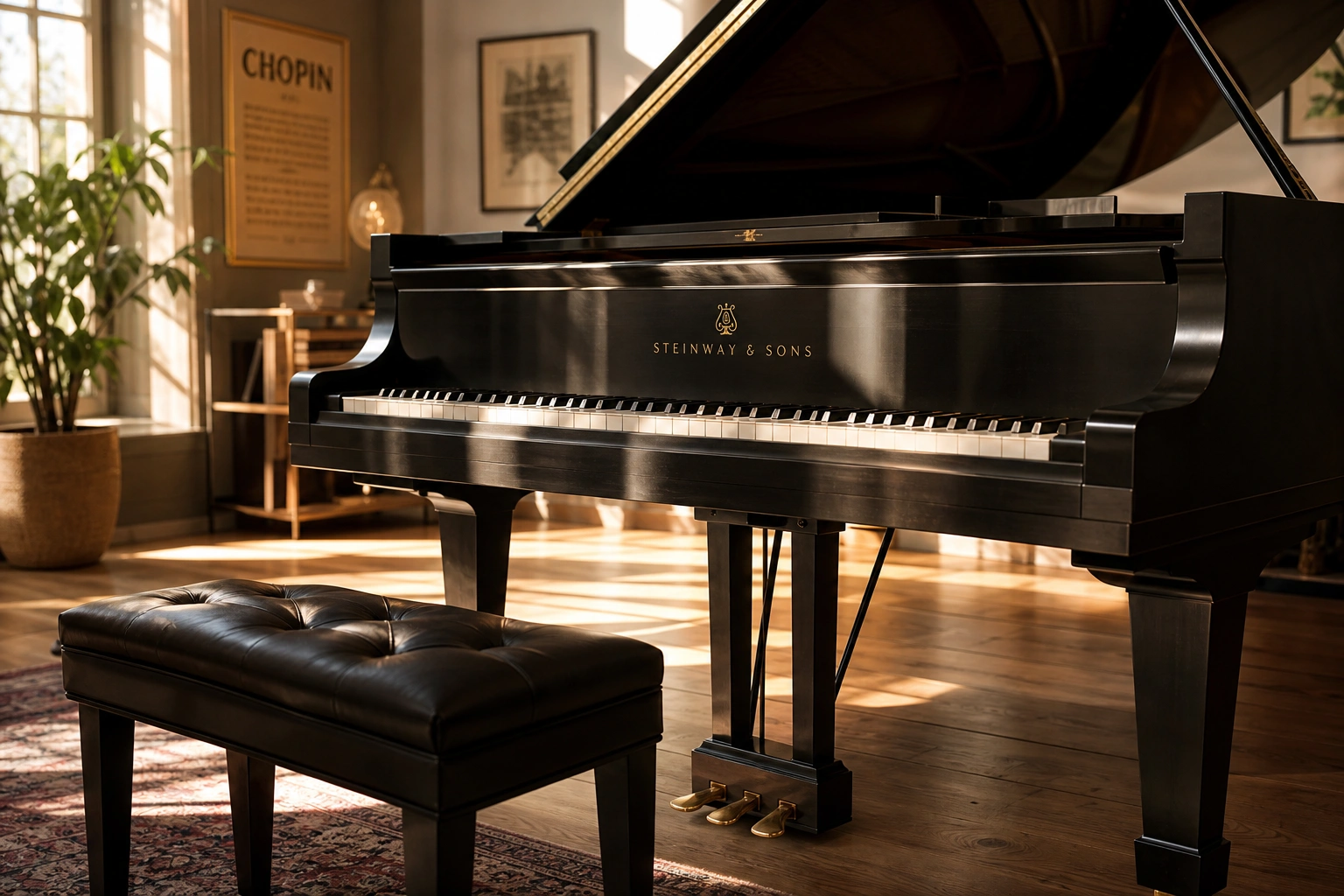
The short answer
A beginner is ready for the sustain pedal once they can play a simple piece hands together, at a slow steady tempo, without looking down at their hands. For most students taking weekly lessons, that happens somewhere between four and eight weeks in. Before that point, the pedal tends to hide sloppy fingering instead of adding musical color.
I introduce the pedal at exactly this stage with almost every student I teach, whether they’re 7 or 70. If you want a second opinion on where your own playing stands, a free 30-minute trial lesson is a low-pressure way to find out – I’ll check your hand position and timing and tell you honestly whether pedaling would help or hurt right now.
What does the sustain pedal do?
The sustain pedal, also called the damper pedal, lifts the felt dampers off the strings so notes ring and blend together after you release the keys. It’s the right-most of the piano’s two or three pedals. Pressing it lets a chord hang in the air; releasing it stops that ringing sound and lets new notes start clean.
Acoustic pianos and most weighted digital pianos both have this pedal, though cheap unweighted keyboards sometimes only fake the effect through a sustain button or a low-quality half-pedal jack. On a real damper mechanism, the effect is continuous – you can press it a quarter of the way down for a subtle blend, or all the way for a wash of sound. That range is exactly why beginners need some hand control before adding it in.
For background on the mechanism itself, Wikipedia’s piano pedals article has a clear diagram of how the damper system works inside the instrument.
How do I know if I’m ready for the sustain pedal?
A student is ready for the sustain pedal when they can play a short piece hands together from memory or with only occasional glances at the score, keep a steady tempo, and sit with their heel resting naturally on the floor near the pedal. If any of those three are still shaky, wait – the pedal adds a layer of coordination, not a shortcut around it.
- They can play a 8-16 bar piece hands together at least twice in a row without stopping
- Their wrists stay loose and their fingers curve naturally over the keys
- They can sit comfortably with their right foot resting near the pedal without stretching
- They already know the difference between legato and staccato touch by ear
I had a seven-year-old student, Lily, who begged to use the pedal in her second week because her older brother used one. We waited three more weeks until she could play “Ode to Joy” hands together cleanly, and when we finally added the pedal, she got it in about ten minutes because her hands weren’t fighting for attention anymore. Rushing it earlier would have just taught her to mash the pedal down and leave it there the whole song.
How do you actually press the sustain pedal?
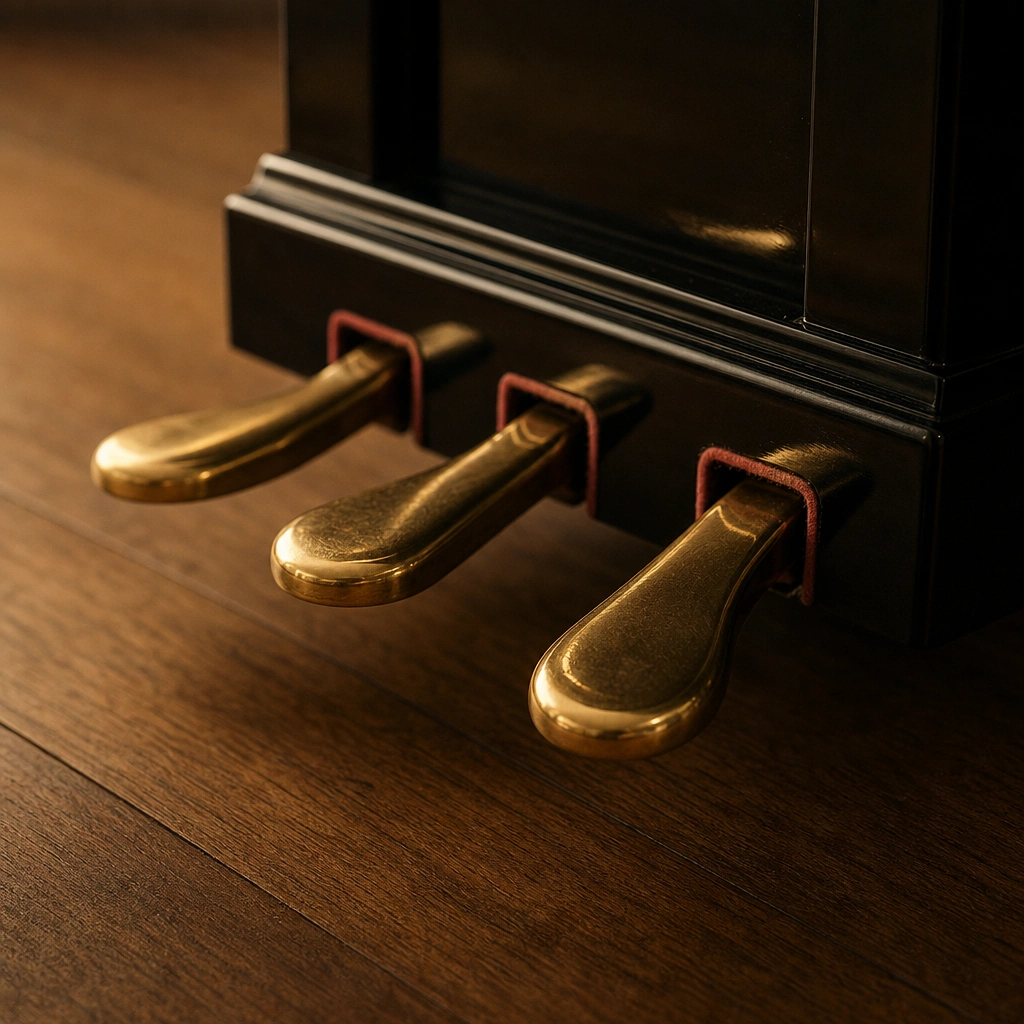
To use the sustain pedal correctly, rest the ball of your right foot on the pedal with your heel on the floor, press down smoothly right after you play a note or chord (not before), and release fully between harmonic changes so the sound doesn’t blur together. This “press-after” timing is the single habit that separates clean pedaling from muddy pedaling.
The technique most teachers call “syncopated pedaling” works like this:
- Play the note or chord with your hands first
- A split second later, press the pedal down
- Hold it until the next chord change
- Release fully, then immediately press again after the new chord sounds
This creates a smooth, connected sound with no gap and no blur – notes overlap just enough to sound legato without turning into mush. It takes most beginners two to three weeks of slow, deliberate practice before the foot movement becomes automatic and stops requiring conscious thought.
What mistakes do beginners make with the pedal?
The most common beginner mistake with the sustain pedal is pressing it down at the start of a piece and never releasing it, which turns every chord change into a wash of blurred, clashing notes. Close behind that is pedaling with the whole foot flat instead of just the ball of the foot, which makes control nearly impossible.
- “Set it and forget it” pedaling – holding the pedal through several chord changes so harmonies smear together
- Pedaling before the note instead of after – this catches the previous chord’s leftover sound in the new one
- Flat-footed pressing – using the whole foot instead of the ball of the foot removes fine control
- Using the pedal to cover sloppy hands – a fix that hides problems in lessons but not in performance
I see that last one constantly with adult students who are self-conscious about mistakes. One of my students, a retired engineer named Robert, kept the pedal pinned down through an entire Chopin waltz to smooth over wrong notes. Once we practiced the piece with no pedal at all for two weeks, his hand accuracy improved so much that when we added the pedal back, it actually sounded musical instead of foggy.
If you’ve been wondering whether you’re pedaling correctly or just guessing, it’s worth having a second set of ears listen. Your first 30-minute lesson with Austin is free – no card, no pressure.
What exercises help beginners learn pedaling?
Simple exercises that isolate the foot from the hands work best for beginners learning the sustain pedal, because they let a student focus on timing without also worrying about notes. Start with one chord at a time before ever attempting a full piece.
- Single chord, press-and-hold: play one chord, press the pedal after, hold for four counts, release. Repeat with a new chord.
- Alternating chords: play chord one with pedal down, release everything, play chord two with pedal down. Listen for a clean break between them.
- Scale with pedal changes: play a five-finger scale one note at a time, changing the pedal on every single note to build the reflex.
- Silent foot drill: practice the up-down motion away from the piano entirely, tapping a rhythm with your foot while counting out loud.
Most of my students need about a week of five-minute daily drills like these before pedaling feels natural inside an actual song. As one of my students put it:
“I started as a complete beginner, and Austin made the learning process feel comfortable.” – Noah Peterson
That comfort matters here specifically, because pedaling is one of those skills where overthinking makes it worse, not better.
Do I need a piano with a pedal to practice this?
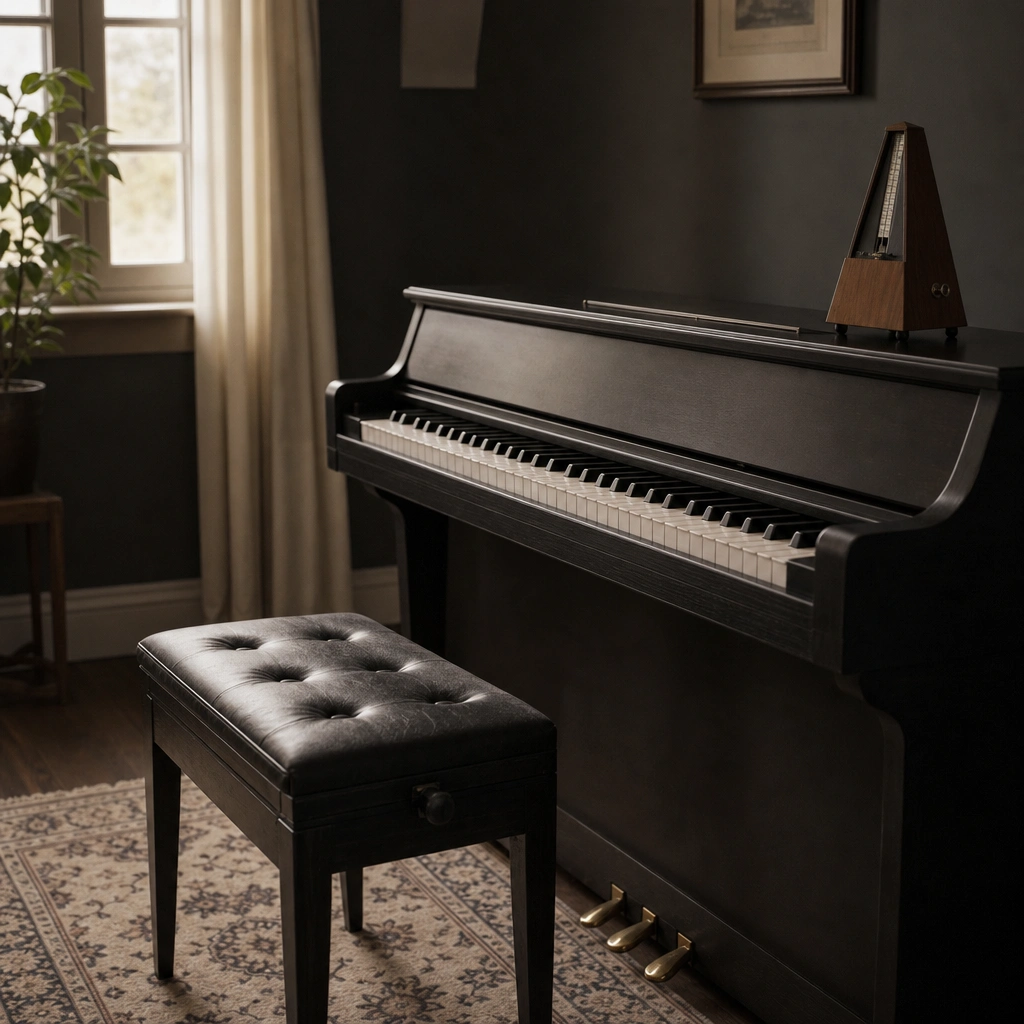
A functioning sustain pedal is necessary to practice real pedaling technique, so a keyboard without one – or with a cheap unweighted “sustain button” – will only teach a rough approximation. If you’re shopping for a first instrument, look for at least an 88-key weighted keyboard with a proper continuous damper pedal, not a plastic footswitch.
That said, you don’t need a full acoustic piano to start. Many digital pianos with weighted keys and a real pedal jack cost far less than an upright and are perfectly adequate for years of lessons. If you’re deciding between a digital piano and an acoustic for a beginner, that’s a separate question worth researching on its own before you buy.
Whatever instrument you’re on, lessons over Zoom work fine for pedal technique – I can see a student’s foot position on camera just as clearly as I would in person.
Common questions
Can pedaling too early ruin a beginner’s technique?
Pedaling too early doesn’t cause permanent damage, but it does build a habit of using the pedal to cover uneven playing instead of fixing it. That habit is genuinely harder to unlearn later than it would have been to just wait a few extra weeks before introducing the pedal in the first place.
Should young kids under age 8 use the sustain pedal?
Young children can use the sustain pedal once their leg is long enough to reach it comfortably without sliding forward on the bench, which is usually around age 7 or 8. Some studios use a pedal extender for smaller kids so shorter legs can still reach it safely.
What’s the difference between the sustain pedal and the soft pedal?
The sustain pedal (right) sustains notes after keys are released, while the soft pedal (left), called the una corda, quiets and softens the tone by shifting the hammers. They serve completely different musical purposes and beginners typically learn sustain first, soft pedal much later.
Can I damage my piano by pedaling wrong?
Pedaling incorrectly won’t damage a well-maintained piano mechanically – it’s a normal moving part designed for constant use. The only real risk is with very old or poorly maintained instruments where the pedal linkage is already worn, which a technician can check during a routine tuning visit.
How long until pedaling feels automatic instead of something I have to think about?
Most beginners need two to four weeks of regular, focused practice before pedal timing stops requiring conscious thought. Kids often pick up the physical motion faster than adults, but adults tend to understand the “why” behind the timing more quickly, which balances things out.
Do all piano method books teach pedal at the same point?
No – method books vary widely; some introduce simple pedal markings within the first 10-15 pages, others wait until book two or three. This is one reason a teacher’s judgment about an individual student’s readiness matters more than strictly following any single book’s schedule.
If you’re just getting started and want a clear plan – not just for the pedal, but for reading, technique, and repertoire overall – a free trial lesson is a good first step. And if there’s a specific song you’re dying to play once your hands (and feet) are ready for it, we can build your plan around that goal from day one.
Ready to find out for yourself?
Your first 30-minute lesson with me is completely free – we will evaluate where you are, talk through your goals, and map out your path.
