
The short answer
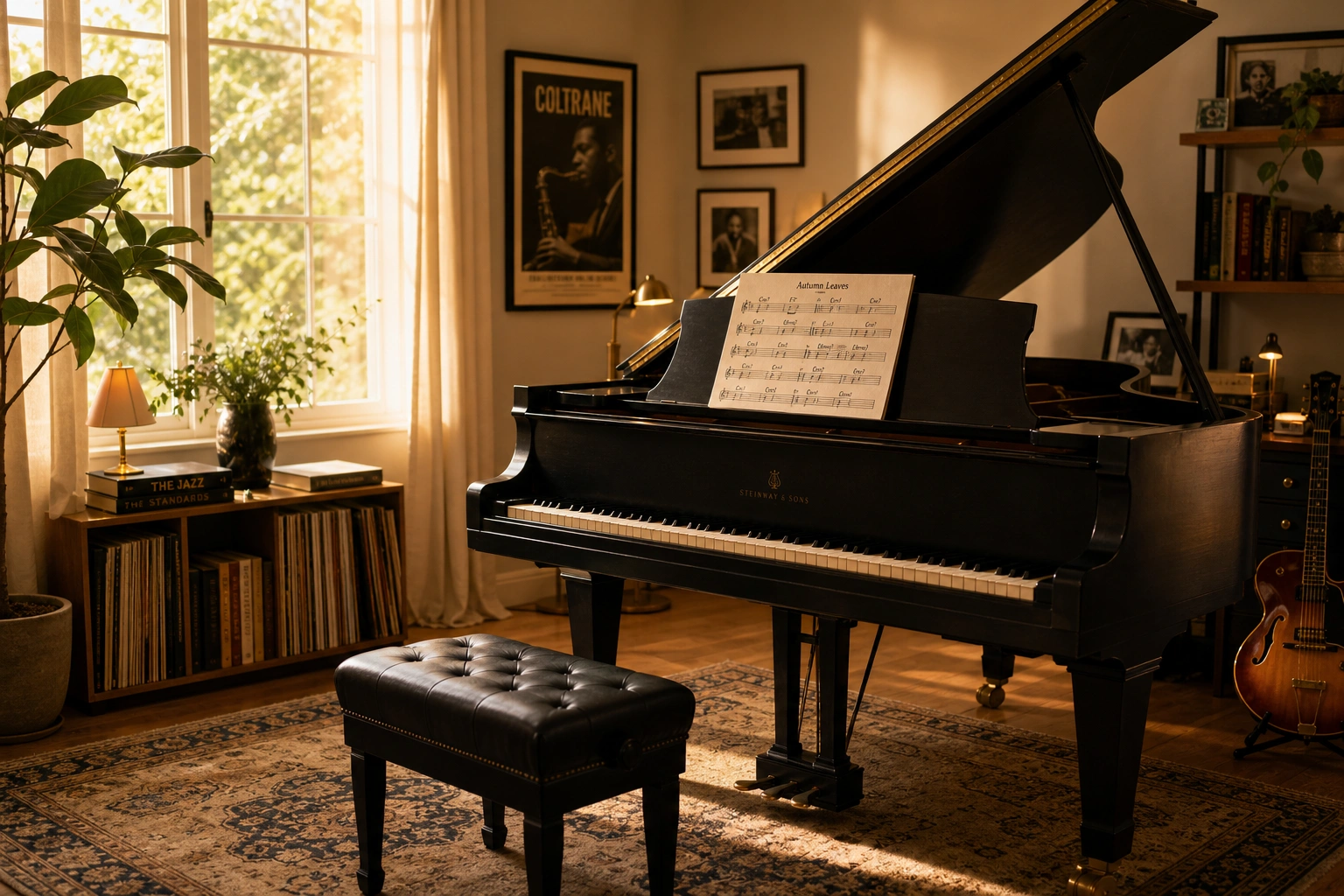
Learning how to read chord symbols piano players see on a lead sheet means decoding a short label like “Am7” or “G/B” into the notes you play with your left hand (or both hands) under a melody. The letter names the root, extra letters and numbers name the chord quality, and a slash tells you which note goes in the bass. Once you know the handful of patterns, it reads almost like words.
I’ve taught this to students ranging from eight-year-olds learning their first pop song to retirees picking piano back up after forty years, and the lightbulb moment is always the same: chord symbols aren’t a secret code, they’re shorthand. If you’d like a teacher to walk through your own lead sheets with you, Austin offers a free 30-minute trial lesson where this is often the very first thing we tackle.
What is a lead sheet, and how is it different from sheet music?
A lead sheet shows the melody line written in standard notation plus chord symbols written above the staff, leaving the exact accompaniment up to the player. Traditional sheet music, by contrast, writes out both hands note-for-note. Lead sheets are the norm for jazz standards, church music, and most pop fake books.
The appeal of a lead sheet is flexibility. Two pianists can play the same lead sheet for “Fly Me to the Moon” and come up with completely different arrangements, because the chord symbols only tell you the harmony, not the voicing, rhythm, or register. That freedom is exactly why beginners sometimes find lead sheets harder at first than fully notated music.
- Full sheet music: every note for both hands written out
- Lead sheet: melody notated, harmony given as chord symbols
- Fake book: a collection of lead sheets, usually one page per song
If you’re deciding whether to learn chords or notes first as a beginner, lead sheet reading usually comes after you’re comfortable finding notes on the staff, not before.
What do the letters and symbols in a chord name actually mean?
A basic chord symbol is a letter (the root note) plus an optional suffix describing the chord’s quality. “C” alone means a C major triad: C, E, G. “Cm” or “Cmin” means C minor: C, Eb, G. The letter always tells you where to start; the suffix tells you how to stack the other two notes.
Here’s how the most common triad symbols break down in practice:
- C = C major (C, E, G) – no suffix means major
- Cm or Cmin = C minor (C, Eb, G)
- Cdim or C° = C diminished (C, Eb, Gb)
- Caug or C+ = C augmented (C, E, G#)
- Csus4 = C with the 3rd replaced by the 4th (C, F, G)
- Csus2 = C with the 3rd replaced by the 2nd (C, D, G)
I tell students to memorize one rule first: no letters after the root means major, every time, in every key. Once that’s automatic, the minor, diminished, and augmented symbols stop feeling random and start feeling like small, predictable edits to a major triad. If you want a deeper reference on how these qualities are built, musictheory.net’s lesson on triads is a solid, free companion to what we cover here.
How do you read seventh chords like Cmaj7 or G7?
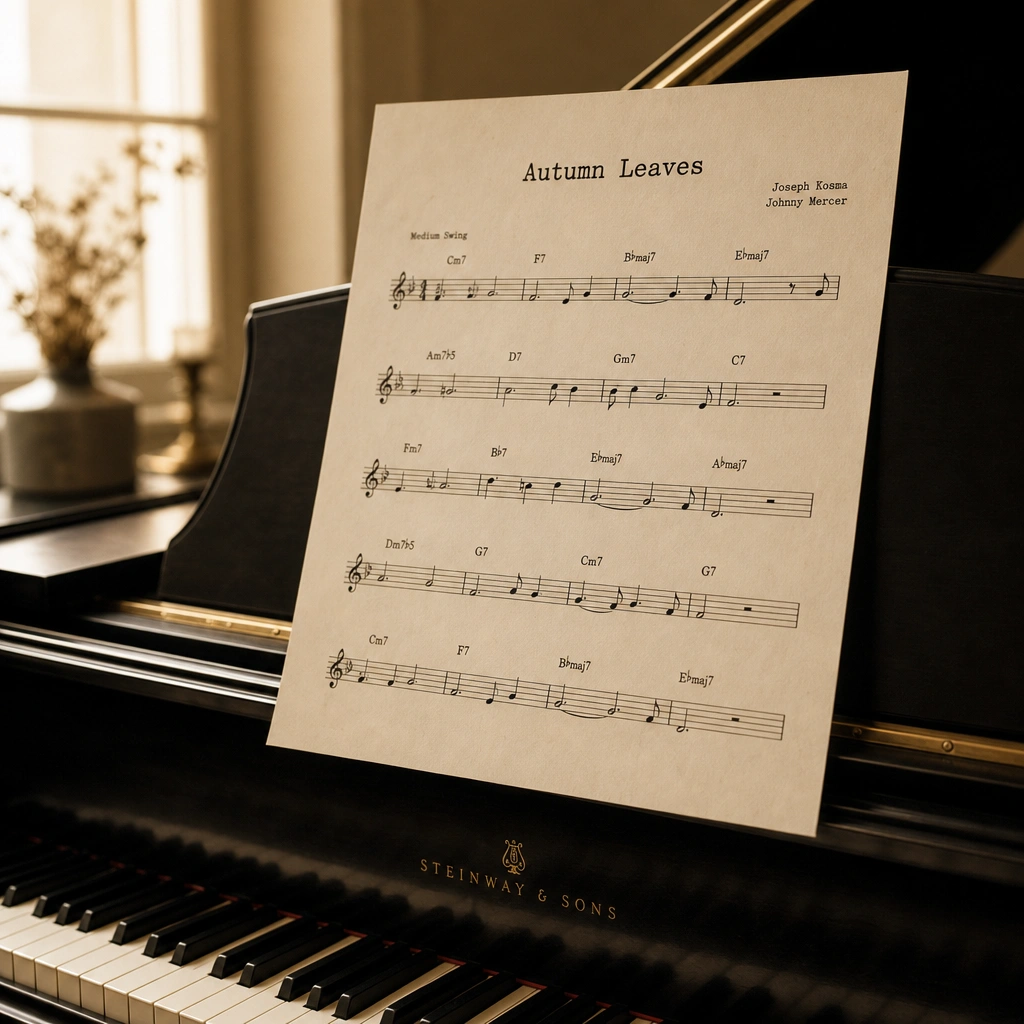
A seventh chord symbol adds one more note stacked a third above the triad, and the exact label tells you whether that note is major or minor relative to the root. “G7” means a dominant seventh (G, B, D, F). “Cmaj7” means a major seventh (C, E, G, B). “Am7” means a minor seventh (A, C, E, G).
This is the spot where I see students stall the most, because “7” alone and “maj7” look similar but produce different chords. Here’s the breakdown I give in lessons:
- G7 (dominant 7th): major triad plus a minor 7th above the root
- Cmaj7 or CM7: major triad plus a major 7th above the root
- Am7: minor triad plus a minor 7th above the root
- Bm7b5 or Bø: diminished triad plus a minor 7th (common in minor key ii chords)
- Cdim7: fully diminished triad plus a diminished 7th
A student of mine, a 34-year-old software engineer working through a jazz fake book, kept playing “maj7” chords as plain dominant 7ths for weeks because the labels looked interchangeable at a glance. The fix was simple: I had him circle every “maj” in a song before playing a single note. Once the visual habit stuck, the mix-up disappeared within two sessions.
If chord symbols on your favorite songbook still feel like a foreign language, a short lesson can make them click fast. Your first 30-minute lesson with Austin is free – no card, no pressure.
What does a chord symbol with a slash mean, like C/E?
A slash chord tells you to play a specific note in the bass that isn’t the root of the chord. “C/E” means play a C major chord with E in the bass instead of C. The letter before the slash is still the chord; the letter after the slash is just which note sits lowest.
Slash chords show up constantly in pop and worship music to create smoother bass lines. A progression like C, G/B, Am, F lets the bass walk down step by step (C to B to A to F) instead of jumping around. Composers also use slash chords to notate chords over a pedal tone, where the bass note stays fixed while the chords above it change.
- G/B: G major chord, B in the bass
- D/F#: D major chord, F# in the bass
- C/G: C major chord, G in the bass (a very common “inverted” sound)
The quickest way to internalize this is to play the bass note alone with your left hand first, then add the chord with your right, so your ear hears the two layers separately before you combine them.
How do you actually play a chord once you’ve read the symbol?
Playing from a chord symbol means choosing a voicing: deciding which octave, which inversion, and which hand plays what. A beginner typically plays root-position triads with the left hand while the right hand plays the written melody. More advanced players spread the notes out, add octaves, or use both hands for fuller harmony.
There’s no single “correct” way to voice “Fmaj7” – that’s the whole point of a lead sheet. I usually start new students with three steps in order:
- Find the root and play it alone in the left hand on beat one
- Build the full chord in root position so your ear knows its basic shape
- Experiment with inversions so the chord sits closer to the previous one, reducing hand jumps
This connects directly to scale and key fluency – if you already know your way around the circle of fifths, you’ll recognize chord patterns faster because related chords tend to cluster together by key. Students who’ve also worked on scales tend to find chord shapes under their fingers more naturally, since the notes overlap constantly.
“Austin explains everything clearly and makes online piano lessons easy to follow.” – Emily Carter
That kind of plain, step-by-step explanation is exactly how I approach chord symbols with every new student, live over Zoom.
What mistakes do beginners make when reading chord symbols?
The most common mistake beginners make is ignoring suffixes and treating every chord symbol as if it were a plain major triad. The second most common is rushing past slash chords and playing the chord’s own root in the bass instead of the specified bass note, which quietly breaks the intended sound of the progression.
- Skipping the suffix: playing “Dm” as “D” because the letter looks the same at a glance
- Confusing “7” with “maj7”: covered above, but worth repeating because it’s so frequent
- Ignoring slash chords: playing the root in the bass instead of the note after the slash
- Memorizing shapes without naming notes: this works until a song changes key and the shape no longer applies
I had a 10-year-old student who memorized “C, F, G” shapes perfectly for months, but froze the moment a song introduced “G7.” She wasn’t bad at piano – she’d just never been shown that the “7” meant “add one more note.” Five minutes of explanation and she was back on track permanently. This is also a great area to connect with basic improvising, since knowing chord tones is the backbone of learning to improvise on piano. For a broader overview of how chord notation evolved, the Berklee-affiliated Berklee resources on jazz harmony are worth a look if you want to go deeper.

Common questions
Do I need to read sheet music to read chord symbols?
Reading chord symbols doesn’t require fluent sheet music reading, but you do need to recognize note names on the staff for the melody line. Many students learn chord symbols and basic melody reading side by side, since lead sheets combine both skills on a single page.
Are chord symbols the same in every genre of music?
Chord symbol notation is largely standardized across pop, jazz, and worship music, though jazz fake books tend to use more extended chords like 9ths, 11ths, and 13ths. Classical sheet music rarely uses chord symbols at all, since it’s fully notated for both hands instead.
What’s the difference between a chord symbol and guitar tablature?
A chord symbol names the harmony abstractly, leaving voicing up to the player, while guitar tablature shows exact finger placement on specific strings and frets. Pianists read the chord symbol and choose their own voicing; guitarists following tab play a fixed, predetermined shape.
Can young kids learn to read chord symbols?
Children as young as seven or eight can learn basic major and minor chord symbols once they’re comfortable finding notes on the keyboard. I usually introduce chord symbols after a student has a solid grip on note names and simple five-finger positions, often within the first year of lessons.
How long does it take to get comfortable reading chord symbols?
Most students who practice chord reading for 15-20 minutes a few times a week get comfortable with basic major, minor, and seventh chord symbols within 4-6 weeks. Slash chords and extended jazz chords typically take a few additional months of regular exposure to feel automatic.
Do I need a real piano to practice this, or will a keyboard work?
A full-size, touch-responsive keyboard works fine for learning chord symbols, since the skill is about note recognition and hand shapes rather than touch sensitivity. What matters more is having at least 61 keys so you have room to move chords up and down without running out of keys.
Reading chord symbols is one of those skills that feels overwhelming for about two weeks and then suddenly becomes second nature – I’ve watched it happen with students of every age, from kids to adults getting back into piano after years away. If you want a clear, personalized plan for working through this with real songs you actually want to play, Weaver Music lessons run $60 for 30 minutes, $80 for 45 minutes, or $99 for a full hour, with a free 30-minute trial lesson to start – no card required.
Ready to find out for yourself?
Your first 30-minute lesson with me is completely free – we will evaluate where you are, talk through your goals, and map out your path.
