
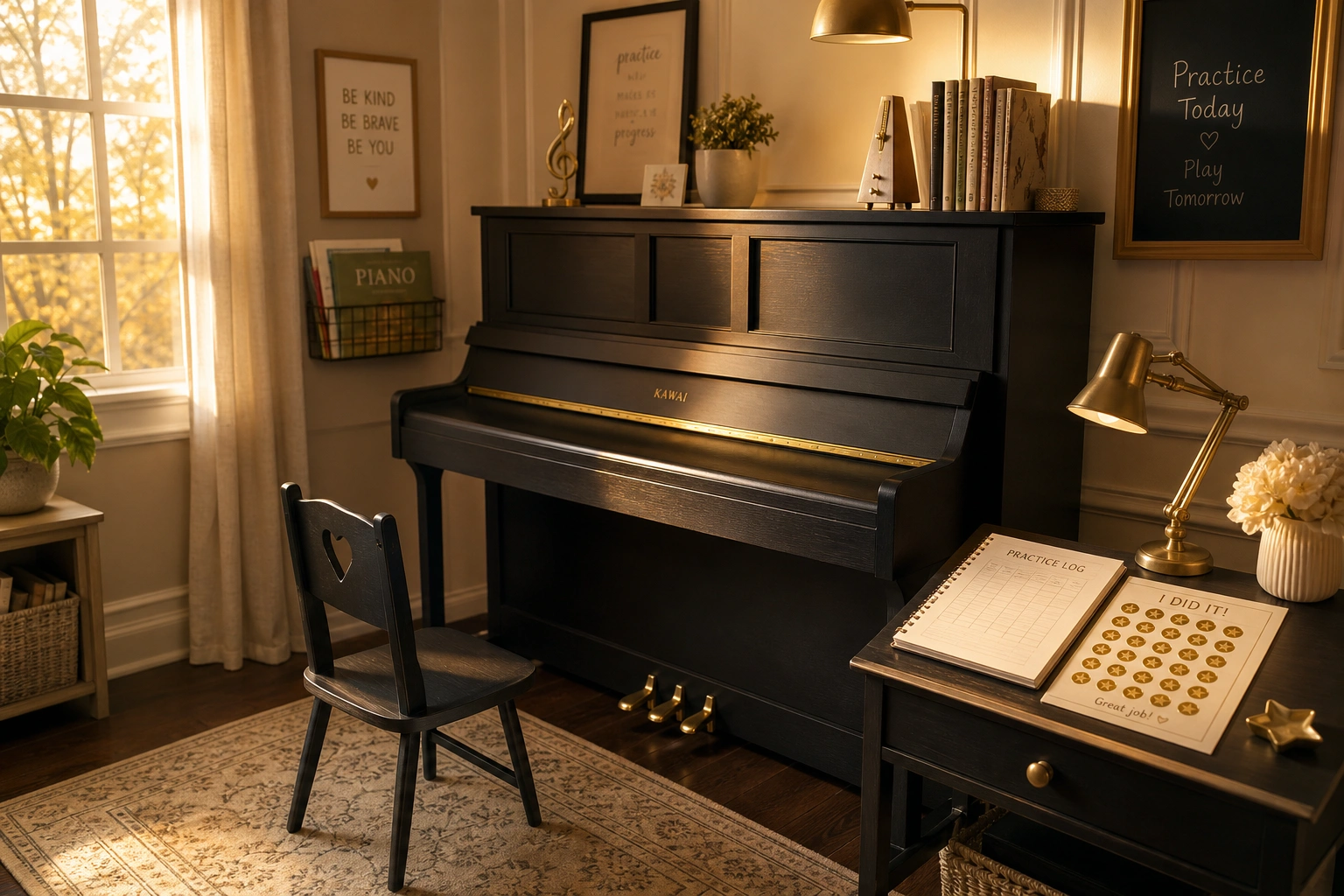
The short answer
The best way to motivate a child to practice piano is to replace reminders with a fixed daily routine, keep sessions short (10-20 minutes for most beginners), let the child choose part of what they play, and praise effort over perfection. Nagging makes practice feel like a chore; structure and small wins make it feel like a habit.
I’ve watched this play out in hundreds of households over 10+ years of experience teaching piano, and the pattern is consistent. If you want a second set of eyes on your specific situation, a free 30-minute trial lesson is a low-pressure way to get a read on your child’s level and a practice plan that actually fits your family’s schedule.
Why does nagging about piano practice backfire?
Nagging backfires because it turns practice into a power struggle instead of a personal habit. Once a child is only sitting at the bench to stop a parent from asking again, the motivation is external and disappears the moment the reminders stop – which is exactly why so many kids quit within the first year.
I had a student, Lily, age 8, whose mom texted me every week asking how to get her to practice without a fight. We swapped the evening reminder for a sticky note on the piano lid that said “Pick 2: warm-up, song, or game” – no parent involved. Within three weeks, Lily was starting on her own most days. The note removed the parent as the enforcer and made the choice feel like hers.
- Nagging puts the parent in the role of police officer, not supporter.
- It teaches the child to resist rather than self-start.
- It attaches negative emotion to the piano itself, not just the reminder.
- It rarely changes behavior long-term – most parents report it gets worse, not better, after a few months.
How long should a child practice piano each day?
Most beginners age 5-9 do best with 10-15 minutes a day, and kids age 10 and up can usually handle 20-30 minutes once they have a few months of lessons behind them. Short, daily, and consistent beats long and sporadic almost every time I’ve tested it with students.
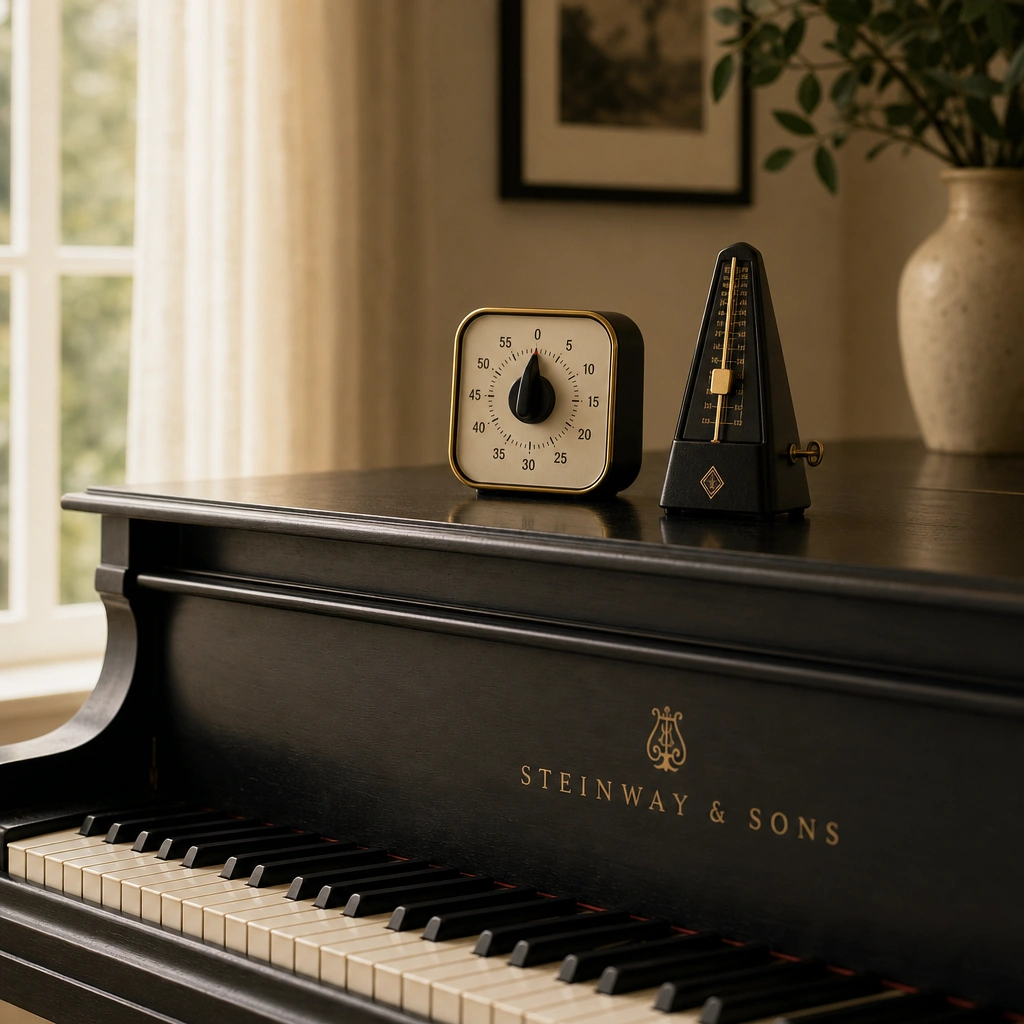
I ask younger students to set a kitchen timer for 10 minutes rather than aiming for a certain number of pages or songs. This removes the moving target that makes practice feel endless to a 6-year-old. Once the timer goes off, they can stop – and most kids keep going anyway because the pressure is gone.
- Ages 5-7: 10 minutes, broken into two 5-minute chunks if needed.
- Ages 8-10: 15-20 minutes, one sitting.
- Ages 11+: 20-30 minutes, often split between technique and repertoire.
A metronome app clicking quietly in the background can also help a distractible child stay anchored to the task instead of drifting off mid-song.
How do I build a practice routine my child will actually follow?
A practice routine that sticks is tied to an existing daily anchor – right after breakfast, right after homework, or right before screen time – at the same time every day, not “whenever there’s time.” Vague intentions like “sometime after dinner” are the single most common reason I see practice routines collapse within a month.
I tell parents to treat piano practice like brushing teeth: same slot, no negotiation about whether it happens, only flexibility in exactly when within that window. One family I work with ties practice to right after the dog gets walked – it’s unrelated to piano, but it’s rock-solid every single day, so the habit attached itself easily.
- Pick a time slot that already happens reliably every day.
- Keep the piano visible and accessible – not covered in laundry or shoved in a corner.
- Use a visual practice log or checklist the child marks themselves.
- Let the child start the timer or app, not the parent.
If you’re not sure your child’s practice routine matches what they’re actually working on in lessons, that’s an easy thing to fix together. Your first 30-minute lesson with Austin is free – no card, no pressure.
Should I reward my child for practicing piano?
Small, occasional rewards can help kickstart a new habit, but they should fade out once practice becomes routine, since relying on prizes long-term teaches a child to play for the reward instead of for the music. I use rewards sparingly and always pair them with specific praise about what the child did well.
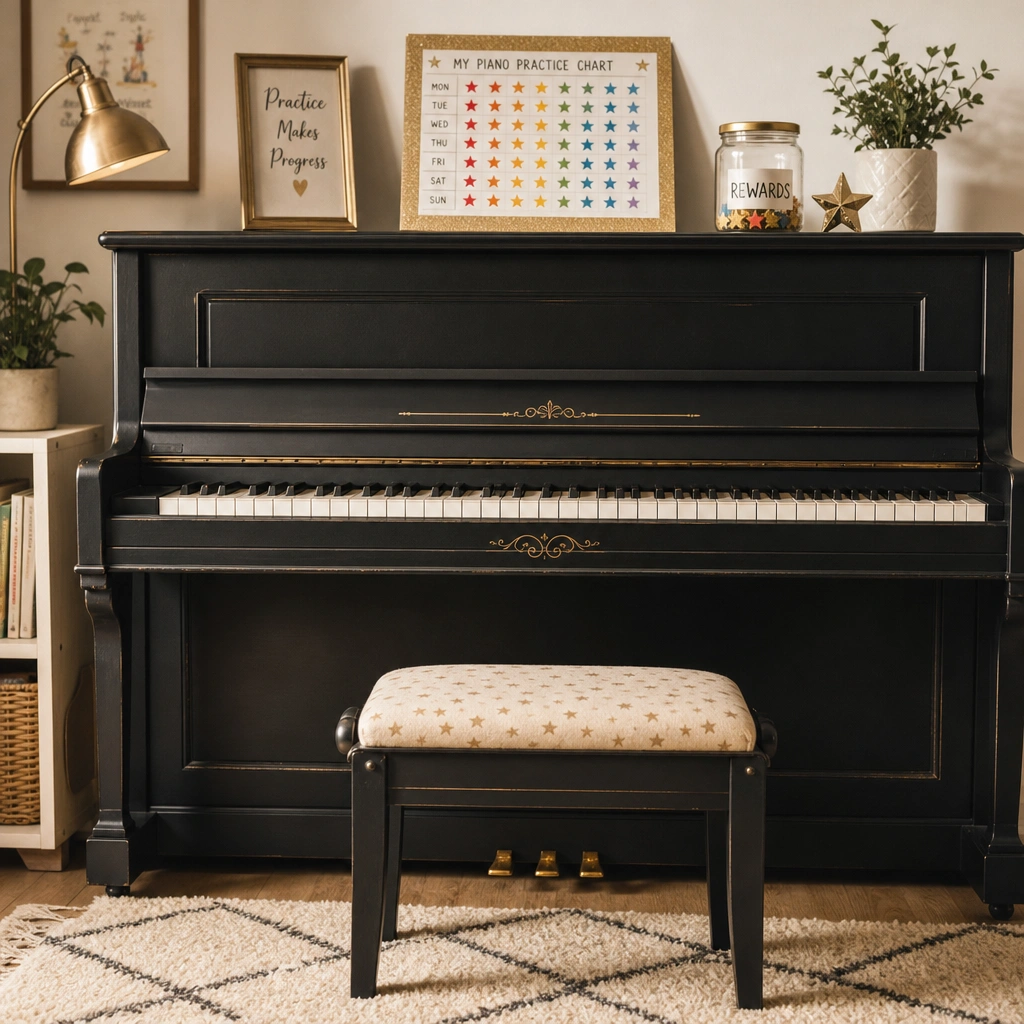
A sticker chart for the first month of a new habit is fine. What I avoid is cash or screen-time bribes tied to every single session, because kids quickly start negotiating the price instead of sitting down to play. Praise that names something specific – “that left-hand part was smoother today” – does more for long-term motivation than any prize.
“My confidence at the piano has grown so much since starting lessons.” – Mia Reynolds
Letting a child choose a fun song alongside their assigned repertoire works better than material rewards. Pairing technique work with something they picked themselves – maybe a pop tune after reading about classical versus pop as a starting point – keeps practice feeling like their project, not an assignment handed down.
What should I do if my child wants to quit piano?
When a child wants to quit piano, pause before agreeing or arguing and find out why first – boredom, frustration with a specific skill, or a scheduling conflict each need a different fix, and most “I want to quit” moments pass within two to three weeks once the real problem is addressed.
In my experience, the quitting urge usually spikes around month three or four, right when the beginner novelty wears off and the material gets slightly harder. I’ve talked several families through this exact slump by temporarily lowering the bar – shorter sessions, easier songs, more games – for two weeks, then building back up. Almost every time, the urge to quit fades once the frustration does.
- Ask what specifically feels hard or boring, not just “do you want to quit.”
- Check if the current songs match their interests – a mismatch with repertoire is a common, fixable cause.
- Consider whether the lesson format fits – some kids do better in person, others thrive over Zoom.
- Give it two to three weeks of a lighter load before making a final decision.
If the struggle seems tied to the teacher relationship rather than the instrument itself, it’s worth knowing that’s a solvable problem too, not a sign to abandon piano altogether.
Common questions
At what age should a child start piano lessons?
Most children are ready for structured piano lessons between ages 5 and 7, once they can sit still for 15-20 minutes and recognize basic letters and numbers. Some kids start successfully at 4 with a playful, game-based approach, while others do better waiting until 7 or 8.
Is it normal for kids to resist practicing even if they like piano?
Yes, this is extremely common and doesn’t mean a child dislikes piano. Most kids resist practice at some point simply because it requires sitting still and repeating things, which feels less fun than free play – routine and short sessions usually resolve this within a few weeks.
How do I know if my child is actually practicing correctly at home?
Watch or listen for a few minutes without correcting – are they repeating the same section when it’s wrong, or just playing straight through and stopping? A short practice log from the teacher with specific tasks, not just “practice 15 minutes,” makes correct practice far easier to check.
Should I sit with my child during every practice session?
Not every session, but younger beginners (under age 8) usually benefit from a parent nearby for the first few months to help reset the timer or read instructions. By age 9 or 10, most kids can practice independently if the routine and tasks are clear.
What if my child only wants to play songs they already know?
This is normal and usually means new material feels too hard or unrewarding yet. Mix one comfortable, known song into each session alongside one new, slightly challenging piece so practice still feels enjoyable while progress continues.
Can switching from in-person to online piano lessons help with motivation?
Sometimes – kids who are shy in person sometimes relax more on Zoom, and the novelty itself can renew interest. Weaver Music lessons are live, one-on-one Zoom lessons, which many kids find a refreshing change from a studio.
If you’d like help building a routine that fits your child’s age, attention span, and interests, Austin offers free 30-minute trial lessons with a skill check and a practice plan included – no card required. Lessons run $60 for 30 minutes, $80 for 45 minutes, or $99 for 60 minutes, live over Zoom, for all ages and levels.
Ready to find out for yourself?
Your first 30-minute lesson with me is completely free – we will evaluate where you are, talk through your goals, and map out your path.
