Choosing the right music instructor can feel like navigating a maze with no map. You want your child to love music, but you also want to avoid tears at the piano bench, wasted money, and a teacher who doesn’t connect. After teaching hundreds of students over the past decade, I’ve seen what works and what doesn’t. Understanding piano lessons for kids what to look for will help you make a confident decision that sets your child up for success.
The good news is that you don’t need to be a musician yourself to spot the markers of a great piano teacher and learning environment. A free trial lesson can reveal many of these qualities in just 30 minutes, but knowing what to watch for makes all the difference.
The short answer
When evaluating piano lessons for kids what to look for, prioritize these twelve essentials: a teacher who adapts to your child’s personality, clear lesson structure with variety, regular parent communication, realistic progress expectations, flexible repertoire choices, solid technique instruction, practical practice guidance, transparent pricing, trial lessons offered, patience and encouragement, age-appropriate methods, and genuine enthusiasm for teaching children.
The best piano lessons for kids balance structure with creativity, challenge with encouragement, and classical fundamentals with music your child actually wants to play. These elements work together to create an environment where children thrive musically and personally.
Why this decision matters more than you think
Your child’s first piano teacher shapes their relationship with music for years to come. I’ve taught students who came to me after negative experiences elsewhere, and the repair work takes months. They’ve internalized that they’re “not musical” or that piano is “boring and hard.”
On the flip side, a great early experience builds confidence that extends beyond the piano. Kids learn that practice leads to progress, that mistakes are part of learning, and that they can create something beautiful with their own hands.
The stakes are higher than just learning scales. You’re choosing someone who will influence your child’s self-image, work ethic, and creative expression. When considering piano lessons for kids what to look for, remember that the right teacher becomes a mentor who shapes how your child approaches challenges in all areas of life.
Research consistently shows that early positive experiences with music education contribute to better academic performance, improved social skills, and enhanced emotional regulation. The teacher you choose today impacts far more than just musical ability.
Children who develop a positive relationship with their instrument early on are more likely to continue studying music throughout their school years and beyond. This long-term engagement provides cumulative benefits in brain development, emotional intelligence, and creative problem-solving abilities.
Moreover, the quality of early instruction determines whether foundational skills are learned correctly from the start. Correcting poor technique or bad habits years later is significantly more difficult than establishing proper form initially. The right teacher gets it right the first time.
Piano lessons for kids what to look for: teaching style and personality fit
Every child responds differently to teaching styles. Some kids thrive with high energy and lots of games. Others need calm, patient instruction with minimal distractions. The same teacher can be perfect for one child and completely wrong for another.
Watch how the teacher interacts with your child during a trial lesson. Do they get down to the child’s eye level? Do they notice when your child is confused or losing focus? Do they adjust their approach in the moment?
A good teacher for kids should have these personality qualities:
- Patience without condescension
- Enthusiasm that feels genuine, not forced
- Ability to explain concepts in multiple ways
- Sense of humor appropriate to your child’s age
- Warmth balanced with clear boundaries
- Flexibility when something isn’t working
I’ve found that the best indicator is simple: does your child light up or shut down in their presence? Kids are honest barometers. Trust what you observe in that first interaction when evaluating piano lessons for kids what to look for.
The personality match between teacher and student often predicts success more accurately than credentials or experience alone. A highly qualified teacher who can’t connect with your specific child won’t deliver the results you’re hoping for.
Consider your child’s temperament as well. Shy children may need a teacher who draws them out gently. Energetic children might benefit from someone who channels that energy productively. A child who is naturally perfectionistic needs a teacher who celebrates effort, not just flawless performance.
The teaching relationship is inherently personal, especially for young students. When children feel safe, seen, and supported, they take creative risks and persist through challenges. When they feel judged or misunderstood, they shut down. Personality fit creates the foundation for everything else.
“I started as a complete beginner, and Austin made the learning process feel comfortable.” – Noah Peterson
Lesson structure that keeps kids engaged
A well-structured lesson for children isn’t just “sit down and play scales for 30 minutes.” Young attention spans need variety and momentum. When you’re assessing piano lessons for kids what to look for, ask about lesson structure.
Effective lessons typically include multiple segments:
- Warm-up or review (5-7 minutes)
- Technique work with clear purpose (5-10 minutes)
- New concept or piece introduction (10-15 minutes)
- Fun element—game, duet, improvisation (5 minutes)
- Assignment preview for the week ahead (2-3 minutes)
The segments should flow naturally, not feel chopped up. A skilled teacher moves between activities before boredom sets in, but stays long enough for real learning to happen.
If you’re wondering how long lessons should be, 30-45 minutes is typically ideal for kids under 10, while older students can handle 60 minutes.
Ask potential teachers how they structure a typical lesson. Vague answers are a yellow flag. Detailed, thoughtful responses show they’ve refined their approach through experience and understand developmental needs at different ages.
Lesson structure also reveals teaching philosophy. Teachers who incorporate games and creative activities understand that children learn through play. Those who include duets or ensemble playing recognize the social and motivational benefits of shared music-making.
The pacing within each lesson segment matters too. A teacher who rushes through material to check boxes won’t build deep understanding. Conversely, a teacher who lingers too long on a single activity risks losing engagement. The right balance keeps momentum while allowing concepts to sink in.
Communication with parents
You’re not in the lesson room, but you’re the one supporting practice at home. Regular, clear communication from the teacher makes your job possible. This is a crucial factor in piano lessons for kids what to look for.
Good teachers provide:
- Written or digital assignment notes after each lesson
- Specific practice instructions you can reference
- Updates on progress and upcoming goals
- Responsiveness to questions between lessons
- Honesty about challenges without alarm
- Celebration of milestones, however small
At Weaver Music, I send a summary after every lesson with exactly what to practice and how. Parents tell me this removes the guesswork and cuts down on practice battles at home.
Ask how the teacher communicates with parents. Monthly check-ins aren’t enough for younger students. Weekly touchpoints, even brief ones, keep everyone aligned and help you know how to support practice between lessons.
Effective parent-teacher communication creates a consistent support system for the child. When parents understand the lesson goals and practice expectations, they can reinforce concepts at home without confusion or frustration.
Communication style matters as much as frequency. Teachers should speak in language that non-musicians understand, avoiding jargon when explaining concepts or progress. They should also be open to your questions and concerns without defensiveness.
Some teachers use apps, email, text messages, or dedicated parent portals for updates. The medium matters less than the consistency and clarity. What you need is reliable information that helps you support your child between lessons.
Seeing how a teacher communicates with you and your child in real time reveals more than any email ever could. Your first 30-minute lesson with Austin is free – no card, no pressure.
Realistic expectations and progress tracking
Beware of teachers who promise your child will be playing Beethoven in six months. Equally concerning are teachers who never articulate any timeline or goals at all. Understanding piano lessons for kids what to look for includes knowing how teachers set and track expectations.
Realistic teachers will tell you that progress is non-linear. Some weeks bring breakthroughs. Other weeks feel like treading water. Both are normal. They’ll also be honest that consistent practice matters more than natural talent.
A good teacher should be able to outline:
- What skills typically develop in the first 3-6 months
- What your child might be able to play in a year
- How they measure progress beyond just “finished pieces”
- What plateaus are common and how they work through them
I tell parents that in the first six months, we’re building finger independence, note reading, rhythm basics, and musical expression. Students are usually playing simple songs with both hands by month three, and short classical pieces or contemporary songs by month six. That’s honest and achievable.
According to research on music education, children who receive regular, structured instruction develop not only musical skills but also enhanced cognitive and emotional abilities over time. Progress is about more than repertoire—it encompasses focus, discipline, pattern recognition, and emotional expression.
Progress tracking should be visible and motivating for the child as well. Some teachers use achievement charts, sticker systems, or level completion certificates. Others maintain portfolios of recordings so students can hear their own improvement over time.
The best teachers set both short-term and long-term goals. Short-term goals provide frequent wins that maintain motivation. Long-term goals give direction and purpose to daily practice. Together, they create a roadmap that makes the journey feel manageable and rewarding.
Piano lessons for kids what to look for: repertoire and flexibility
Some teachers only teach classical music. Others let kids play anything they want with no guidance. The best approach usually falls somewhere in between, and this flexibility is central to piano lessons for kids what to look for.
Your child should learn foundational pieces that build technique, yes. But they should also get to explore music they love. If your daughter is obsessed with Taylor Swift, a good teacher will find age-appropriate arrangements and use them as motivation.
Ask potential teachers:
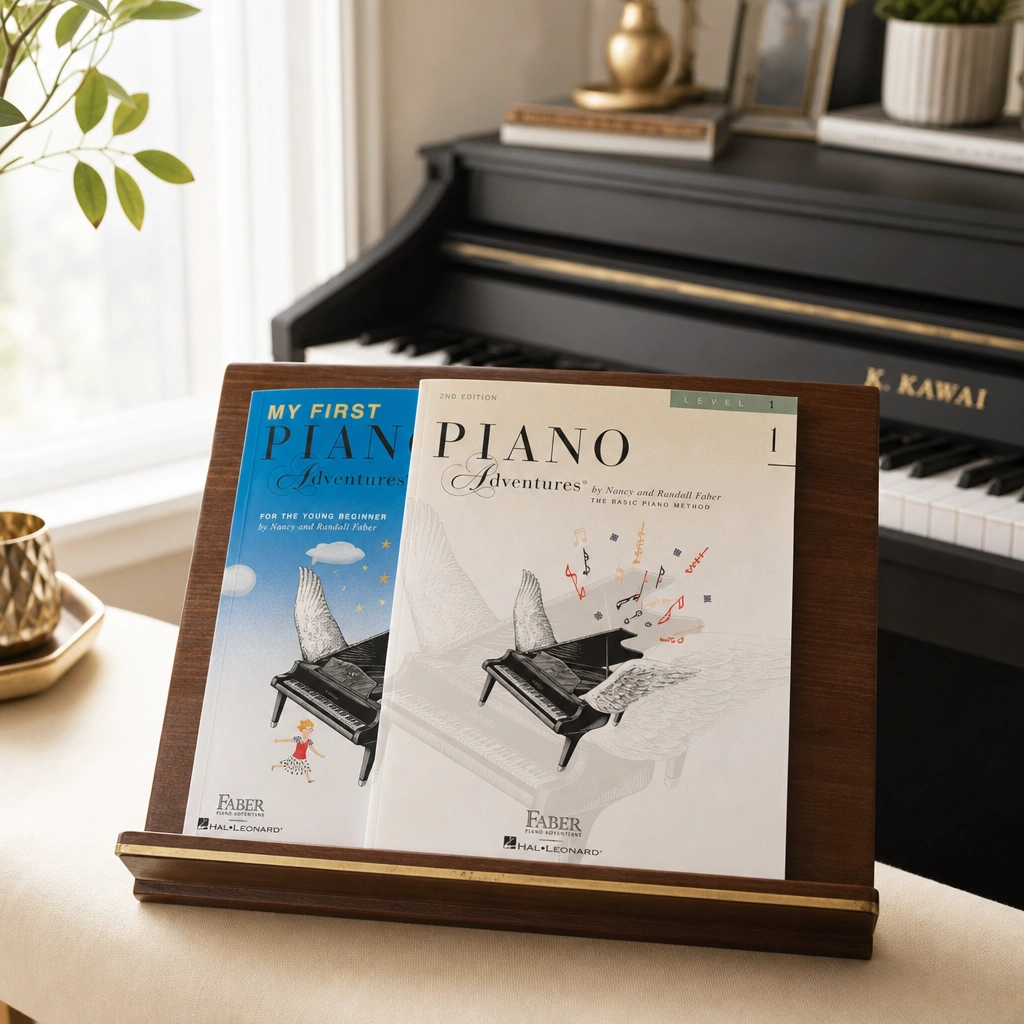
- What method books or materials do you use?
- How do you choose repertoire for each student?
- Can students request songs they want to learn?
- Do you incorporate different genres and styles?
At Weaver Music, students get a mix: method book work for skill-building, classical pieces for technique and musicality, and popular songs or movie themes they’re excited about. The variety keeps lessons fresh and practice motivated.
A teacher who is rigid about repertoire might produce technically proficient students, but they often lose the joy. Piano lessons for kids what to look for should always include musical joy alongside skill development.
Balancing structured curriculum with student interests creates intrinsic motivation. When children feel ownership over some of their repertoire choices, practice becomes less of a chore and more of an opportunity to work toward something they genuinely want to achieve.
Repertoire selection also affects how quickly children develop sight-reading skills versus rote memorization. A balanced approach includes both: pieces learned by ear or simplified arrangements for fun, and pieces read from notation for skill development.
Exposure to different musical styles broadens a child’s musical vocabulary and cultural awareness. A student who learns only classical music misses the rhythmic complexity of jazz, the improvisational freedom of pop, and the storytelling of folk music. Variety creates well-rounded musicians.
Technique foundation without rigidity
Proper hand position, posture, and finger technique matter. Poor habits formed early become hard to break. But technique instruction for young children should never feel punishing or obsessive.
Good teachers weave technique naturally into lessons. They correct hand position gently and frequently. They explain why curved fingers or relaxed wrists matter. They demonstrate and guide, not just criticize.
When evaluating piano lessons for kids what to look for in technique instruction, watch for:
- Clear explanations of why technique matters (not just “because I said so”)
- Patient, repeated corrections without frustration
- Use of imagery kids understand (“hold a small ball,” “light fingers like raindrops”)
- Balance between technical precision and musical expression
- Exercises that don’t feel like punishment
I’ve seen teachers who are so focused on perfect hand shape that kids become afraid to make a mistake. I’ve also seen teachers who ignore technique entirely, leading to students who hit a wall later because they never learned proper form.
The right approach builds a solid foundation while keeping the experience positive. Technique should serve the music, not overshadow it. Children need to understand that good technique makes playing easier and sounds better, not that it’s an arbitrary set of rules.
Age-appropriate technique instruction looks different at different stages. Very young beginners need basic concepts like finger numbers and hand position. Older elementary students can handle more detailed instruction about weight transfer and arm rotation. Pushing advanced concepts too early creates confusion and tension.
The best teachers make technique feel purposeful by connecting it directly to the music. “Curved fingers help you play this run more smoothly” is more motivating than “curved fingers are the rule.” Context makes compliance meaningful rather than arbitrary.
Practice guidance that actually works at home
Lessons are one hour a week. Practice is six days at home. If the teacher doesn’t equip your child to practice effectively, progress will stall. Practice support is essential in piano lessons for kids what to look for.
Great teachers give specific practice instructions:
- “Practice the right hand of measures 5-8 five times slowly”
- “Clap the rhythm of line two before you play it”
- “Play this section three times perfectly before moving on”
Vague assignments like “practice this piece” set kids up for frustration. They don’t know where to start, how long to work, or what success looks like.
Ask teachers how they help students practice independently. Do they teach practice strategies? Do they break assignments into manageable chunks? Do they provide practice logs or tracking?
I include a four-level video course library for my students. If they forget how to approach a tricky section, they can review the technique video. If parents aren’t sure how to help, the resources are there.
This kind of support between lessons is a hallmark of piano lessons for kids what to look for. Effective practice guidance transforms home practice from a battle into a productive, achievable routine that builds both skill and confidence.
Teachers should also help children develop metacognitive skills around practice. This means teaching them to identify what’s difficult, choose appropriate strategies, monitor their own progress, and adjust their approach when something isn’t working. These self-regulation skills transfer far beyond piano.
Practice duration recommendations should be age-appropriate and realistic. Expecting a six-year-old to practice 45 minutes daily sets everyone up for failure. Starting with 10-15 minutes and gradually increasing as the child matures creates sustainable habits.
Pricing and logistics that fit your family
Even the perfect teacher won’t work if the schedule or cost don’t align with your life. When considering piano lessons for kids what to look for, practical fit matters as much as teaching quality.
Questions to ask about logistics:
- What is the per-lesson rate and payment schedule?
- Are there registration fees, recital fees, or book costs?
- What is the cancellation and makeup lesson policy?
- Do you offer in-person, online, or both? (If you’re weighing options, here’s my take on online vs in-person lessons)
- What times are available and how flexible is scheduling?
- Is there a summer break or year-round availability?
At Weaver Music, lessons are $99 per 60-minute session. I offer both Zoom lessons worldwide and in-person lessons in the Bay Area. The first 30-minute trial is completely free so families can see if it’s a good fit without financial risk.
Transparency around pricing and policies tells you a lot about how a teacher runs their studio. Hidden fees or unclear cancellation policies create stress. You want clarity from day one.
Consider not just the cost per lesson but the overall value. A slightly more expensive teacher who provides detailed practice notes, video resources, and responsive communication may deliver better results than a budget option with minimal support.
Location and scheduling matter more than many families initially realize. A teacher who is 40 minutes away might seem worth it at first, but the commute becomes exhausting when factored into weekly routines. Similarly, lesson times that conflict with dinner, homework, or bedtime create ongoing stress.
Ask about the teacher’s attendance expectations and policies for your family as well. Life happens—kids get sick, family emergencies arise, vacations are planned. Understanding how the teacher handles these situations prevents misunderstandings later.
Trial lessons and the chemistry test
No amount of research replaces seeing your child with the teacher in real time. A trial lesson is non-negotiable when assessing piano lessons for kids what to look for.
During the trial, watch for:
- Does the teacher greet your child warmly and put them at ease?
- Do they ask about your child’s interests and musical preferences?
- Do they assess current skill level without making your child feel tested?
- Does your child seem comfortable asking questions?
- Do they explain what lessons would look like going forward?
- Do you feel heard and respected as the parent?
Chemistry matters. Your child will spend significant time with this person. If the vibe feels off, trust that instinct. Credentials and experience matter, but rapport matters more for long-term success.
Most established teachers offer some form of trial. If a teacher refuses, that’s a red flag. They should be as invested in finding a good fit as you are.
Pay attention to how your child talks about the trial lesson afterward. Excitement, curiosity, or even cautious interest are positive signs. Dread or complete disengagement suggests the match isn’t right, regardless of the teacher’s qualifications.
During the trial, notice whether the teacher adapts to your child in real time. Do they adjust pacing if your child seems overwhelmed? Do they add challenge if something seems too easy? This flexibility indicates responsiveness that will serve your child well over months and years of study.
Ask questions during or after the trial lesson. A good teacher welcomes parent involvement and questions. They should be able to articulate their teaching philosophy, explain their approach to challenges, and describe what success might look like for your specific child.
Red flags to watch for
Some warning signs should make you pause or walk away entirely. Knowing piano lessons for kids what to look for also means knowing what to avoid.
Red flags include:
- Teacher seems impatient or irritated with children
- No clear structure or plan for lessons
- Unwillingness to communicate with parents
- Pressure to sign long-term contracts immediately
- Dismissiveness about your child’s interests or learning style
- No trial lesson offered or refusal to answer questions
- Inconsistent scheduling or frequent last-minute cancellations
- Promises that sound too good to be true
I’ve heard stories from parents whose previous teachers yelled at their kids, refused to teach anything but classical music, or went weeks without communication. Those aren’t just personality mismatches. They’re signs of unprofessional or ineffective teaching.
You’re entrusting someone with your child’s musical development and emotional well-being. High standards aren’t picky—they’re appropriate.
If you need to make a change, switching teachers is always an option, and sometimes the best decision you can make. Don’t let guilt or politeness keep your child in a situation that isn’t serving them.
Other subtle red flags include teachers who seem more focused on showcasing their own abilities than teaching, those who compare students to each other, or those who become defensive when you ask questions about methodology or progress.
Pay attention to the learning environment as well. Is the space clean, organized, and welcoming? Is the instrument in good condition and properly tuned? These details reflect professionalism and respect for students.
Finding the right fit for your family
You’ve now got a comprehensive checklist for evaluating piano lessons for kids what to look for. The twelve markers we’ve covered—teaching style, lesson structure, parent communication, realistic expectations, flexible repertoire, technique foundation, practice guidance, transparent pricing, trial lessons, patience, age-appropriate methods, and genuine enthusiasm—give you a framework for making this decision with confidence.
You can absolutely research teachers online, read reviews, ask for recommendations, and compare options on your own. Many families do exactly that and find wonderful matches. The process works.
That said, a single trial lesson often reveals more than weeks of research. In 30 minutes, you’ll see how your child responds, how the teacher communicates, and whether the practical details align. You’ll get answers to questions you didn’t even know to ask.
If you’re in the Bay Area or interested in online lessons, I’d be glad to meet your child and show you what piano lessons for kids what to look for actually looks like in practice. I teach students of all ages and levels, from total beginners to advanced players.
The teaching is patient, structured, and tailored to each student’s personality and goals.
There’s no pressure, no card required, and no obligation. Just an honest conversation about where your child is and where they could go with the right support. Sometimes the best way to know what to look for is to see it firsthand.
The right teacher doesn’t just teach notes and rhythms. They inspire curiosity, build resilience, and help children discover the joy of making music. That’s what you’re really looking for—and it’s absolutely worth taking the time to find.
Remember that this is an important decision, but it’s not permanent. If the first teacher you choose doesn’t work out, you can make a change. What matters most is finding someone who connects with your child, communicates clearly with you, and creates an environment where musical growth and joy coexist.
Trust your observations, listen to your child’s feedback, and prioritize the factors that matter most to your family. With the right guidance and support, your child’s musical journey can be one of the most rewarding experiences of their childhood.
Ready to find out for yourself?
Your first 30-minute lesson with me is completely free – we will evaluate where you are, talk through your goals, and map out your path.