If your hands shake before a recital, your mind goes blank when you sit at the bench, or you’ve ever considered skipping a performance altogether, you’re dealing with piano performance anxiety. This challenge affects nearly every pianist at some point, from beginners playing their first simple piece to advanced musicians tackling complex repertoire.
The good news? With the right strategies, you can transform that nervous energy into focused, confident playing.
With 10+ years of experience and hundreds of students, I’ve seen every shade of performance anxiety. I’ve also discovered what actually works to overcome it, and what’s just well-meaning advice that doesn’t hold up in the real world.
The Short Answer
Piano performance anxiety stems from our brain’s threat response kicking in when we feel judged or fear making mistakes. To overcome it, combine thorough preparation with physical calming techniques (like breathing exercises), mental reframing strategies, and gradual exposure to performance situations.
The key is addressing both the physical symptoms and the underlying thoughts that trigger them.
Most importantly, understand that some nervousness is normal and even helpful. The goal isn’t to eliminate anxiety completely, but to manage it so it doesn’t interfere with your playing.
Why Piano Performance Anxiety Happens
Before we tackle solutions, it helps to understand what’s happening in your body and mind when piano performance anxiety strikes. This isn’t weakness or a character flaw—it’s your brain doing exactly what evolution designed it to do.
The Biology of Performance Nerves
When you face an audience, your amygdala (the brain’s threat-detection center) can interpret the situation as dangerous. It floods your system with adrenaline and cortisol, triggering the fight-or-flight response.
Your heart races, your hands might shake or sweat, and blood flow redirects from fine motor control to major muscle groups.
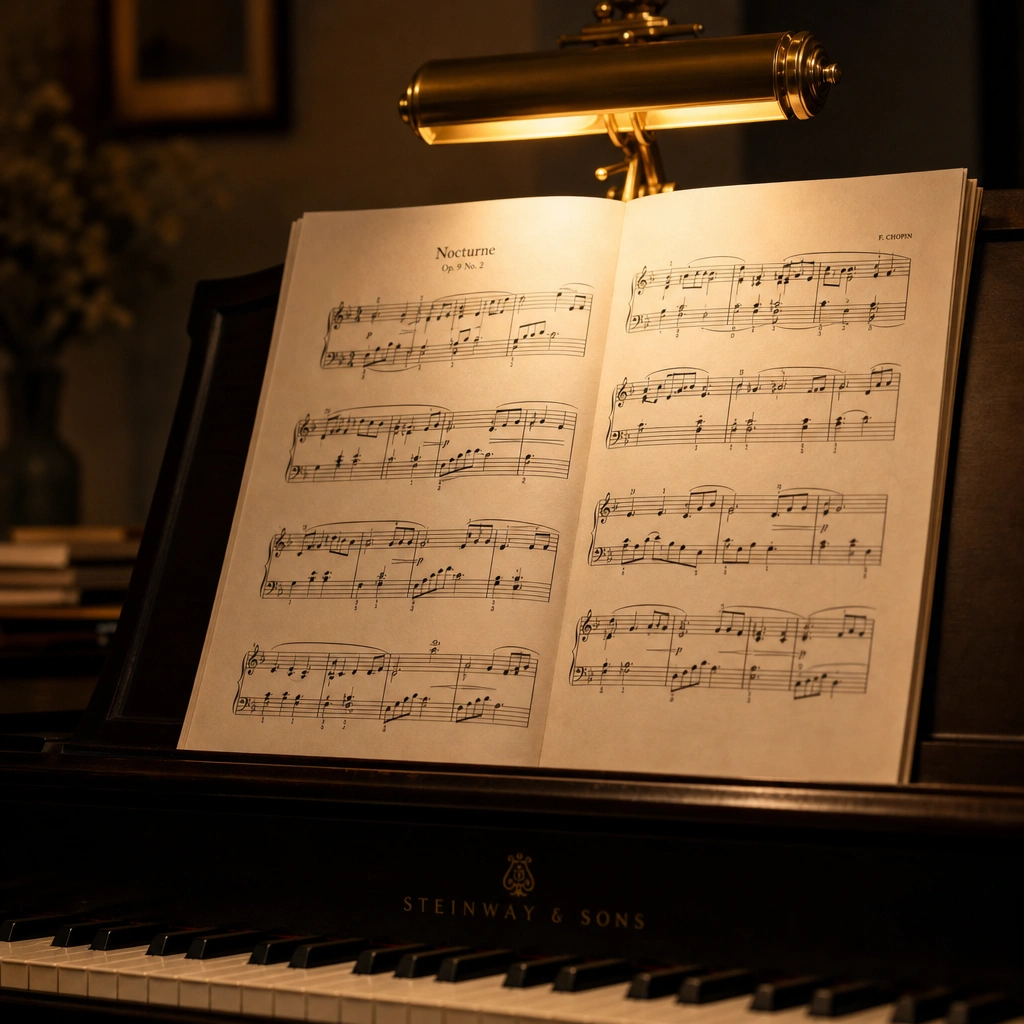
This response helped our ancestors escape predators, but it’s less helpful when you need delicate finger control for a Chopin nocturne. Understanding this biology is the first step in managing piano performance anxiety, because you realize your body isn’t malfunctioning—it’s just responding to perceived threat.
Common Mental Triggers
Several thought patterns intensify piano performance anxiety:
- Perfectionism: Believing you must play flawlessly or you’ve failed
- Catastrophizing: Imagining worst-case scenarios (forgetting the piece, public humiliation)
- Comparison: Measuring yourself against other performers
- External validation: Tying your self-worth to audience approval
- Inexperience: Fear of the unknown when you haven’t performed much
Many students I work with at Weaver Music discover that their piano performance anxiety actually has little to do with their playing ability. It’s rooted in these thought patterns, which means it can be addressed through specific mental strategies.
Preparation Strategies That Build Real Confidence
The foundation for managing piano performance anxiety is laid weeks before the performance. Thorough preparation doesn’t just improve your playing—it gives you genuine confidence that withstands pressure.
Master Your Piece Beyond Performance Level
I tell my students to prepare their recital piece to about 120% of what they need. If you can play it perfectly in your studio, you might manage 80% of that quality under performance stress.
But if you’ve practiced it until you can play it in your sleep, that 80% will still sound great.
This means continuing work on a piece long after you can “play it through.” Polish every phrase, nail every transition, and practice until your fingers know the music so deeply that even when your conscious mind panics, muscle memory carries you through.
Simulate Performance Conditions
Piano performance anxiety spikes when the performance environment feels unfamiliar. Combat this by recreating performance conditions during practice:
- Play through your piece without stopping, even if you make mistakes
- Practice on different pianos when possible
- Record yourself and listen back
- Perform for family members or friends
- Practice in “concert dress” if your outfit might affect your playing
- Stand up, bow, sit down, and begin—practice the whole ritual
At Weaver Music, I encourage students to schedule mini-performances during their practice routine. Even playing for your cat while imagining an audience helps your brain normalize the performance experience.
Develop a Pre-Performance Routine
Athletes use pre-performance routines to trigger focus and calm. Pianists can too. Create a sequence you do before every practice run-through and every actual performance.
This might include specific stretches, breathing patterns, or mental visualization.
When piano performance anxiety rises before a recital, this familiar routine signals to your brain: “We’ve done this many times before. We know what to do.” The familiarity itself is calming.
Understanding the Practice-Performance Connection
Research from the American Psychological Association shows that performance anxiety decreases significantly when musicians practice under varied conditions rather than only in comfortable settings.
This means occasionally practicing when you’re tired, in different rooms, or with minor distractions present.
The more your practice incorporates variety and challenge, the more adaptable you become under pressure. Your brain learns that it can play this piece under different circumstances, which builds genuine resilience against piano performance anxiety.
Physical Techniques to Calm Your Body
When piano performance anxiety triggers physical symptoms, you need tools to bring your body back to baseline. These techniques work because they directly influence your nervous system.
Breathing Exercises That Actually Help
Controlled breathing is one of the fastest ways to signal safety to your nervous system. When you’re anxious, breathing becomes shallow and rapid. Deliberately slowing it down tells your brain the threat has passed.
Try box breathing: Inhale for four counts, hold for four, exhale for four, hold for four. Repeat five times.
I’ve seen students go from shaking hands to steady calm in just two minutes using this technique backstage.
Another effective approach is the 4-7-8 breath: inhale for four counts, hold for seven, exhale slowly for eight. The extended exhale activates your parasympathetic nervous system, the “rest and digest” mode that counteracts anxiety.
Progressive Muscle Relaxation
Piano performance anxiety often manifests as tension—tight shoulders, clenched jaw, rigid fingers. Progressive muscle relaxation teaches you to recognize and release this tension.
Starting at your toes, deliberately tense each muscle group for five seconds, then release and notice the difference. Work up through your legs, torso, arms, hands, neck, and face.
This practice helps you identify where you hold tension and consciously let it go.
Before a performance, a quick version focusing just on your shoulders, arms, and hands can make an immediate difference in your playing comfort.
Physical Warm-Up Routines
Never go into a performance cold. A physical warm-up serves multiple purposes: it prepares your muscles, occupies your anxious mind, and establishes your routine. Your warm-up might include:
- Gentle hand and wrist stretches
- Shoulder rolls and neck stretches
- Playing scales or arpeggios (not your performance piece)
- Simple exercises to get blood flowing to your fingers
Many pianists find that establishing a consistent warm-up routine helps manage piano performance anxiety by giving them something concrete to focus on rather than spiraling worry.
The Role of Physical Health
Your overall physical condition affects how intensely you experience piano performance anxiety. Regular exercise, adequate sleep, and proper nutrition all contribute to a more resilient nervous system.
According to research published in the National Institutes of Health, regular aerobic exercise can reduce general anxiety levels by up to 20%, which translates to lower baseline anxiety when you approach performances.
You don’t need to become an athlete, but basic self-care genuinely impacts your ability to manage performance nerves.
Learning this goes faster with a teacher watching your hands. Your first 30-minute lesson with Austin is free — no card, no pressure.
Mental Approaches That Actually Work
Physical techniques help, but piano performance anxiety lives primarily in your mind. These mental strategies address the root of the problem.
Reframe Your Relationship with Mistakes
Much of piano performance anxiety comes from fear of mistakes. But here’s the truth: every performer makes mistakes. Every single one.
The difference is how they respond.
Professional pianists develop the skill of recovering smoothly when something goes wrong. They don’t stop, grimace, or apologize—they keep the musical line going and most audience members never notice.
Practice making intentional mistakes during run-throughs, then continuing without breaking character. This sounds strange, but it’s incredibly liberating. When you know you can recover from errors, they become much less frightening.
Students in my lesson plan often tell me this single shift—from “mistakes are disasters” to “mistakes are manageable”—transforms their relationship with piano performance anxiety.
Visualization and Mental Rehearsal
Your brain doesn’t fully distinguish between vividly imagined experiences and real ones. This means mental rehearsal creates real neural pathways.
Spend time visualizing your performance from start to finish. Imagine walking to the piano, feeling the bench beneath you, seeing the keys, and hearing yourself play beautifully.
Include sensory details—the temperature of the room, the sound of your breathing, the satisfaction of a well-executed passage.
Also visualize handling challenges. Imagine making a small mistake and recovering gracefully. Picture piano performance anxiety symptoms arising—and then using your breathing technique to calm down.
Mental rehearsal of both success and recovery builds comprehensive confidence.
Shift Your Focus from Self to Music
Piano performance anxiety intensifies when you’re focused on yourself: “How do I look? What are they thinking? Am I good enough?” This self-focused attention creates a vicious cycle of anxiety.
Instead, commit to serving the music. Your job isn’t to prove your worth or be perfect—it’s to share something beautiful.
When you shift focus from “me” to “the music,” the pressure transforms into purpose.
Before you perform, remind yourself: “I’m here to share this piece I’ve grown to love. The audience wants to receive it.” This subtle mental shift can dramatically reduce piano performance anxiety.
Cognitive Restructuring Techniques
Cognitive-behavioral approaches to piano performance anxiety involve identifying and challenging unhelpful thoughts. When you notice catastrophic thinking (“If I mess up, everyone will think I’m terrible”), deliberately counter it with evidence.
“I’ve recovered from mistakes before. Most audience members won’t notice small errors. My worth isn’t determined by one performance.”
This isn’t about positive thinking—it’s about realistic thinking. You’re training your brain to assess situations accurately rather than defaulting to worst-case scenarios.
Day-of-Performance Strategies
The day of your recital requires specific strategies to manage piano performance anxiety as it peaks.
Morning and Afternoon Preparation
How you spend performance day matters. Avoid over-practicing—this usually increases anxiety and tires your muscles. Instead:
- Play through your piece once or twice in the morning, slowly and mindfully
- Engage in calming activities—walk, read, listen to music you love
- Eat regular, balanced meals (skip heavy foods that make you sluggish)
- Stay hydrated but not over-caffeinated
- Avoid other pianists’ performances on YouTube—comparison fuels anxiety
One student told me she used to spend recital day frantically practicing, which amplified her piano performance anxiety. When she switched to one calm morning run-through followed by a nature walk, her performance quality improved dramatically.
Right Before You Perform
In the final minutes before your performance, piano performance anxiety may peak. Have a plan.
Find a quiet space if possible. Do your breathing exercises. Run through your pre-performance routine. Some pianists benefit from listening to their piece one final time; others prefer silence.
Know what works for you.
Importantly, accept the nervousness rather than fighting it. Tell yourself, “My body is energized and ready. This nervousness is excitement. It will help me play with intensity and focus.”
Research shows that reframing anxiety as excitement actually improves performance.
The Walk to the Piano
Your walk to the piano sets the tone. Move deliberately, not rushed. Breathe. Remind yourself of your intention—to share the music.
Settle at the bench without hurrying. Adjust if needed. Place your hands.
Before you begin, take one full breath. This pause—just three or four seconds—allows your nervous system to settle and signals to the audience that you’re in control. Then begin with commitment.
Many pianists battling piano performance anxiety rush this moment, starting before they’re truly ready. The pause is powerful.
Managing Unexpected Challenges
Sometimes performance day brings surprises: a different piano than you expected, an uncomfortably warm room, or an unexpected delay. Piano performance anxiety can spike when things don’t go as planned.
Build flexibility into your mental approach. Remind yourself that professional musicians perform under varied conditions all the time. Your preparation is solid enough to handle variations.
Having a flexible mindset—”I can adapt to whatever comes”—reduces the impact of surprises on your nerves.
After the Performance: Learning and Growing
How you process a performance affects your future relationship with piano performance anxiety.
Realistic Self-Assessment
After performing, your brain may fixate on mistakes while ignoring everything that went well. This negativity bias is normal but unhelpful.
Deliberately practice balanced assessment. Write down three things that went well and one or two things to improve next time.
Notice what you did right—maintained tempo through a tricky section, recovered smoothly from a memory slip, connected emotionally with the music.
In my experience teaching at Weaver Music, students who practice this balanced reflection develop much healthier relationships with performance than those who focus only on what went wrong.
Gathering Useful Feedback
If you’re working with a teacher, discuss the performance. At Weaver Music, I help students process performances during their lessons, identifying both strengths and specific areas to address.
Audience feedback can be tricky—people are usually kind but vague (“Great job!”). The most useful feedback comes from musicians who can offer specific observations while remaining supportive.
Planning Your Next Performance
One of the best ways to overcome piano performance anxiety is to perform regularly. Each performance provides data and experience that inform the next one.
Don’t wait a year between performances. Look for lower-stakes opportunities: play at an open mic, perform for a community group, organize a small house concert, or even go live on social media.
Frequency builds comfort.
The students I work with who perform every few months develop resilience around piano performance anxiety that those who perform once yearly never quite achieve. Exposure is genuinely therapeutic.
Celebrating Progress, Not Just Perfection
Each performance is a learning opportunity. Maybe this time you managed your breathing better than last time. Perhaps you recovered more smoothly from a mistake. Or you simply felt more present with the music.
These incremental improvements matter. Celebrating them reinforces positive patterns and gradually reshapes your relationship with piano performance anxiety.
Long-Term Solutions for Piano Performance Anxiety
While the strategies above help with specific performances, addressing piano performance anxiety in the long term requires deeper work.
Build Performance Into Regular Practice
Make performance mode part of your regular practice routine, not something you only do right before a recital. Once or twice a week, do a complete run-through as if you’re performing.
Some pianists even dress up for these practice performances.
This regular exposure normalizes the performance state. Your brain stops treating it as a rare, threatening event and starts seeing it as just another thing you do.
Address Underlying Perfectionism
If piano performance anxiety is severe and persistent, it may be rooted in perfectionism or deeper self-worth issues. This is common among serious musicians and nothing to be ashamed of.
Working with a teacher who understands these dynamics can help. In my free 30-minute trial lessons, I often discuss not just technique but the mental game of piano playing, because the two are inseparable.
For some pianists, working with a therapist alongside a piano teacher provides the most comprehensive support for piano performance anxiety. Cognitive-behavioral therapy has strong research support for performance anxiety specifically.
Develop Multiple Identities
When your entire self-worth rests on piano performance, the stakes of any single recital become unbearably high. Piano performance anxiety often decreases when you cultivate a rich life with multiple sources of meaning and accomplishment.
You are not just a pianist. You’re also a friend, perhaps a parent, a professional in another field, someone with hobbies and interests beyond music.
This broader identity provides perspective: a less-than-perfect recital doesn’t define you.
I’ve written before about why students quit piano, and often it’s because the pressure became too intense. Keeping piano in healthy perspective—something you love and work hard at, but not the sole source of your worth—actually improves both your enjoyment and your performance.
Understand That Growth Takes Time
Managing piano performance anxiety is a skill like any other—it develops with practice over time. Your first few performances might still involve significant nerves. That’s okay.
Each one teaches you something.
Be patient with yourself. Notice the small improvements: “Last time my hands shook through the whole piece; this time they settled after the introduction.” Progress isn’t always linear, but it is real.
Students who work with me long-term, whether through online courses or regular Zoom lessons, consistently report that piano performance anxiety diminishes as they gain experience and implement these strategies.
It’s not about becoming fearless—it’s about becoming capable even in the presence of fear.
Consider the Role of Preparation Consistency
Inconsistent practice schedules often worsen piano performance anxiety because you’re never quite sure how prepared you really are. When you maintain a steady practice routine, you build reliable competence that withstands pressure.
Many adult students benefit from structured approaches to practice. I’ve found that students who follow a consistent schedule—even if it’s just 20-30 minutes daily—report less anxiety than those who cram before performances.
Know When to Seek Additional Support
For most pianists, the strategies in this article will significantly reduce piano performance anxiety. But if your anxiety is severe—causing panic attacks, making you avoid all performance opportunities, or significantly impacting your quality of life—consider seeking support from a mental health professional who specializes in performance anxiety.
There’s no shame in this. Professional athletes, actors, and musicians often work with sports psychologists or therapists to optimize their performance mindset.
You deserve the same level of support.
Additionally, working with an experienced teacher can make a tremendous difference. At Weaver Music, I’ve helped hundreds of students work through piano performance anxiety, and because every lesson is live over Zoom, location is rarely a barrier.
The investment in quality instruction—$99 for a 60-minute lesson—often pays dividends in both your playing and your confidence.
The Power of Community and Shared Experience
Connecting with other pianists who understand piano performance anxiety can be remarkably healing. You realize you’re not alone in this struggle, and you can learn from how others manage their nerves.
Consider joining piano groups, online forums, or attending masterclasses where performance anxiety is discussed openly. The more normalized these conversations become, the less shame and isolation you’ll feel around your own experience.
Celebrate the Courage It Takes
Finally, recognize that stepping onto a stage or even performing for a small group requires genuine courage. Piano performance anxiety is your brain trying to protect you from perceived threat.
The fact that you do it anyway—that you share your music despite the fear—is worthy of respect.
Every performance, regardless of outcome, is an act of vulnerability and bravery. Over time, as you implement these strategies and gain experience, piano performance anxiety typically lessens.
But even if it doesn’t disappear entirely, you’ll develop the skills to perform well anyway.
That’s the real goal: not to eliminate fear, but to make music regardless. And that’s absolutely achievable for every pianist willing to do the work.
Ready to find out for yourself?
Your first 30-minute lesson with me is completely free – we will evaluate where you are, talk through your goals, and map out your path.