
I’ve been teaching piano for over a decade now, and I’ve watched hundreds of students walk through my studio door with bright eyes and big dreams. Some of them are still playing years later. Others quit within months. The difference between these two groups isn’t talent—it’s almost never about talent. Understanding why students quit piano is the first step to making sure you don’t become another statistic.
Here’s what I’ve learned from years in the trenches: why students quit piano usually comes down to seven specific, fixable problems. And once you know what they are, you can build guardrails to keep yourself on track.
The short answer
Why students quit piano boils down to a handful of predictable patterns: unrealistic expectations about how fast they should progress, boring music that doesn’t excite them, crushing guilt about not practicing “enough,” no clear learning path, feeling isolated in their journey, overwhelming life schedules, or studying with the wrong teacher. The good news? Every single one of these issues is solvable with the right approach.
Unrealistic expectations about progress
This is the number one reason why students quit piano in my experience. They walk in expecting to play Chopin in six months, or they watch YouTube videos of eight-year-old prodigies and think that’s the normal pace of learning.
Let me be honest with you: learning piano is a marathon, not a sprint. Most adults need 1-2 years of consistent practice to feel truly comfortable at the instrument, and that’s perfectly normal. When students don’t know this going in, they hit the three-month mark, realize they’re not concert-ready, and assume they’re failing.
Here’s how to fix this trap before it catches you:
- Set micro-goals instead of fantasy outcomes. “I want to play one verse of this song smoothly” beats “I want to be amazing.”
- Track your progress weekly. Record yourself or keep a practice journal so you can see how far you’ve actually come.
- Remember that every professional pianist was once exactly where you are now, stumbling through their first scales.
- Celebrate small wins. Nailed that tricky measure? That’s worth acknowledging.
When I work with students at Weaver Music, we spend time in the free 30-minute trial lesson talking about realistic timelines. I want every student to know what to expect so they don’t quit out of discouragement when they’re actually progressing beautifully.
The comparison trap
Social media makes this worse. You see someone’s polished performance and don’t see the ten years of work behind it. You compare your beginning to someone else’s middle, and of course you feel inadequate. This is why students quit piano before they’ve given themselves a real chance.
The antidote? Compare yourself only to past you. Are you better than you were last month? Then you’re winning.
Progress at the piano is rarely linear. Some weeks you’ll feel like you’re flying. Other weeks you’ll struggle with passages you thought you’d mastered. This is completely normal and doesn’t mean you’re not improving. Your brain is consolidating skills even when it doesn’t feel like forward movement.
Boring repertoire that doesn’t inspire
I cannot tell you how many students have come to me burned out because their previous teacher made them play nothing but exercises and classical pieces they didn’t connect with. Yes, technique matters. But why students quit piano often has nothing to do with ability—it’s about interest.
If you hate every piece you’re working on, you won’t practice. And if you don’t practice, you won’t improve. It’s that simple.
Here’s my philosophy: you should genuinely like at least 80% of what you’re playing. That might mean pop songs, jazz standards, movie themes, hymns, video game music—whatever lights you up. There’s a way to build solid technique while playing music you actually want to hear.
At Weaver Music, our four-level lesson path includes diverse repertoire precisely because I’ve seen too many students quit from boredom. Your practice time should feel like a gift you give yourself, not a chore.
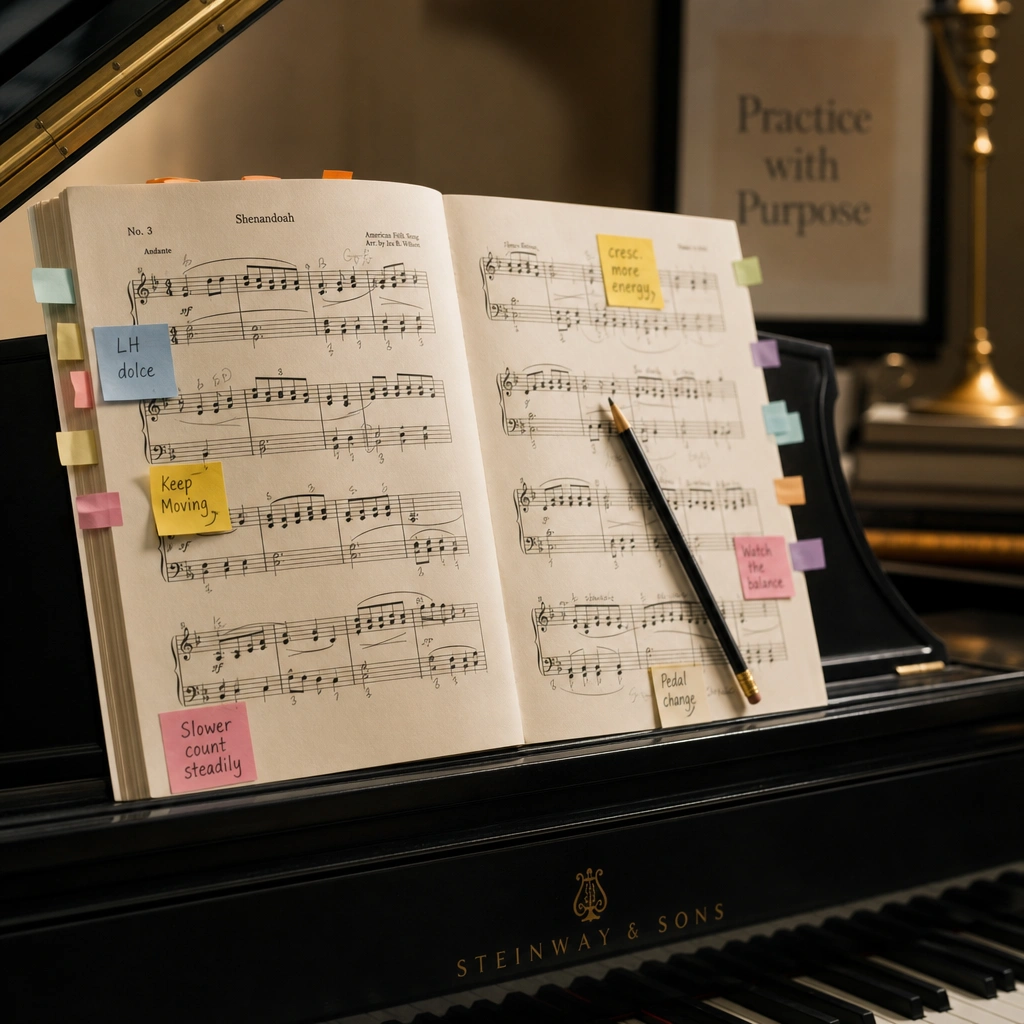
How to choose better music
- Make a list of ten songs you wish you could play. Share it with your teacher.
- Don’t wait until you’re “good enough” for fun music. Simplified versions exist for nearly everything.
- Balance your practicing: one technique piece, one piece you love.
- If you’re dreading sitting down at the piano, your repertoire choices are probably the problem.
The beauty of modern piano teaching is that we have access to arrangements at every level. That song you love from a movie soundtrack? There’s probably a beginner version, an intermediate version, and an advanced version. You don’t have to wait years to play music that moves you.
Practice guilt and the all-or-nothing trap
This one breaks my heart because it’s so unnecessary, yet it’s a massive reason why students quit piano. Here’s how it goes: Life gets busy. You miss a few practice sessions. You feel guilty. That guilt makes sitting down at the piano feel bad instead of good. So you avoid it more. The guilt compounds. Eventually you just… stop.
I’ve seen this cycle destroy more piano journeys than actual lack of time ever could. The belief that you need to practice an hour a day or you’re failing is toxic and false.
Here’s the truth: ten minutes of practice is infinitely better than zero minutes. Five minutes is better than zero. Even just sitting down and playing through one song you already know—with no “work” at all—keeps your relationship with the piano alive.
Building a sustainable piano practice schedule means letting go of perfectionism. Some weeks you’ll practice five days. Some weeks you’ll practice two. Both are fine. Progress isn’t linear, and consistency doesn’t mean perfection.
Reframing practice
Instead of “I should practice an hour a day” (which triggers guilt), try “I’ll spend whatever time I have at the piano, even if it’s just a few minutes.” This mindset shift has saved countless students from quitting.
When my students tell me they didn’t practice much, I never scold them. We just look at what’s realistic for their life right now and adjust. Piano should add joy to your life, not stress. Understanding why students quit piano often comes down to this: they made it a source of shame instead of pleasure.
The students who succeed long-term are the ones who give themselves permission to have imperfect practice weeks. They understand that maintaining the habit—even in a minimal way—is more valuable than perfect execution followed by burnout.
No clear path or structured learning plan
Wandering around without a map is exhausting. Not knowing what to practice next, or whether you’re learning things in the right order, creates decision fatigue. And decision fatigue leads to avoidance. This is another major reason why students quit piano.
Self-taught students hit this wall constantly. They learn a couple of YouTube tutorials, then don’t know where to go next. Should they learn theory? More songs? Scales? The paralysis of choice becomes overwhelming.
Here’s what helps:
- Work with a teacher who lays out a clear curriculum so you always know what comes next.
- Use a structured method book or course that builds skills sequentially.
- Keep a running “next steps” list so you never sit down at the piano wondering what to do.
- Break big goals into specific weekly targets.
In my lessons—whether through in-person sessions in the Bay Area or Zoom lessons worldwide—we always end by clarifying exactly what to focus on before the next session. That clarity eliminates the “what now?” friction that makes people quit.
A four-level lesson path, like the one we offer at Weaver Music, can provide that structure even between live lessons. You know exactly what level you’re at and what skill comes next.
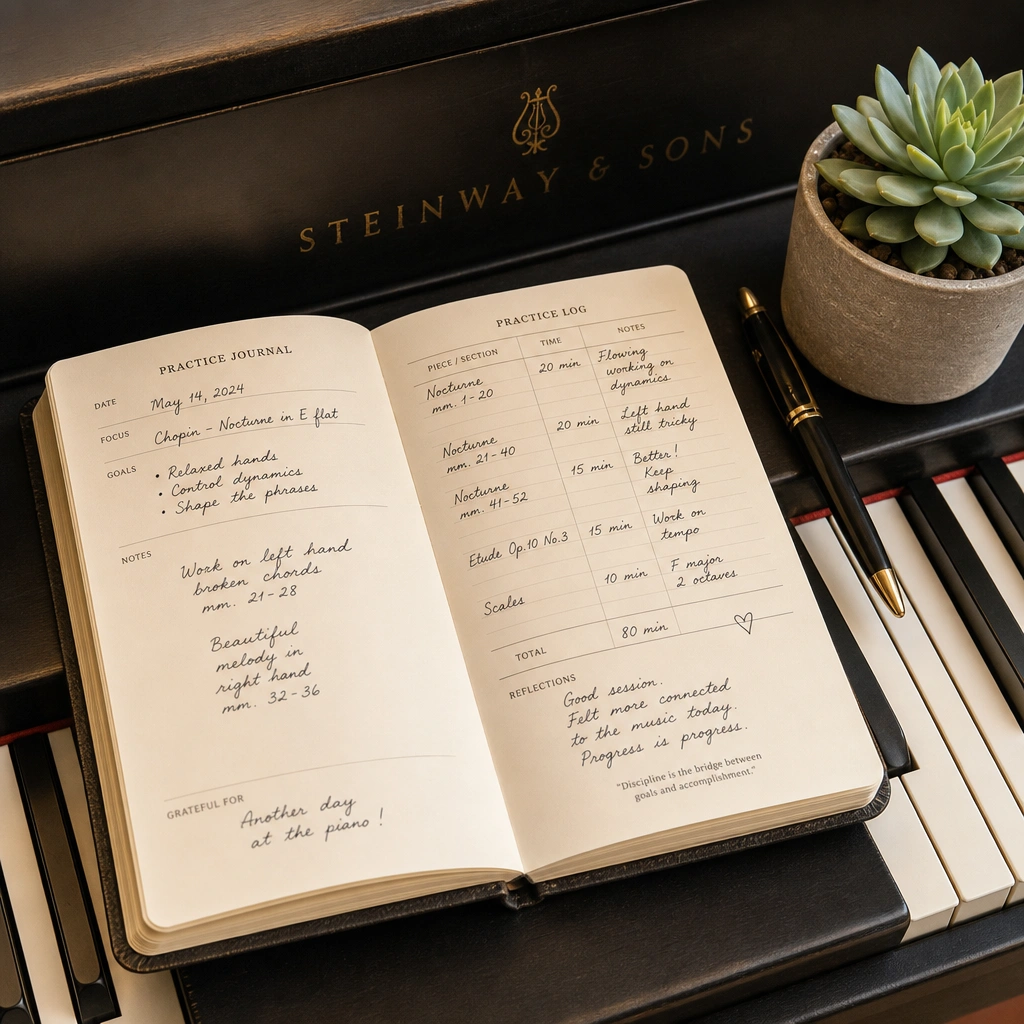
Why students quit piano without structure
Without a clear path forward, piano practice becomes a guessing game. You might spend weeks on skills that aren’t appropriate for your level, or skip fundamental concepts that leave gaps in your playing later. A structured approach ensures you’re building a solid foundation while steadily expanding your abilities.
Think of learning piano like building a house. You need to pour the foundation before you frame the walls. You need to frame the walls before you put on the roof. Skipping steps or doing things out of order creates problems down the line. A good teacher or structured course keeps you building in the right sequence.
Learning this goes faster with a teacher watching your hands. Your first 30-minute lesson with Austin is free — no card, no pressure.
Isolation and lack of accountability
Learning piano can feel lonely. You’re in a room by yourself, making mistakes no one else hears, with no one to celebrate your breakthroughs. This isolation is genuinely one of the reasons why students quit piano, especially adults who don’t have the built-in community of a school music program.
Humans are social creatures. We’re motivated by connection, encouragement, and gentle accountability. When you’re studying alone with no one checking in, it’s easy to let weeks slip by without touching the keys.
Building community and accountability
- Find a teacher you connect with. A real person who knows your name and asks about your progress creates natural accountability.
- Share your playing with friends or family, even if it’s imperfect. Vulnerability builds momentum.
- Join online piano communities or local groups where you can share your journey.
- Consider regular lessons instead of sporadic ones. Online piano lessons can be just as effective as in-person for creating that teacher-student connection.
- Record videos of your progress and share them (even privately) with someone who’ll cheer you on.
At Weaver Music, my goal is to be more than just a technique instructor. I’m your cheerleader, your accountability partner, and your guide. At $99 per 60-minute lesson, you’re investing not just in instruction but in a relationship that keeps you motivated when the going gets tough.
Why students quit piano often traces back to feeling like they’re in it alone. You don’t have to be.
Even small connections make a difference. Telling someone “I’m working on this piece” creates a sense of accountability. Having someone to text when you finally nail that tricky section gives you a reason to celebrate. These human connections transform piano from a solitary struggle into a shared journey.
Life overwhelm and schedule chaos
Let’s be real: life is chaotic. Work deadlines, family obligations, health issues, travel, exhaustion—these are all legitimate challenges. And yes, they’re among the reasons why students quit piano. But here’s the distinction that matters: life chaos doesn’t have to mean quitting. It just means adapting.
The students who stick with piano long-term aren’t the ones with the most free time. They’re the ones who’ve learned to flex with their seasons of life instead of giving up entirely when things get hard.
Strategies for chaotic seasons
- Scale back instead of stopping. If you can’t practice daily, practice twice a week. Still counts.
- Take intentional breaks when needed. A planned two-week pause is different from guilt-quitting.
- Keep your keyboard or piano in a visible, accessible spot. The easier it is to sit down, the more likely you will.
- Let go of the practice schedule you “should” have and embrace the one that’s actually possible right now.
- Communicate with your teacher. We’d rather help you find a sustainable pace than watch you disappear.
I’ve worked with parents of newborns, graduate students during finals, and people navigating career changes. We adjust. Sometimes that means shorter lessons, less frequent check-ins, or focusing on just one simple piece for a while. The key is not letting a rough month turn into permanent quitting.
Understanding why students quit piano includes recognizing that overwhelm is often temporary—but quitting feels permanent. Don’t make a permanent decision based on a temporary season.
One of my adult students is a busy executive who travels frequently for work. Some months he practices consistently. Other months he barely touches the keys. But he hasn’t quit. We adjust his lesson schedule around his travel, and when he has a light practice month, we review fundamentals or work on sight-reading skills that don’t require hours of preparation. He’s been studying with me for five years now because we’ve made piano fit his life, not the other way around.
The wrong teacher fit
This is uncomfortable to talk about, but it’s important: sometimes why students quit piano is simply because they’re studying with the wrong teacher. Not a bad teacher—just the wrong fit for their personality, goals, or learning style.
Maybe you need someone more patient, or more challenging. Maybe you need a teacher who focuses on classical technique, or one who’s flexible with pop and jazz. Maybe you need someone who’s warm and encouraging, or someone who pushes you harder. None of these preferences are wrong—but a mismatch can kill your motivation.
I’ve had students come to me after quitting with a previous teacher, and they flourish because the teaching style finally clicks. I’ve also had students realize they need something I don’t offer, and I help them find a better match. That’s not failure—that’s wisdom.
Signs you might need a different teacher
- You dread lessons instead of looking forward to them.
- Your teacher dismisses your musical goals or interests.
- You feel talked down to or not taken seriously.
- There’s no clear plan or structure to your lessons.
- You’re not seeing any progress after several months of consistent work.
- The teaching style simply doesn’t match how you learn best.
At Weaver Music, I offer a free 30-minute trial lesson specifically so we can both assess fit before committing. I teach students of all ages and levels, from total beginners to advanced players, but I’m not the right teacher for everyone—and that’s okay. The important thing is finding someone who makes you want to keep playing.
According to music education research, the student-teacher relationship is one of the strongest predictors of long-term persistence in music study. It matters more than talent, more than the quality of the instrument, more than almost anything else. So if the fit isn’t right, don’t quit piano—just find a different guide.
Age and expectations
It’s worth noting that the best age to start piano lessons is whenever you’re motivated to learn. I’ve taught six-year-olds and sixty-year-olds. Both can succeed beautifully. But they need different approaches. A teacher who specializes in young children might not be the best fit for an adult learner, and vice versa. Make sure your teacher has experience with your age group and learning context.
Adult learners often have different priorities than children. They want to understand the “why” behind techniques. They have specific songs they want to learn. They’re fitting lessons around demanding schedules. They need a teacher who respects their goals and time constraints, not someone trying to recreate a childhood lesson model that doesn’t apply.
What keeps students playing for years
After watching hundreds of students over the past decade, I can tell you what the long-term players have in common. It’s not perfect pitch or natural rhythm. It’s not even consistent practice, though that helps.
The students who stick with piano have learned to:
- Set realistic expectations and celebrate incremental progress
- Choose music they genuinely love playing
- Let go of practice guilt and embrace imperfect consistency
- Follow a clear learning path with guidance
- Build accountability and community around their playing
- Adapt their practice to life’s seasons instead of quitting when things get hard
- Find a teacher who’s the right fit for their goals and personality
These aren’t secrets. They’re not complicated. But they make all the difference between someone who plays for a few months and someone who’s still at the piano ten years later.
Why students quit piano is almost never about lack of talent or ability. It’s about hitting one of these seven roadblocks and not knowing how to navigate around it. Now you know. And knowing is half the battle.
The other half? Taking action. Adjusting your approach. Asking for help when you need it. Being honest about what’s working and what’s not. Giving yourself permission to learn at your own pace, in your own way, with music you actually care about.
I’ve built Weaver Music around these principles. Whether you’re joining me for lessons in the Bay Area or connecting via Zoom from anywhere in the world, my teaching is rooted in patience, practicality, and keeping you motivated for the long haul. Every student gets access to our four-level lesson path to supplement lessons, and we work together to build a practice approach that fits your real life.
You don’t have to be another statistic. You don’t have to be someone who “used to play piano.” With the right approach, support, and mindset, you can be someone who’s still playing—and loving it—years from now.
Understanding why students quit piano gives you the power to avoid those pitfalls. You know what to watch for now. You know the warning signs. And you know that every single obstacle has a solution. The question is: what will you do with that knowledge?
The difference between students who quit and students who thrive often comes down to one decision: choosing to see obstacles as problems to solve rather than signs to give up. When progress feels slow, they adjust expectations instead of quitting. When repertoire gets boring, they communicate with their teacher and find better music. When life gets chaotic, they scale back instead of stopping entirely.
Piano playing is a skill that can bring joy for a lifetime. I have students in their seventies who are still learning new pieces, still experiencing the thrill of mastering something challenging, still finding comfort and expression at the keyboard. That could be you in five years, ten years, or fifty years—if you commit to pushing through the predictable challenges instead of letting them end your journey.
The most important thing I can tell you is this: why students quit piano is predictable, but so is success. The students who make it are the ones who keep showing up, even imperfectly. They miss practice days but return anyway. They struggle with difficult passages but don’t interpret struggle as failure. They communicate when something isn’t working and adjust course rather than abandoning ship.
You have everything you need to succeed at piano. The question isn’t whether you’re talented enough or dedicated enough. The question is whether you’ll recognize the common pitfalls, build strategies to navigate them, and give yourself the grace to learn at a human pace.
Ready to find out for yourself?
Your first 30-minute lesson with me is completely free – we will evaluate where you are, talk through your goals, and map out your path.

Leave a Reply