Piano Practice Schedule for Adults: 5 Proven Strategies to Make Real Progress

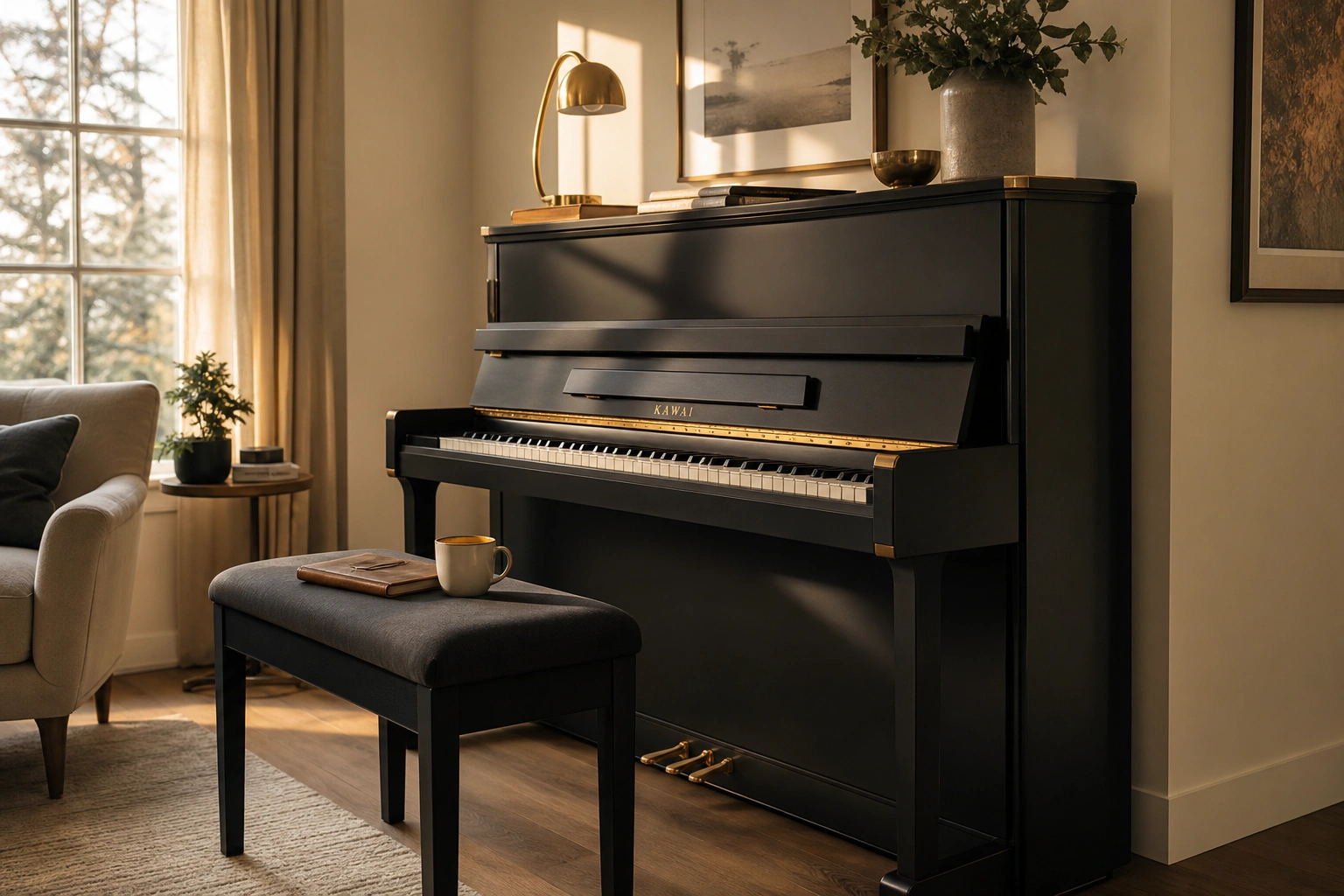
Cozy home piano setup showing a realistic piano practice schedule for adults

If you’re a working adult trying to learn piano, you’ve probably discovered that the biggest challenge isn’t learning the notes—it’s finding time to practice. Creating a sustainable piano practice schedule for adults is the single most important factor in whether you’ll still be playing a year from now.

I’ve watched hundreds of adult students navigate this exact challenge over the past decade, and I can tell you with certainty: the students who succeed aren’t the ones with the most talent or the most time. They’re the ones with a realistic piano practice schedule for adults that fits their actual life.

The good news? You don’t need two hours a day. You don’t need perfect consistency. And you definitely don’t need to feel guilty about the practice you’re not doing. What you need is a framework that acknowledges your real constraints and works with them instead of against them.

The short answer

A realistic piano practice schedule for adults should include 15-30 minutes of focused practice, 4-5 days per week. Consistency matters more than duration.

Schedule practice at the same time each day when possible, focus on one or two specific goals per session, and build in flexibility for the inevitable disruptions of adult life. Most working adults see meaningful progress with 90-120 minutes of total practice per week.

That’s the framework. Now let me show you exactly how to make it work.

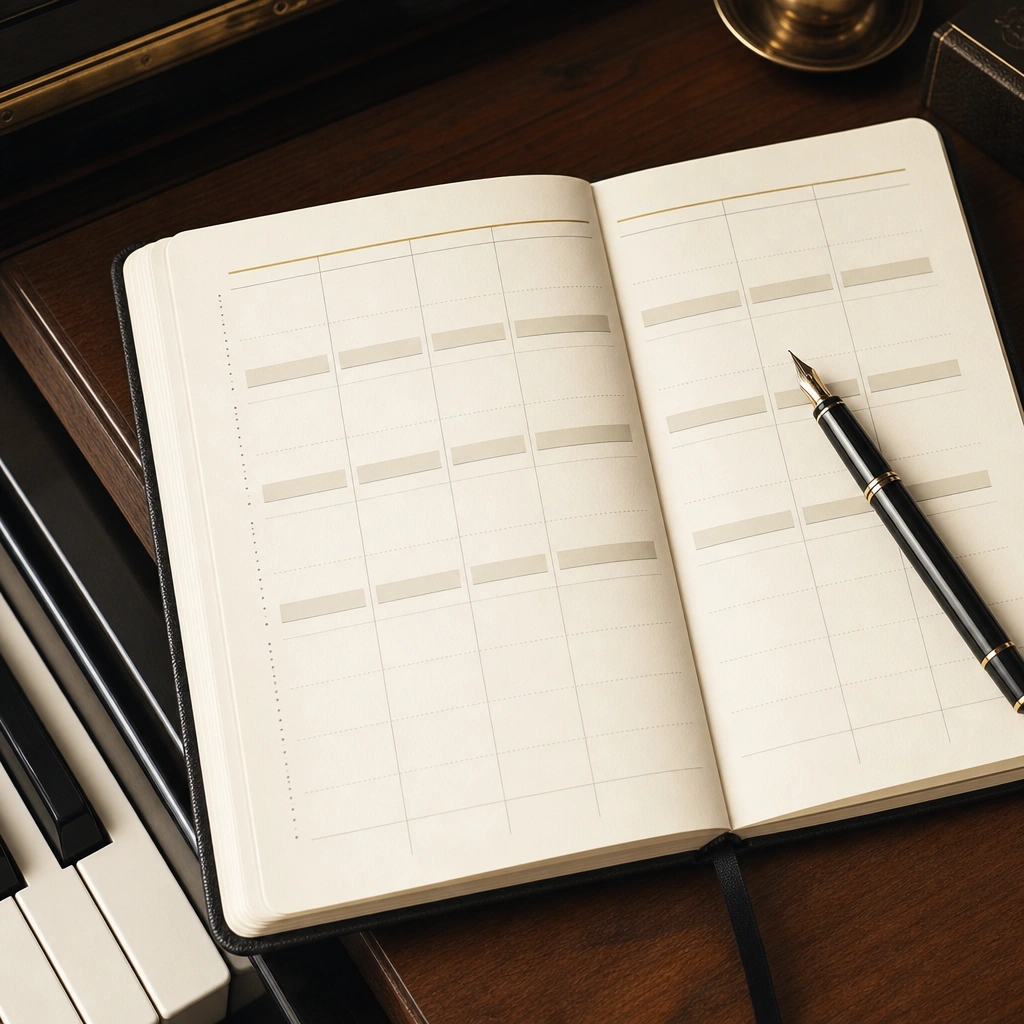
Weekly planner showing structured piano practice schedule for adults

Why most practice schedules fail for working adults

Before we build your schedule, let’s talk about why the typical advice doesn’t work. Most piano practice guidance is written for children with structured afternoons, or for conservatory students with practice rooms and flexible schedules. You have neither.

Here’s what I see fail repeatedly:

  • The “daily two-hour” fantasy – You’ll practice two hours every day after work. This lasts exactly three days before life intervenes.
  • The weekend warrior approach – Cramming all your practice into Saturday morning. Your brain needs regular reinforcement, not binge sessions.
  • The guilt-driven model – Every missed practice session becomes evidence that you’re failing. This emotional weight kills motivation faster than anything.
  • The all-or-nothing trap – If you can’t do a “full” practice session, you skip it entirely. Ten focused minutes is infinitely better than zero guilt-ridden minutes.

The fundamental issue: these approaches don’t account for decision fatigue, unexpected meetings, social obligations, or the simple fact that adults get tired. A working piano practice schedule for adults must be built on realistic assumptions about energy and time.

I learned this the hard way with my own students. Early in my teaching career, I’d assign practice plans that looked great on paper and failed spectacularly in practice. The students who stuck with piano weren’t following my elaborate schedules—they were doing something much simpler and more sustainable.

A realistic weekly piano practice schedule for adults

Here’s the framework that actually works. I’ve tested this with working professionals, parents, graduate students, and retirees. It’s flexible enough to adapt but structured enough to create real progress.

The foundation: four core sessions

Build your piano practice schedule for adults around four core practice sessions per week, 20-25 minutes each. These are your non-negotiables—the sessions you protect fiercely. Schedule them at consistent times when your energy and environment are most reliable.

For most working adults, this means:

  • Early morning before work (surprisingly effective once the habit forms)
  • Lunch break if you work from home
  • Evening slots before dinner or after kids’ bedtime
  • Weekend mornings when your mind is fresh

Twenty minutes feels achievable. You won’t skip it because it seems overwhelming. And when you sit down, you can actually focus for the entire duration without your attention fragmenting.

The buffer: one flex session

Add one flexible 15-30 minute session that floats through your week. This is your buffer for the week when Wednesday’s practice gets derailed by a work crisis. It’s also your opportunity to practice longer when inspiration strikes.

This flex session removes the all-or-nothing pressure. Miss a scheduled practice? You haven’t failed—you have a built-in recovery mechanism. Your piano practice schedule for adults should include this grace from the beginning.

The micro-sessions: optional daily touchpoints

Beyond your core sessions, consider 5-10 minute “touchpoints”—brief moments at the piano that maintain connection without requiring full focus. These aren’t structured practice. They’re musical snacks.

  • Running through a piece you already know
  • Improvising for five minutes
  • Sight-reading something easy and fun
  • Practicing one difficult measure from your current piece

These don’t replace core sessions, but they keep your fingers familiar with the keyboard and prevent the “starting from scratch” feeling when you return to structured practice.

Understanding your personal rhythm

One aspect of an effective piano practice schedule for adults that’s often overlooked is energy management. Pay attention to when you feel most mentally sharp during the day.

Some adults are morning learners—their brains absorb new material best between 6-9 AM. Others hit their cognitive peak in late afternoon or evening. There’s no universal “best” time to practice piano.

Track your energy levels for a week. Notice when you feel most patient, focused, and creative. Those are your golden hours for piano practice. Even if you only have 15 minutes during that window, it’s worth more than 45 minutes when you’re mentally depleted.

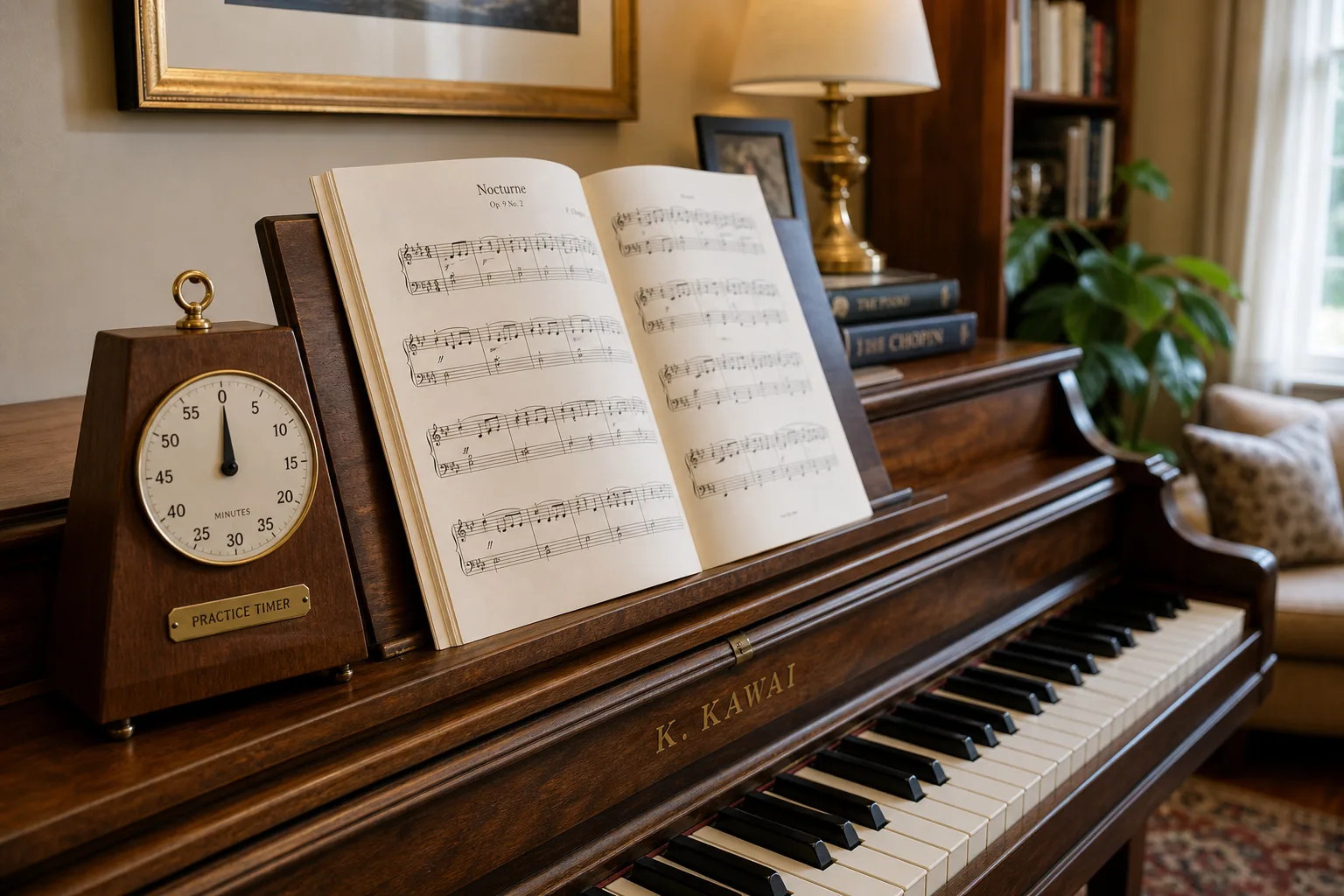
Close-up of piano practice session showing focused hand position and music

Five proven strategies that actually work

A piano practice schedule for adults needs more than time slots—it needs strategies that maximize your limited practice windows. Here are five approaches I’ve seen transform adult students’ progress.

1. Time-block specific skills

Don’t sit down to “practice piano.” That’s too vague and leads to aimless noodling. Instead, assign each session a specific focus before you sit down.

Example weekly breakdown:

  • Monday: Technique and warm-up exercises (scales, arpeggios, hand independence drills)
  • Wednesday: New material—learning new measures or sections
  • Friday: Problem-solving—drilling the difficult passages
  • Sunday: Performance practice—playing pieces all the way through

This approach creates measurable progress. You’re not just “practicing”—you’re solving specific problems and building specific skills. When each session has a clear purpose, you make decisions faster and waste less of your limited time figuring out what to work on.

2. Use the 70/20/10 rule

Divide your practice time across three categories:

  • 70% working on pieces at your current level
  • 20% reviewing easier pieces you’ve already learned
  • 10% exploring new, challenging material

This balance keeps practice satisfying (the 20% gives you wins), productive (the 70% creates steady progress), and exciting (the 10% stretches your abilities). Adults need all three to maintain motivation across months and years.

The review portion is especially important for adults. Unlike children who practice daily out of routine or requirement, adult learners need regular reminders of their competence. Playing through a piece you’ve mastered provides that psychological boost that keeps you coming back.

3. Practice in loops, not linear runthrough

Forget playing pieces from beginning to end repeatedly. That’s not efficient practice—it’s performance rehearsal disguised as practice. Instead, work in small loops.

Identify the 2-4 measure passage that’s causing problems. Play it five times slowly, focusing on accuracy. Take a 30-second break. Play it three times at tempo. Move to the next trouble spot.

This concentrated repetition rewires your muscle memory far faster than running through entire pieces. When you have only 20 minutes, this approach creates exponentially more progress than traditional beginning-to-end practice.

It’s the difference between vague familiarity and genuine mastery. Loop practice feels less satisfying in the moment—you’re not experiencing the flow of a complete piece. But over time, it builds the technical foundation that makes everything else possible.

4. Separate mental and physical practice

Not all practice happens at the piano. Some of the most valuable practice happens in your head during your commute, before bed, or during lunch.

Mental practice includes:

  • Visualizing finger movements and hand positions
  • Singing or humming your pieces away from the piano
  • Analyzing the structure and patterns in your music
  • Listening to professional recordings of pieces you’re learning

This isn’t a substitute for physical practice, but it’s a powerful supplement. Research in motor learning shows that mental rehearsal activates similar neural pathways as physical practice. For time-constrained adults, this is free progress.

I have students who spend 10 minutes during their morning commute visualizing their current piece. They arrive at their next physical practice session with clearer mental maps of what they’re trying to accomplish. The physical execution comes faster because the cognitive work is already done.

5. Schedule deload weeks

Every 6-8 weeks, plan a lighter practice week. Reduce your core sessions to 2-3, keep them short, and focus only on maintaining what you’ve built. No new material. No pressure.

This isn’t slacking—it’s strategic recovery. Your brain consolidates learning during rest periods. Plus, building in planned breaks prevents burnout and removes guilt when you need to pull back.

A sustainable piano practice schedule for adults acknowledges that consistency doesn’t mean identical effort every single week. Some weeks you push forward. Other weeks you hold steady. Both are necessary for long-term progress.

Sample schedules for different lifestyles

Theory is helpful, but let me show you what this actually looks like in practice. Here are three real-world schedules adapted from students I’ve worked with.

The full-time office worker

Sarah works 9-6 with a 45-minute commute. Her piano practice schedule for adults:

  • Tuesday, Thursday: 6:45-7:05 AM (before getting ready for work)
  • Saturday: 9:00-9:30 AM (with coffee, before errands)
  • Sunday: 7:30-7:55 PM (after dinner, before winding down)
  • Flex session: Wednesday or Friday lunch break if working from home

Total: 75-100 minutes weekly. Sarah has maintained this schedule for two years and has progressed from beginner to early-intermediate repertoire. She credits the morning sessions with creating momentum for her day.

What makes Sarah’s schedule work: She prepares everything the night before. Her practice book is open to the right page. Her coffee is on a timer. She eliminates all decision-making from those early morning minutes.

The parent with young children

Marcus has two kids under seven. His schedule is chaos, so his piano practice schedule for adults is built around the few predictable windows:

  • Monday, Wednesday, Friday: 5:30-5:50 AM (before kids wake up)
  • Saturday: During younger child’s nap time, 15-20 minutes
  • Micro-sessions: 5-10 minutes after kids’ bedtime when energy permits

Total: 60-90 minutes weekly. Marcus accepts that some weeks he’ll hit the lower end of that range. But he’s been playing for three years now, and the early-morning habit has become automatic—it’s the one part of his day that’s entirely his own.

Marcus uses headphones during early morning practice so he doesn’t wake the house. He’s discovered that this focused, solitary practice is not just about piano—it’s become his meditation practice and mental health strategy.

The variable-schedule professional

Jennifer is a nurse with rotating shifts. She can’t rely on consistent daily times, so her piano practice schedule for adults is structured by weekly targets rather than specific time slots:

  • Four 20-minute sessions distributed across the week
  • She schedules them each Sunday for the week ahead, based on her shift schedule
  • She protects post-day-shift afternoons (when she’s tired but has time before sleeping)
  • On night-shift weeks, she practices before leaving for work

Total: 80 minutes weekly. Jennifer’s progress is steady because she’s learned to adapt the framework to her schedule rather than fighting against her constraints.

Some weeks look totally different from others, but the total time remains consistent. She’s proven that you don’t need a routine schedule—you need a routine commitment.

The retiree with volunteer commitments

David retired two years ago and imagined he’d have unlimited practice time. In reality, he fills his days with volunteering, grandchildren, travel, and home projects. His piano practice schedule for adults needed structure just like everyone else’s:

  • Monday, Wednesday, Friday: 10:00-10:30 AM (after breakfast, before daily activities)
  • Tuesday, Thursday: 4:00-4:20 PM (late afternoon energy dip, perfect for sitting activity)

Total: 130 minutes weekly. David practices more than most of my adult students, but what’s interesting is that he still needs defined boundaries. Without structure, his days would fill with other activities and piano would get perpetually postponed.

The lesson: more available time doesn’t automatically equal more practice. A dedicated piano practice schedule for adults matters at every life stage.

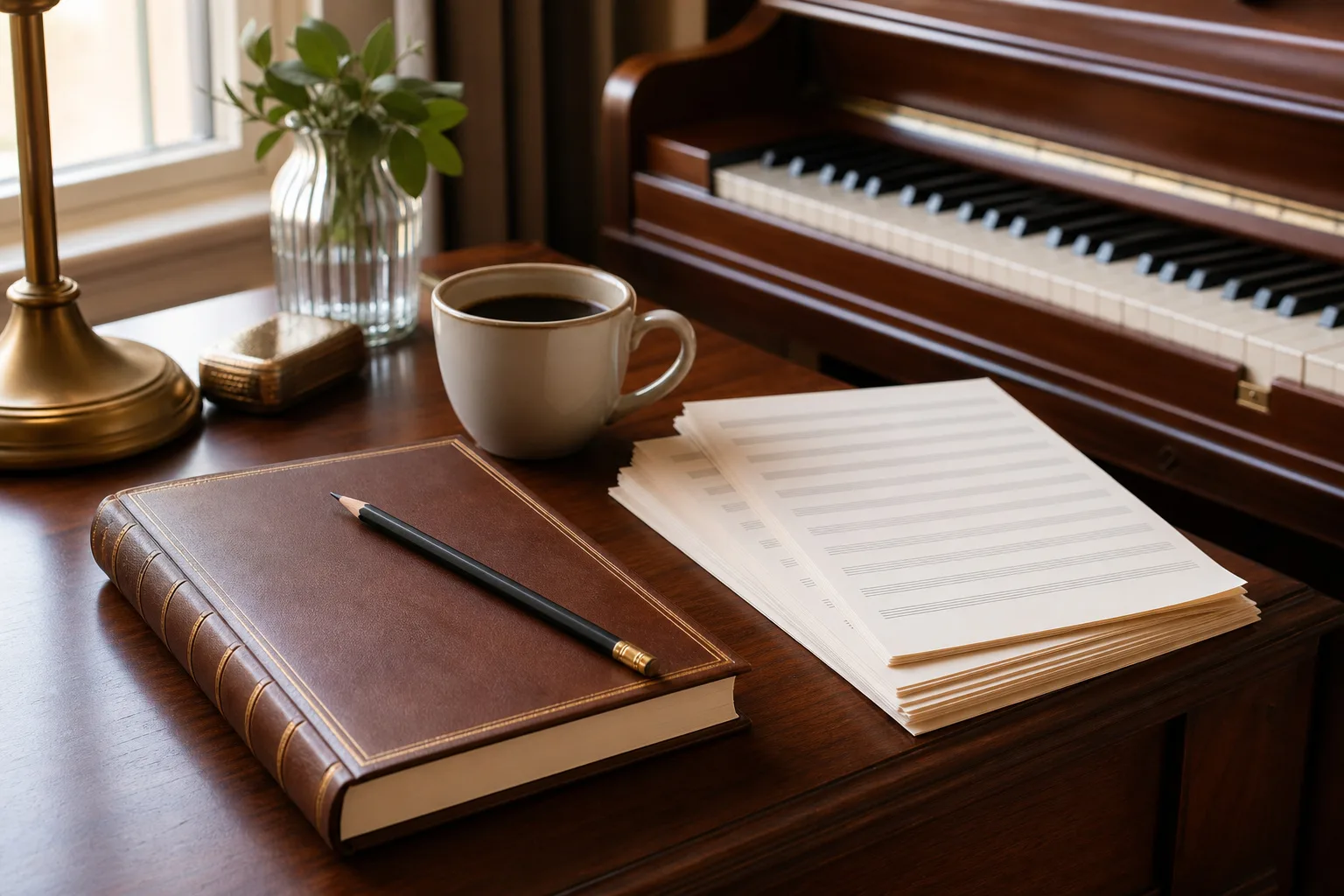
Practice journal on piano showing progress tracking for adult piano students

What to practice in limited time

When you only have 20 minutes, every choice matters. Here’s how to structure your sessions for maximum impact within a practical piano practice schedule for adults.

The session structure

A typical 20-25 minute session should break down roughly like this:

  • Minutes 1-3: Brief warm-up (scales, arpeggios, or finger exercises)
  • Minutes 4-8: Technical work on your current challenge area
  • Minutes 9-18: Focused work on repertoire (using loop practice)
  • Minutes 19-22: Play-through or review of easier material
  • Minutes 23-25: Sight-reading or exploration if time permits

This structure ensures you touch on multiple skill areas without fragmenting your focus. The bulk of your time goes to your primary learning goals, but you maintain well-rounded development.

What to cut when time is tight

When you only have 15 minutes, prioritize in this order:

  1. Problem areas in your current pieces (the measures you can’t play smoothly yet)
  2. New material you’re actively learning
  3. Technical exercises that support those pieces
  4. Everything else

Cut warm-ups, sight-reading, and easy review pieces when necessary. Those are valuable but not essential for progress. Focused work on your specific challenges is what moves you forward.

The one-goal session

When your schedule is especially compressed, use the one-goal approach. Pick a single specific objective and work on nothing else for the entire session:

  • “Today I’m getting measures 9-12 smooth at half tempo”
  • “Today I’m memorizing the right-hand melody of the B section”
  • “Today I’m drilling the chord transitions in measure 16”

This laser focus creates tangible progress. You end the session knowing exactly what you accomplished. Over time, these small victories compound into significant improvement.

Technical exercises that serve double duty

Choose technical work that directly supports the pieces you’re learning. If your current piece has lots of alberti bass patterns, practice alberti bass exercises. If you’re working on a piece with octave jumps, drill octave jumps as part of your warm-up.

This approach makes technical practice feel relevant rather than tedious. You’re not doing scales because some method book said you should—you’re building the specific skills your repertoire demands. For adults with limited time, this connection between technical work and musical goals is essential for maintaining motivation.

The power of slow practice

One of the biggest mistakes I see in adult learners is practicing too fast too soon. When time is limited, the temptation is to play at tempo to feel like you’re making progress. This is exactly backward.

Slow practice—playing at 50-70% of final tempo—builds accuracy into your muscle memory from the beginning. You’re teaching your hands the correct movements without reinforcing mistakes. This actually gets you to performance tempo faster than repeatedly stumbling through passages at full speed.

Set your metronome slower than feels comfortable. Play with perfect accuracy at that tempo. Only increase speed when you can play the passage correctly five times in a row. This methodical approach feels painfully slow in the moment, but it’s the fastest path to genuine mastery.

Tracking progress without obsessing

A piano practice schedule for adults should include some form of tracking—not to judge yourself, but to notice patterns and celebrate progress you might otherwise miss.

The simple practice log

Keep a basic log with three pieces of information:

  • Date and duration of practice
  • What you worked on (specific pieces or skills)
  • One sentence about progress or challenges

That’s it. This takes 30 seconds after each session and creates a record you can look back on. When you feel like you’re not improving, you can flip back three months and see concrete evidence of how far you’ve come.

I have students who use a simple notebook, a notes app on their phone, or a shared Google Doc we both reference during lessons. The format doesn’t matter—the habit of noticing does.

Monthly check-ins

Once a month, spend five minutes reviewing your log and asking:

  • Did I hit my target of 4-5 sessions most weeks?
  • Which pieces or skills saw the most progress?
  • What obstacles came up repeatedly?
  • What felt satisfying about my practice this month?

This reflection helps you adjust your piano practice schedule for adults based on real data rather than feelings. Maybe you discover that Sunday evening sessions consistently get skipped—time to move that slot. Maybe you notice you progress faster on pieces you mentally practice during your commute—time to do more of that.

Recording yourself

Every 4-6 weeks, record yourself playing your current pieces. Use your phone, keep it casual, don’t wait for perfection. Then file it away without obsessing over it.

Six months later, listen to those early recordings. The difference will be stunning—you’ll hear progress your day-to-day ear can’t detect. This is incredibly motivating during plateaus when you feel stuck.

Some of my students create a private YouTube or Google Drive folder with dated recordings. Looking back over a year of progress provides powerful evidence that consistent practice—even in small doses—creates real transformation.

Celebrating milestones

Build celebration into your tracking system. When you complete a piece, mark it somehow. Some students keep a “completed repertoire” list. Others treat themselves to a nice dinner when they finish a particularly challenging piece.

Adult learners are often so focused on the gap between where they are and where they want to be that they forget to acknowledge how far they’ve traveled. Deliberate celebration counteracts this tendency. It reinforces that your piano practice schedule for adults is working—even when progress feels slow.

When life disrupts your piano practice schedule for adults

You will have weeks when your piano practice schedule for adults falls apart. A work deadline will explode. Someone will get sick. You’ll travel for a wedding. This is normal, not failure.

The comeback protocol

When you’ve missed several practice sessions (or even several weeks), resist the urge to practice extra-long to “make up” for lost time. That’s a recipe for frustration and sloppy playing.

Instead, return with shorter, easier sessions:

  • Start with 10-15 minutes of easy material you already know
  • Gradually rebuild to your full session length over 3-4 practices
  • Temporarily lower your expectations for difficult passages
  • Focus on rebuilding the habit before worrying about progress

Think of this as a warm-up for your practice routine itself. You’re not starting from scratch—you’re easing back into your rhythm. Your muscle memory is more resilient than you think. After even a month away, most of what you’d learned returns within a week or two of consistent practice.

Maintenance mode

Sometimes life enters a legitimately busy season—you’re changing jobs, moving, dealing with a family situation. During these periods, shift your piano practice schedule for adults into maintenance mode.

Maintenance means:

  • Two 15-minute sessions per week minimum
  • Focus only on playing pieces you already know
  • No guilt about not learning new material
  • The goal is staying connected to the piano, not making progress

This reduced commitment keeps your skills from disappearing while acknowledging your reality. When life settles, you’ll return to active learning mode much faster than if you’d quit entirely.

I’ve seen this work beautifully with students going through major life transitions. One student maintained a minimal practice schedule through the birth of her first child. She didn’t learn anything new for six months, but she kept her hands on the keys twice a week. When she was ready to focus again, she was back to full learning capacity within a month.

The productivity fallacy

Here’s something crucial: not every practice session needs to be productive. Sometimes you sit down and just play for the joy of it. No metronome. No analysis. No improvement agenda. Just sound and feeling.

These “unproductive” sessions are actually deeply valuable. They remind you why you started learning piano in the first place. They reduce the pressure that makes practice feel like work. They’re an essential part of a sustainable piano practice schedule for adults, even if they don’t show up in your progress log.

I’ve been teaching for over a decade, and I can tell you: the students who last are the ones who remember that music is supposed to be enjoyable. The piano practice schedule for adults that works long-term is one that includes room for pure play.

Adapting to seasonal rhythms

Your capacity for practice may shift with seasons, both literal and metaphorical. Some adults find winter evenings perfect for piano practice. Others thrive with early summer morning sessions. Some have busy seasons at work that recur annually.

Rather than fighting these patterns, acknowledge them. Build a piano practice schedule for adults that has built-in flexibility for your predictable busy seasons. If you know that November through January is intense at work every year, plan for maintenance mode during those months. Go deeper with your practice during your naturally less-busy seasons.

This long-view approach removes the guilt cycle that derails so many adult learners. You’re not constantly “failing” at your practice schedule—you’re strategically adapting to the rhythms of your actual life.

Getting support and accountability

One of the most valuable parts of working with a teacher is having someone who understands the realities of adult learning. At Weaver Music, I work with adult students at every level, and a huge part of our work together is building practice strategies that fit your actual life.

We offer structured video courses you can work through at your own pace, and lessons are available both via Zoom (for students anywhere in the world) and in-person here in the Bay Area. Many adult students appreciate the flexibility of combining self-paced courses with periodic check-in lessons to stay accountable and get personalized feedback.

Every new student starts with a free 30-minute trial lesson where we assess where you are, talk through your schedule constraints and goals, and map out a realistic path forward. There’s no pressure and no commitment—just an honest conversation about whether piano fits into your life right now. You can book your trial lesson here.

For context on expectations: most adult beginners wonder how long it takes to learn piano as an adult. The honest answer depends heavily on how consistently you can maintain your practice schedule.

With the framework I’ve outlined here—15-30 minutes, 4-5 days per week—most adults move from complete beginner to playing recognizable songs within 3-6 months, and to intermediate repertoire within 1-2 years. That timeline assumes you’re following an effective piano practice schedule for adults and working with guidance from either a teacher or structured curriculum.

The science behind adult learning and practice schedules

It’s worth understanding why the piano practice schedule for adults I’m recommending—short, frequent sessions rather than long, infrequent ones—is backed by neuroscience research on adult learning.

Adult brains learn motor skills differently than children’s brains. We have more developed executive function, which means we can practice more strategically and analyze what we’re doing. But we also have less neuroplasticity, which means we need more repetition to form new neural pathways.

According to research from institutions like the National Institutes of Health, motor learning happens primarily during rest periods between practice sessions, not during the practice itself. When you practice, you’re providing the raw material. When you sleep and rest, your brain consolidates those patterns into long-term memory.

This is why four 20-minute sessions spread across a week create better results than one 80-minute marathon session. You’re giving your brain multiple consolidation opportunities. You’re also avoiding the fatigue and diminishing returns that set in during long practice sessions.

For adult learners balancing multiple demands, this is incredibly encouraging news. Your constraints—limited time, need for sleep, busy schedule—actually align with optimal learning patterns. The piano practice schedule for adults that fits your life is also the one that fits your brain.

Building environmental support

Your physical environment has a huge impact on whether you’ll stick to your piano practice schedule for adults. Make practice as frictionless as possible.

Practical environmental strategies:

  • Keep your keyboard or piano in a space you pass through regularly, not hidden in a spare room
  • Leave your practice materials out and ready—open to the right page, pencil nearby
  • If you use headphones, keep them plugged in and ready
  • Consider a small lamp dedicated to your piano area if lighting is an issue
  • Keep a water bottle at the piano (staying hydrated actually improves cognitive function)

Every small friction point you remove increases the likelihood you’ll follow through on your practice schedule. The goal is to make sitting down at the piano the path of least resistance during your designated practice times.

Some of my students set up their space the night before, treating their practice session with the same preparation they’d give an important meeting. This simple ritual signals to your brain that this time matters.

The role of community

Learning piano as an adult can feel isolating. You’re not in a school band or orchestra. You might not know other adult learners. But community can be a powerful support for maintaining your practice schedule.

Consider:

  • Finding online forums or social media groups for adult piano learners
  • Sharing your progress with friends or family who encourage you
  • Attending adult recitals or open mic nights to see other learners perform
  • Working with a practice buddy—another adult learner you check in with weekly

Accountability to others—even loosely—can sustain your piano practice schedule for adults through periods when self-motivation flags. Knowing that someone else is on a similar journey makes the inevitable plateaus and frustrations feel less personal.

Making peace with imperfection

Perhaps the most important mindset shift for adult learners: your piano practice schedule for adults will never be perfect, and that’s completely fine. You will miss sessions. You will have bad practice weeks. You will occasionally regress on pieces you thought you’d mastered.

None of this means you’re failing. It means you’re a real person with a full life learning a complex skill. The goal isn’t perfection—it’s persistence.

The students I’ve seen thrive over 5, 10, 15 years aren’t the ones who never miss practice. They’re the ones who miss practice, feel momentarily discouraged, and then return anyway. They’re the ones who’ve made peace with being a work in progress. They’re the ones who measure success not by flawless execution but by the simple fact that they’re still playing.

That’s the real marker of a successful piano practice schedule for adults: it’s the one you’re still following a year from now, in whatever imperfect form it takes.

Your next steps

The question isn’t whether you have enough time. The question is whether you’re willing to use the time you do have strategically. A realistic piano practice schedule for adults isn’t about finding more hours in your day—it’s about using the hours you have more effectively.

So here’s my challenge: pick four 20-minute windows in the next week. Schedule them right now. Not someday when life is less busy—this week, with all its imperfections. Show up for those four sessions and see what happens.

Don’t worry about whether you’re doing it “right.” Just create the container and trust that consistency will take care of the rest. That’s how every successful adult student I’ve worked with has started. Not with perfect conditions or unlimited time. With a decision to show up regularly within the constraints of a full life.

Your piano practice schedule for adults starts with that first committed session. Everything else builds from there.

Ready to find out for yourself?

Your first 30-minute lesson with me is completely free – we will evaluate where you are, talk through your goals, and map out your path.

Book Your Free Trial Lesson

AW

Written by Austin Weaver

Bay Area piano teacher with 10+ years at the keys and hundreds of students taught — total beginners to advanced players, over Zoom and in person. Patient, supportive, honest lessons built around you.

Book a free 30-minute trial lesson →

Comments

Leave a Reply

Your email address will not be published. Required fields are marked *