
The short answer
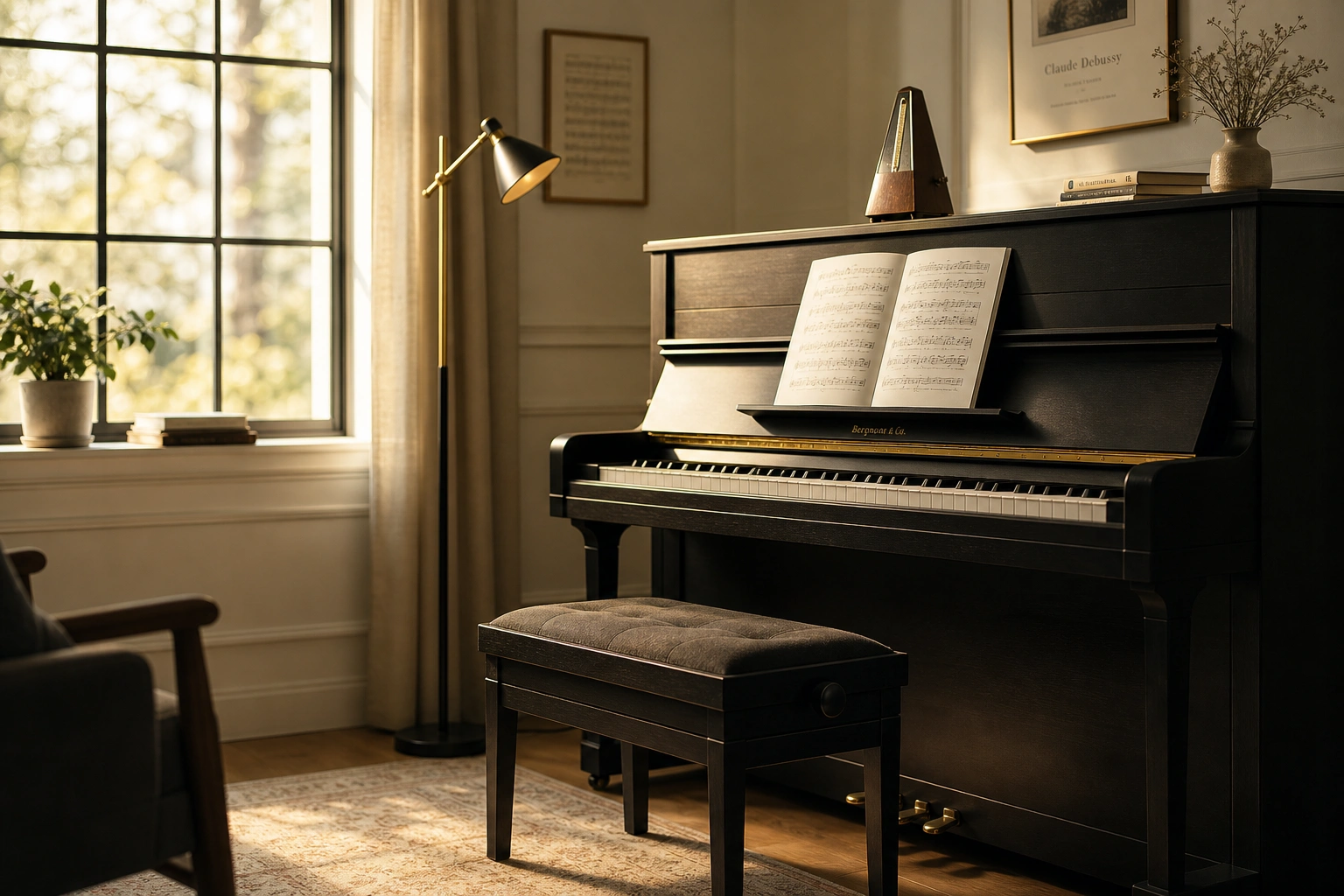
Practicing piano effectively means using a focused 20-minute session split into four parts: a two-minute warm-up, eight minutes on the hardest new material, six minutes fixing one or two specific trouble spots slowly, and four minutes replaying something you already know well. Structure matters more than total time. I’ve watched students with 15 focused minutes outpace students who “practiced” for an hour with no plan.
If you want someone to watch you practice and tell you exactly what to adjust, that’s literally what a free 30-minute trial lesson is for – no card, no pressure, just an honest look at your routine.
What should the first five minutes look like?
The first five minutes of an effective piano session should be a physical and mental warm-up, not song practice: a scale or five-finger pattern in both hands, a few chords, and a slow read-through of whatever piece you’re currently learning. This wakes up your hands and your ear before you ask them to solve a hard problem.
I tell students to treat this like a runner’s stretch. Skipping it doesn’t ruin one session, but skip it for a month and technique gets sloppy – fingers collapse, wrists tense up, and mistakes that were never there start showing up in easy passages.
- Play a C major scale, one octave, hands separately, then together
- Play the I-IV-V chords in whatever key your current song uses
- Read through your piece once at half speed, no stopping for mistakes
This whole block should take two to three minutes tops. If it’s eating ten minutes of your twenty, you’re overdoing the warm-up and shortchanging the part that actually moves you forward.
How do I know what to actually work on?
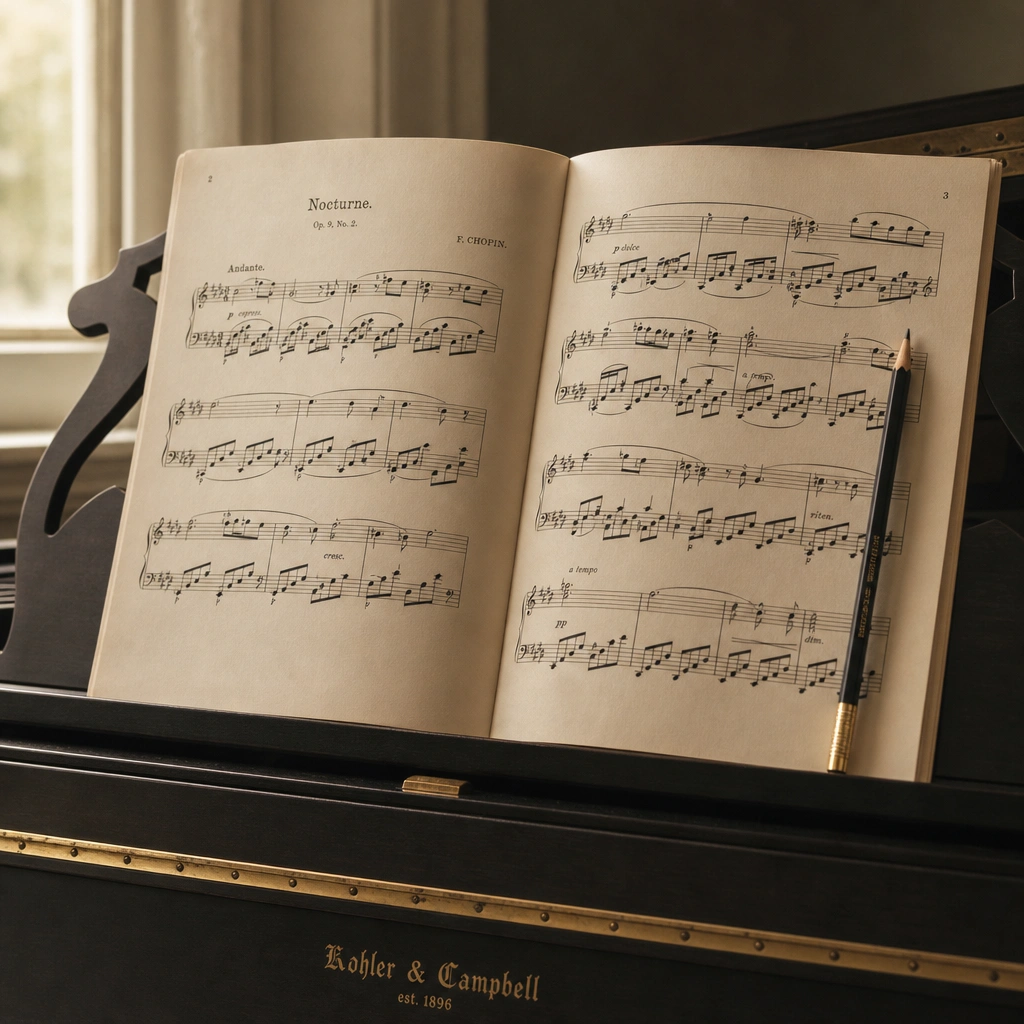
Effective piano practice targets the single hardest measure or phrase in your current piece, not the whole song from the top. Pick the spot where your hands hesitate, where you always slow down, or where you’d guess wrong if someone stopped you and asked what note comes next.
A student of mine, Daniel, used to play his whole piece start to finish every single practice, mistakes and all, for a full week. When we isolated just the four measures giving him trouble, he fixed them in one 20-minute session. Playing a piece straight through feels productive because it’s satisfying, but it mostly rehearses what you already know and repeats what you don’t.
- Play the piece through once to locate the rough spot
- Mark it with a pencil circle or sticky note
- Spend the bulk of your session there, not on the easy parts
This is also where a decision about reading chords versus notes tends to surface – trouble spots often trace back to a gap in one or the other.
Should I practice slowly or at full speed?
New or difficult material should always be practiced slowly at first – slow enough that you play it correctly three times in a row before speeding up at all. A tempo you can play cleanly at half speed will get you to full speed faster than repeatedly stumbling through it fast.
This is opinion shaped by experience rather than a universal law, but I’ve seen it hold true across ten years of teaching: rushing a passage before your hands know it locks in errors that are miserable to undo later. Musicians sometimes call this “practicing mistakes into the music,” and once a wrong finger pattern is automatic, it takes three or four times longer to correct than it would have taken to learn it right the first time.
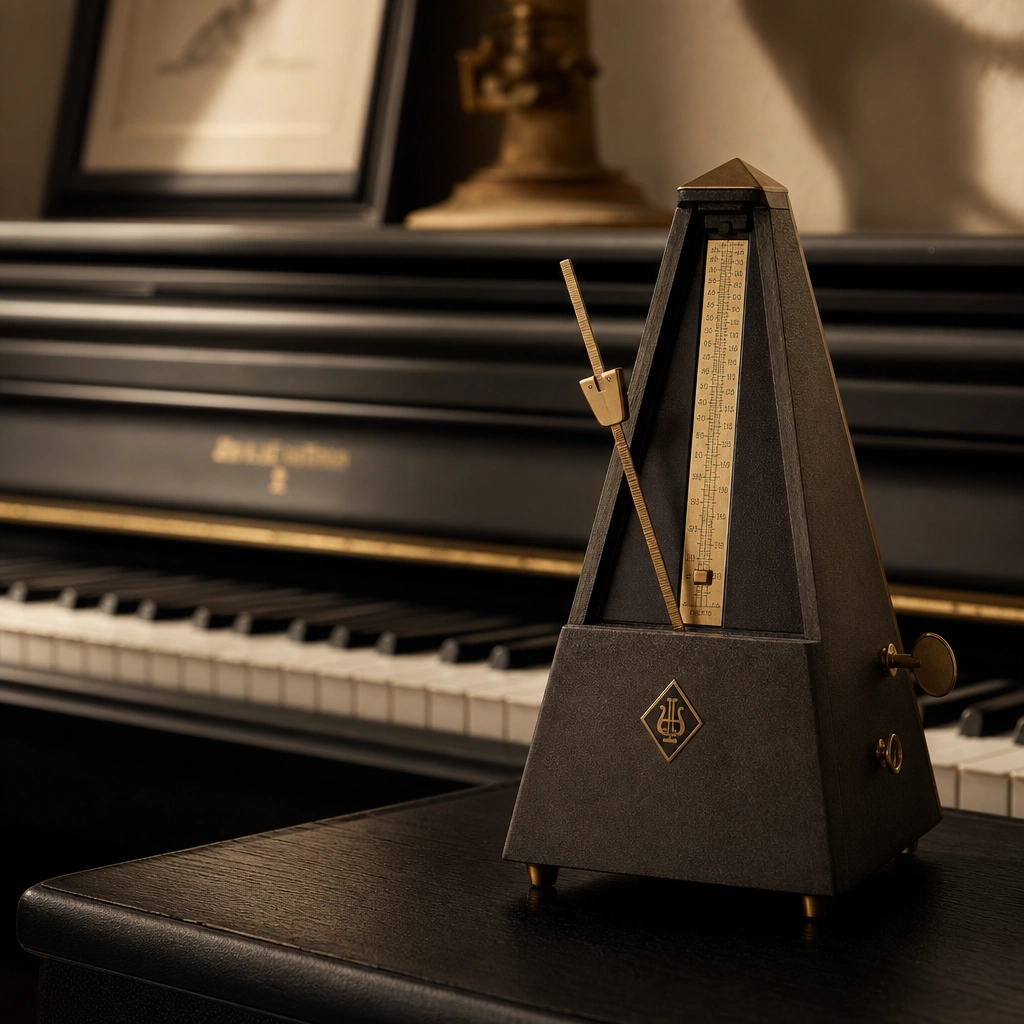
- Use a metronome and start at a tempo where zero mistakes happen
- Increase speed in small steps, only after three clean repetitions
- If mistakes return at a new tempo, drop back down – don’t push through
There’s decent research behind this too. Studies on motor skill acquisition, summarized well on Wikipedia’s motor learning page, back up what teachers have said for generations: accuracy before speed builds a more durable skill than speed before accuracy.
If your practice sessions feel busy but nothing is actually improving, a second set of eyes usually finds the fix in minutes. Your first 30-minute lesson with Austin is free – no card, no pressure.
How do I fix a tricky spot instead of just replaying it?
Fixing a tricky spot on piano means isolating the exact beat or note where the error happens, not just replaying the whole measure and hoping it lands. Break the passage into the smallest unit that contains the mistake, sometimes just two or three notes, and repeat that unit until it’s automatic.
I see this mistake constantly: a student plays a four-measure phrase, fumbles beat three of measure two, and goes right back to the top of the phrase to try again. By the time they reach the trouble spot, their hands are already tired and their focus has drifted. Isolating the actual problem is faster and far less frustrating.
- Identify the exact beat, not just the measure, where things go wrong
- Loop just that beat plus one note before and after it
- Repeat five times slowly, then reconnect it to the full phrase
Hands separately is another underused tool here. Isolating the left hand alone for a tricky bass line, something covered in more depth on our page about lesson length and pacing, often reveals that one hand is doing fine and the other is the actual bottleneck.
What should the last few minutes be for?
The final four minutes of a practice session should be spent playing something you already know well and enjoy, ending the session on a feeling of success rather than struggle. This isn’t wasted time – it reinforces retention and keeps you wanting to come back tomorrow.
This is the part beginners skip most often, and it’s the one I push back on hardest. Ending every session mid-struggle on the hard new piece is a quiet but real reason students quit. Noah, one of my longtime online students, started closing every session with a song he’d already mastered, and he told me it changed how he felt about sitting down to practice at all.
“I started as a complete beginner, and Austin made the learning process feel comfortable.” – Noah Peterson
Most adult beginners can play a simple two-hand song cleanly within six to eight weeks at 20 minutes a day, and that’s largely because the daily win at the end of each session keeps motivation intact. If you’re practicing in a shared space, our guide on practicing piano in an apartment has useful tips for keeping this last stretch enjoyable without disturbing neighbors.
Common questions
Is 20 minutes a day actually enough to improve?
Yes, for most beginners and intermediate players, 20 focused minutes a day beats an hour once a week. Consistency builds the muscle memory and ear training that piano depends on. As of 2026, this is still the routine I recommend to nearly every new student regardless of age.
What if I only have time to practice three days a week?
Three days a week still works, but expect roughly half the progress speed of daily practice. On practice days, stretch each session to 30 minutes and keep the same structure – warm-up, hard spot, slow work, easy finish – rather than trying to cram a week’s worth of practice into one long sitting.
Should I practice with a metronome every single day?
Not every day, but often. Use a metronome specifically when learning new material or working on a tricky rhythm, and skip it when you’re playing pieces you already know for enjoyment. Overusing it can make your playing feel mechanical rather than musical.
Does it matter what time of day I practice?
Not much, as long as it’s consistent. Some students focus better in the morning before mental fatigue sets in; others do best unwinding in the evening. What matters far more than the clock time is doing it at roughly the same point in your day so it becomes a habit rather than a decision.
Can I split my 20 minutes into two shorter sessions?
Yes, and for young kids or very busy adults this often works better than one block. Two 10-minute sessions, one focused on the hard spot and one on review, still cover the same ground. The warm-up and hard-spot work matter most in whichever session comes first.
How do I know if my practice routine needs adjusting?
If you’ve spent two or more weeks on the same passage with no improvement, or if you dread sitting down to practice, your routine likely needs a change. That’s usually a sign to isolate smaller sections, slow the tempo further, or get feedback from a teacher on what’s actually going wrong.
If your current routine isn’t quite clicking, it’s worth comparing structured lessons against solo practice with apps – our breakdown of piano lessons vs piano apps covers when each approach makes sense. And if you’ve been considering a change of teacher or format, how to choose a piano teacher walks through what to look for.
Ready to find out for yourself?
Your first 30-minute lesson with me is completely free – we will evaluate where you are, talk through your goals, and map out your path.

Comments
One response to “How to Practice Piano Effectively in 20 Minutes”
[…] Research from the field of neuroplasticity supports what I see in lessons: the adult brain retains the capacity to form new motor and cognitive patterns well into older age, especially with consistent, structured practice. Learning piano is one of the more studied examples of this. For more on building a workable daily habit, see our guide on practicing piano effectively. […]