
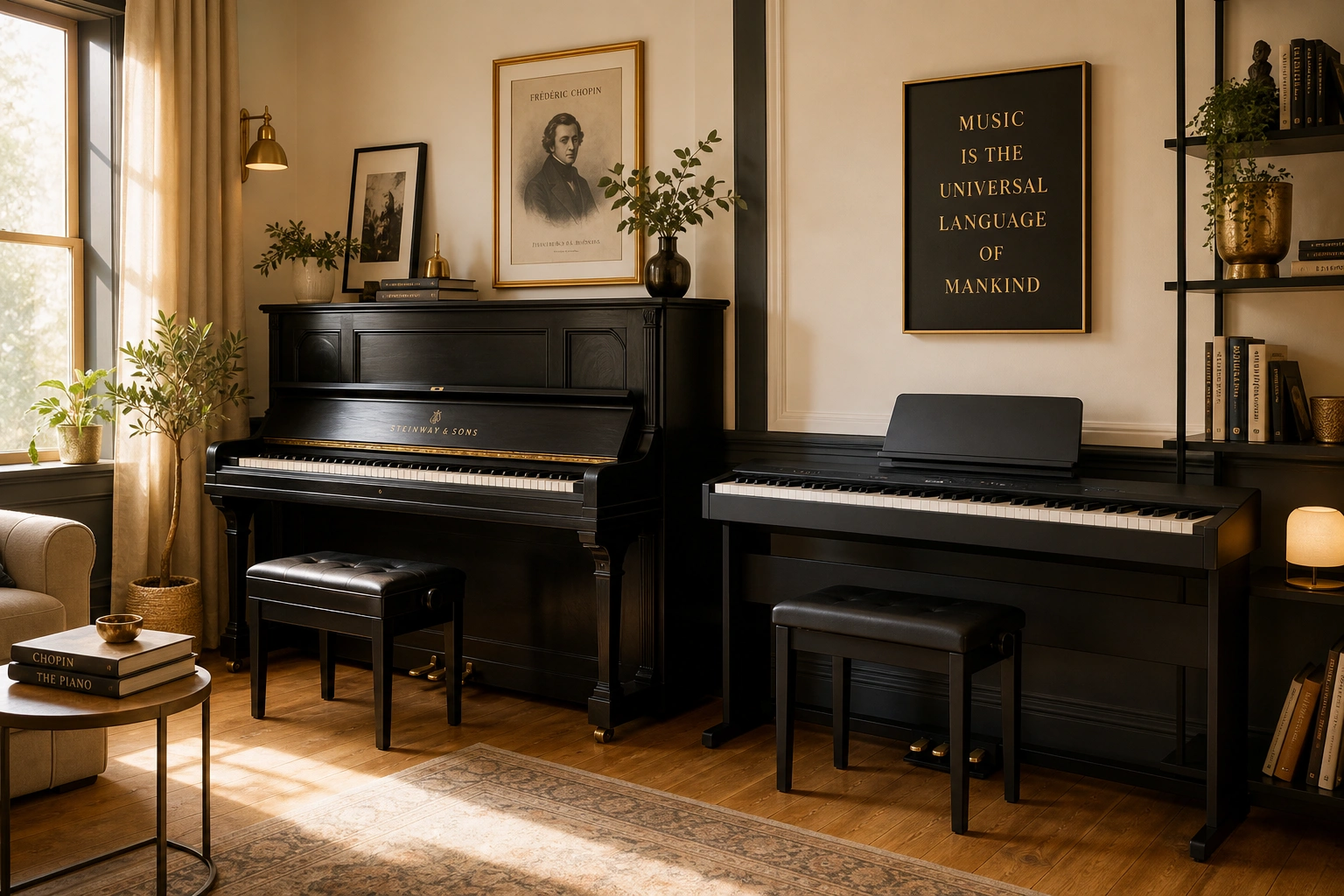
When you’re ready to start learning piano, one of the first questions you’ll face is whether you need a real acoustic piano or if a digital keyboard will work. The question of piano vs keyboard for beginners comes up in almost every first conversation I have with new students, and I understand why: it feels like a big decision with expensive consequences.
Here’s what I tell everyone: you don’t need to spend thousands of dollars on an acoustic piano to begin learning. But not all keyboards are equal, and the instrument you choose does matter for your progress.
If you’re wondering about the piano vs keyboard for beginners debate, I want to share what I’ve learned from teaching hundreds of students who started on everything from concert grands to $200 keyboards.
If you’d like personalized guidance on choosing the right instrument for your situation, I offer a free 30-minute trial lesson where we can talk through your specific setup.
The short answer
A good digital piano with 88 weighted keys is perfectly fine for beginners and often better than a cheap or poorly maintained acoustic piano. You do not need a “real” piano to start, but you do need full-size weighted keys if you’re serious about learning proper technique.
Most of my students learn on digital pianos, and they progress beautifully. The piano vs keyboard for beginners question isn’t about acoustic versus digital—it’s about weighted versus unweighted, 88 keys versus fewer, and quality versus price.
If you’re on a tight budget or uncertain about commitment, a quality 61-key keyboard can get you started for the first few months. But plan to upgrade within six months if you’re sticking with it.
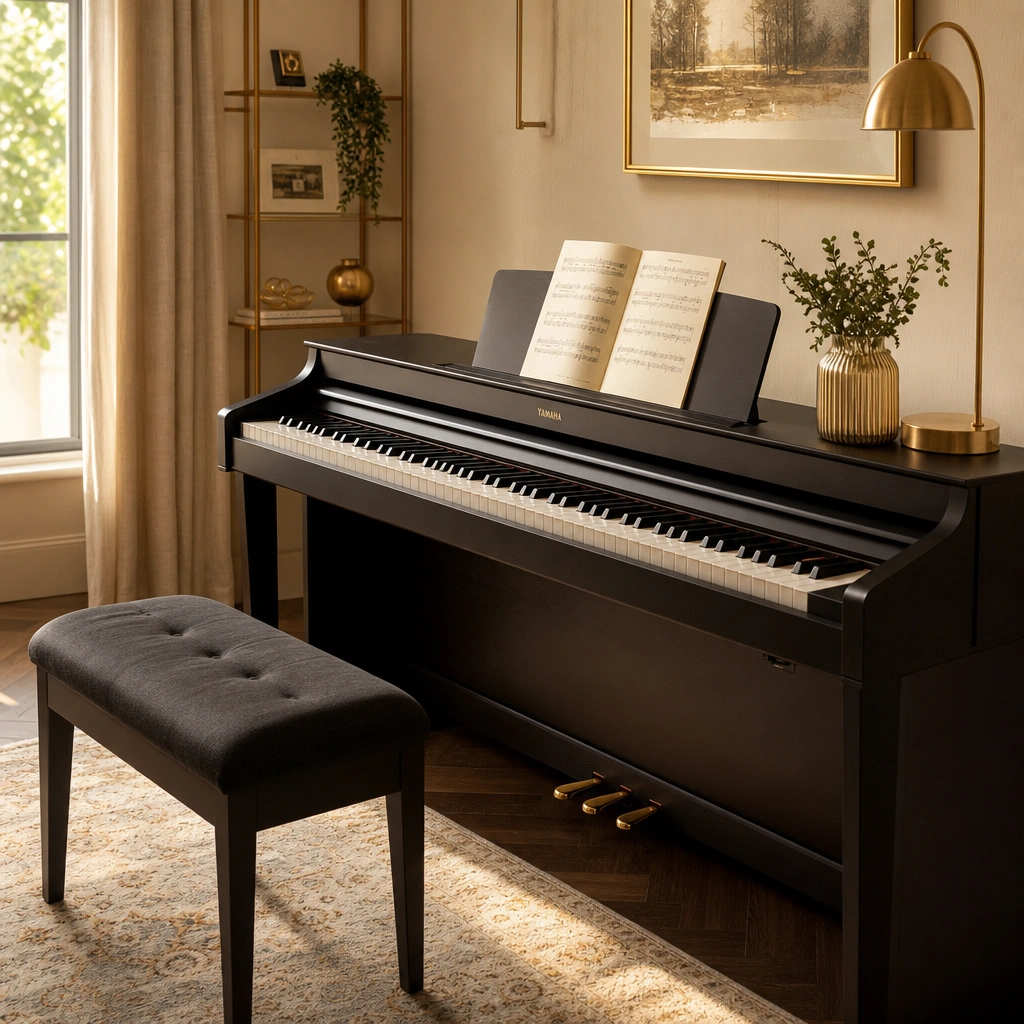
What beginners actually need
Let me start by cutting through the noise. When thinking about piano vs keyboard for beginners, here’s what actually affects your learning in the first year:
- Key resistance: weighted or semi-weighted keys that push back when you press them
- Full range: 88 keys gives you room to grow (61 or 76 can work short-term)
- Touch sensitivity: the ability to play louder or softer based on how hard you press
- Consistent tuning: the instrument should sound in tune every time you sit down
Notice what’s not on that list: brand names, wood versus plastic, or whether it costs five hundred or five thousand dollars.
I’ve taught students on $300 Yamaha digital pianos who developed better technique than students on $10,000 baby grands, simply because the digital was set up correctly and maintained.
The main advantage of a quality instrument—acoustic or digital—is that it responds to your touch. When you press gently, it sounds soft. When you press with confidence, it sounds strong.
This feedback loop is how you learn dynamics and expression, and it’s central to the piano vs keyboard for beginners discussion.
Understanding instrument response as a beginner
One thing many beginners don’t realize is that learning piano isn’t just about pressing the right notes in the right order. It’s about developing a relationship with the instrument’s response.
Think of it like learning to drive: you need to feel how the gas pedal responds, how the steering wheel turns, how the brake engages. The same is true for piano.
When you practice on an instrument with good touch sensitivity, you’re constantly receiving feedback about your finger pressure, hand position, and arm weight. This sensory feedback accelerates your learning because your body starts to internalize what “good” feels like.
On an unresponsive instrument, you’re essentially practicing blind. You might be hitting the right notes, but you’re not developing the physical awareness that separates mechanical playing from musical playing.
This is why the piano vs keyboard for beginners choice matters so much in your first year. The habits you form—good or bad—tend to stick.
Piano vs keyboard for beginners: the key differences
Let me walk through what separates these instruments in practical terms, not marketing speak.
Acoustic pianos
An acoustic piano—whether upright or grand—produces sound through hammers striking strings. When you press a key, a complex mechanical action launches a felt hammer at a tensioned wire, and the vibration resonates through a large wooden soundboard.
The benefits for beginners are real:
- Natural, responsive touch that rewards control
- Rich, resonant sound that fills a room
- No need for headphones, speakers, or power
- Holds value reasonably well if maintained
The downsides are also real:
- Expensive: even used uprights start around $1,500-$3,000
- Require tuning twice a year ($150-$200 each time)
- Heavy and difficult to move
- Sensitive to humidity and temperature
- Volume can’t be controlled (a problem in apartments)
For many beginners, especially adults or families in smaller homes, these practical barriers make an acoustic piano a difficult starting point. And that’s okay.
The piano vs keyboard for beginners choice doesn’t have to default to acoustic just because it’s “traditional.”
Digital pianos and keyboards
A digital piano or keyboard uses sampled sounds and speakers to recreate the sound of an acoustic piano. The key action is designed to mimic the resistance of real hammers and strings.
The advantages for beginners include:
- Affordable: quality models start around $400-$700
- Never need tuning
- Headphone jacks for silent practice
- Lightweight and portable
- Built-in metronomes and recording features
The limitations:
- Cheaper models have unweighted or poorly weighted keys
- Sound quality varies widely by price
- Requires power and sometimes external speakers
- Depreciates quickly in resale value
In the piano vs keyboard for beginners comparison, a good digital piano (like a Yamaha P-125, Roland FP-30X, or Casio Privia series) will serve you better than a neglected upright that hasn’t been tuned in five years.
Understanding the technical differences
Beyond the basic acoustic versus digital distinction, there’s a spectrum of keyboard types that confuses many beginners. Let me clarify the terminology you’ll encounter when shopping.
Digital pianos are designed specifically to replicate the acoustic piano experience. They typically have 88 weighted keys, graded hammer action (heavier in the bass, lighter in the treble, just like an acoustic), and high-quality piano samples.
Portable keyboards are lighter instruments with 61 or 76 keys, often unweighted or lightly weighted. They usually include various instrument sounds beyond piano—strings, organs, drums—and are designed for portability and versatility rather than serious piano study.
Stage pianos are professional digital pianos built for gigging musicians. They have excellent key action and sound but often lack built-in speakers, requiring external amplification.
Console digital pianos look like furniture, with a wooden cabinet and built-in stand. They’re essentially digital pianos in a more permanent, attractive package.
When people ask about piano vs keyboard for beginners, they’re usually comparing acoustic pianos to digital pianos, not portable keyboards. That distinction matters because a quality digital piano is a legitimate learning instrument, while a cheap portable keyboard is a temporary compromise at best.
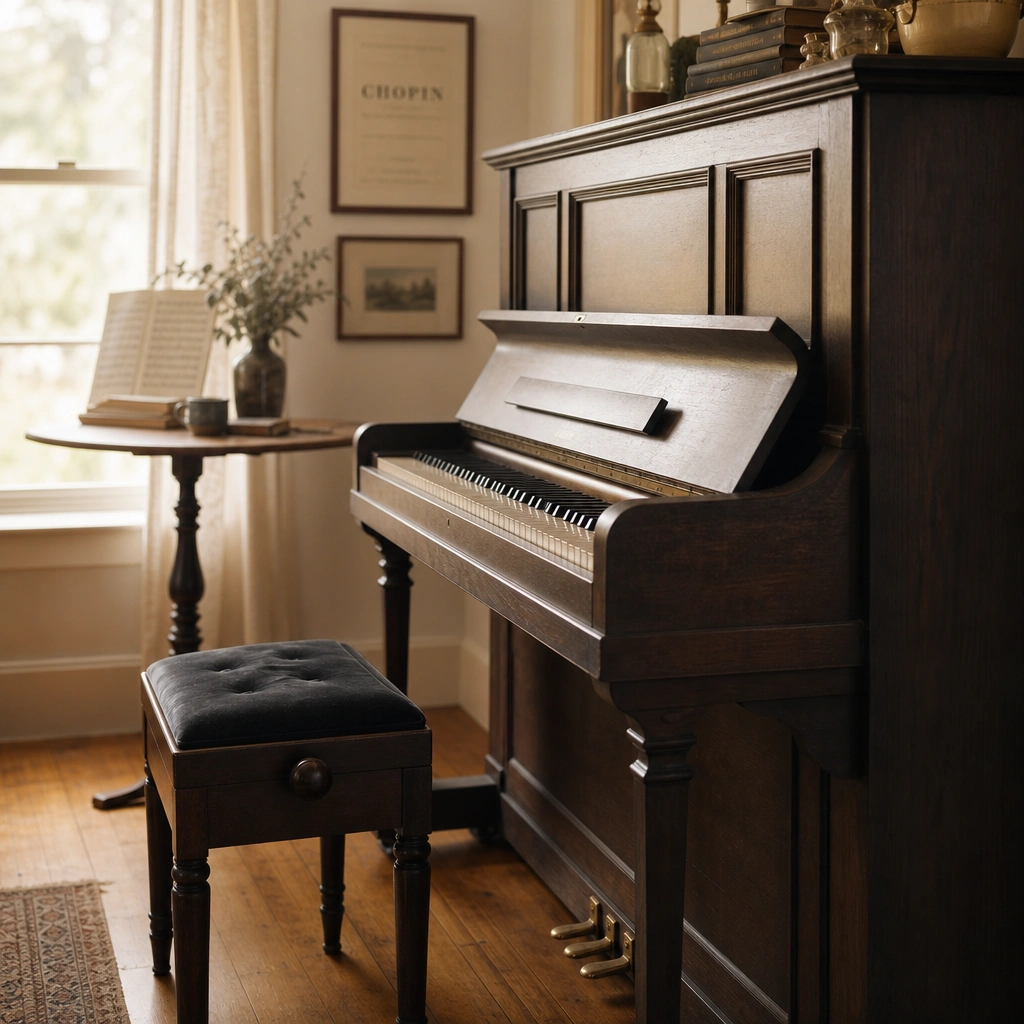
When a keyboard is the better choice
There are situations where I actively recommend students start with a digital keyboard, even if they could afford an acoustic piano. Here are the scenarios where the piano vs keyboard for beginners debate tips toward digital:
You live in an apartment
If you’re in an apartment or shared housing, the ability to practice with headphones is not a luxury—it’s essential.
I have students who practice at 6 a.m. before work or at 10 p.m. after their kids go to bed. That’s only possible with a digital instrument.
I’ve written more about practicing piano in an apartment if this is your situation.
You’re uncertain about commitment
If you’re not sure whether you or your child will stick with piano for more than a few months, spending $3,000 on an acoustic is a big gamble.
A $500 digital piano gives you a real shot at learning without the financial pressure. You can always upgrade later if the commitment is there.
You move frequently
Students who relocate for work or school need portability. A digital piano fits in a car. An upright piano requires professional movers and costs hundreds of dollars each time you relocate.
You want extra features
Many digital pianos include metronomes, multiple instrument sounds, and MIDI connectivity for recording or using apps.
For some learners, especially those interested in composition or music production, these features make a digital the clear winner in the piano vs keyboard for beginners question.
You’re teaching yourself initially
Digital pianos often come with learning features like light-up keys, split keyboard modes, and the ability to slow down or loop sections using apps. While these aren’t substitutes for proper instruction, they can be helpful supplementary tools.
Most beginners today start on a digital piano or keyboard, reflecting these practical advantages.
“I started as a complete beginner, and Austin made the learning process feel comfortable.” – Noah Peterson
When you should get a real piano
That said, there are times when I encourage students to prioritize an acoustic piano if they can manage it:
You have the space and budget
If you own your home, have a dedicated room for the piano, and can afford both the purchase and the ongoing tuning costs, an acoustic piano is a beautiful instrument to live with. The sound and feel are unmatched.
You’re committed long-term
If you know this isn’t a trial run—maybe you played as a child and you’re coming back, or you’re enrolling your child in serious lessons with performance goals—an acoustic piano is an investment that will grow with you for decades.
You have access to a good used instrument
If a family member, friend, or neighbor is offering you a well-maintained upright for free or cheap, and it’s been tuned recently, take it.
A free acoustic piano beats a $500 keyboard in the piano vs keyboard for beginners equation, assuming it’s in good condition.
One warning: do not accept a piano that hasn’t been tuned in years or has broken keys, sticky action, or structural issues. A bad acoustic piano is worse than no piano.
Have it inspected by a piano technician before you move it into your home.
You value the acoustic experience
Some students simply respond better to the acoustic piano experience. The resonance, the way the sound fills a room, the vibration you feel through the keys and pedals—these elements can be deeply motivating.
If you’ve tried both and the acoustic piano inspires you to practice more, that emotional connection is worth considering in your piano vs keyboard for beginners decision.
Choosing the right instrument is much easier when a teacher can see your space and hear your goals. Your first 30-minute lesson with Austin is free – no card, no pressure.
The weighted keys question
This is the single most important factor in the piano vs keyboard for beginners discussion, and it’s where many people go wrong.
Weighted keys mimic the resistance of an acoustic piano’s hammer action. When you press a key on an acoustic piano, you’re lifting a small wooden hammer.
That requires a certain amount of force, and your fingers build strength and control by working against that resistance.
Unweighted keys—the kind you find on cheap portable keyboards—have no resistance. They feel like pressing buttons.
You can play them with the lightest touch, which means you never develop finger strength, and you never learn to control dynamics.
Here’s what happens when beginners learn on unweighted keys: they develop a weak, tentative touch. When they eventually move to a real piano or weighted digital, they struggle to press the keys down fully, and their playing sounds timid and inconsistent.
I’ve seen this dozens of times, and it’s frustrating for the student because they have to relearn their entire physical approach to the instrument.
In the piano vs keyboard for beginners question, weighted keys are non-negotiable if you’re planning to study seriously.
If budget is extremely tight, a 61-key weighted keyboard is better than an 88-key unweighted one. You’ll outgrow the smaller range eventually, but you won’t have to unlearn bad technique.
Types of key weighting explained
Not all weighted keys are created equal. Understanding the different weighting technologies helps you evaluate instruments when shopping.
Fully weighted/hammer action keys use a mechanical hammer system similar to acoustic pianos. Each key has a small weighted hammer that provides realistic resistance. This is the gold standard for serious students.
Graded hammer action takes it further by making the bass keys heavier and the treble keys lighter, just like a real piano where the bass hammers are larger and heavier.
Semi-weighted keys use springs to create resistance rather than actual hammers. They’re lighter than fully weighted keys but heavier than unweighted. These are common in mid-range portable keyboards and are acceptable for very short-term beginners.
Unweighted/synth-action keys have minimal resistance and are designed for synthesizers and organs, not piano study. Avoid these for learning piano.
When evaluating the piano vs keyboard for beginners choice, look for “graded hammer action” or “fully weighted keys” in the product description. This feature alone will determine whether the instrument supports or hinders your technical development.
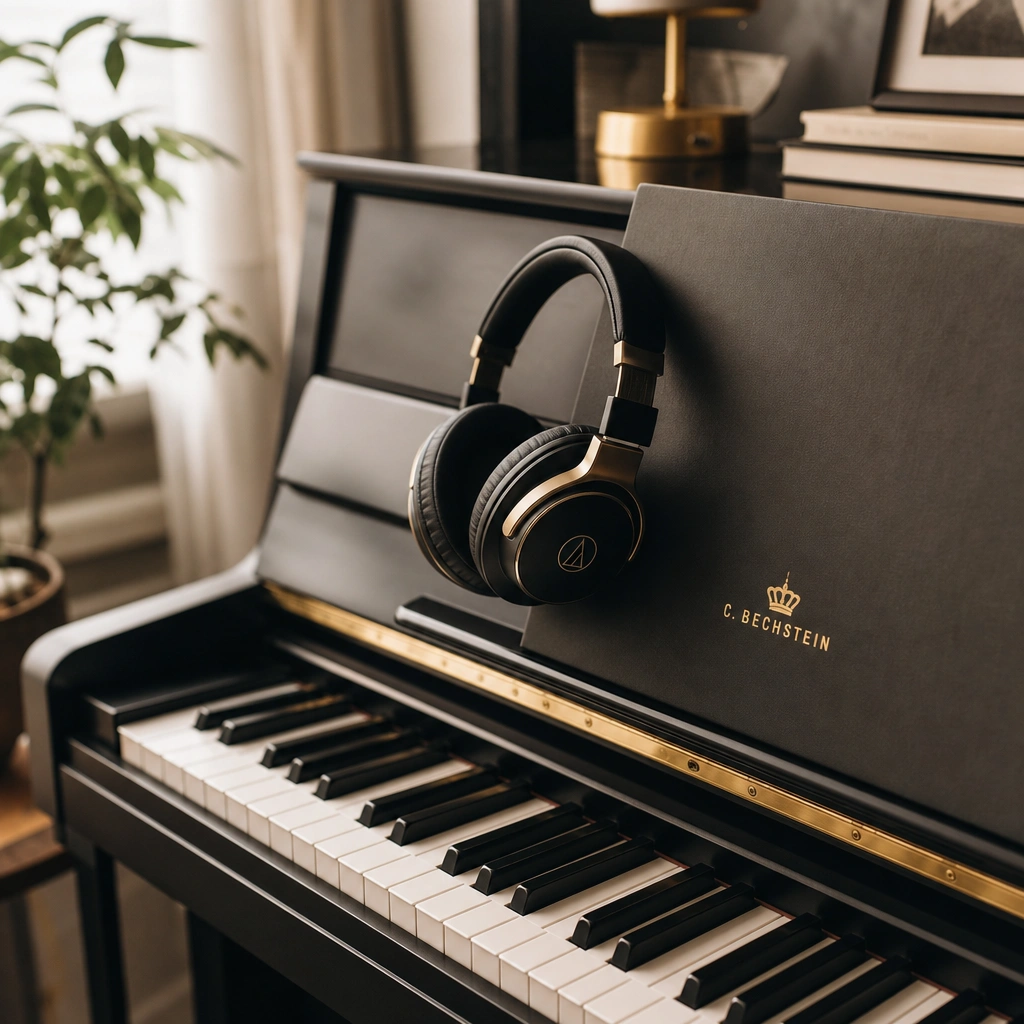
What to look for in a beginner keyboard
When students ask me for specific recommendations in the piano vs keyboard for beginners conversation, here’s the checklist I give them:
- 88 full-size weighted keys (or at minimum 61 weighted keys)
- Touch-sensitive/velocity-sensitive: volume changes based on how hard you press
- Sustain pedal input: even if the pedal is sold separately, the keyboard should have a jack for it
- Headphone jack: for quiet practice
- Decent built-in speakers: you shouldn’t need external speakers to hear yourself clearly
Brands I trust for students include Yamaha, Roland, Casio (Privia line), and Korg. You don’t need to spend more than $500-$700 for a solid beginner digital piano.
Avoid toy keyboards, mini keys, and anything that doesn’t explicitly say “weighted” or “hammer action.”
Also be cautious with used digital pianos that are more than 10-15 years old—technology improves, and older models often have poor sound quality or unreliable key action.
If you’re shopping for a child and wondering about sizing, I’ve written more about what to look for in piano lessons for kids, which touches on instrument selection.
One more note: if you’re comparing digital pianos to learning methods like apps, you might find my article on piano lessons vs piano apps helpful for understanding how the instrument and instruction work together.
Specific model recommendations
While I don’t accept sponsorships or commissions, I can share what I’ve seen work well for my students across different budgets.
Budget tier ($400-$600): The Yamaha P-45 or P-125 are reliable workhorses. The Casio Privia PX-160 or PX-S1100 offer good value. The Alesis Recital Pro provides weighted keys at the lowest price point, though the sound quality isn’t as refined.
Mid-range ($600-$1,200): The Roland FP-30X, Yamaha P-225, and Kawai ES120 all offer excellent key action and sound quality. These instruments will serve you well for many years, even as you advance.
Premium digital ($1,200-$2,500): The Yamaha P-515, Roland FP-90X, and Kawai ES920 approach the feel and sound of quality acoustic pianos. If you’re certain about your commitment and want the best digital experience, these are worth the investment.
When weighing the piano vs keyboard for beginners question against your budget, remember that a mid-range digital piano often provides better value than a low-quality acoustic piano in the same price range.
Starting with what you have
Here’s the truth I tell every student who’s overthinking the piano vs keyboard for beginners question: the best instrument is the one you’ll actually practice on.
If you already own a keyboard—even a less-than-ideal one—start there. You can learn note reading, basic finger patterns, rhythm, and music theory on almost any keyboard.
It’s not optimal, but it’s better than waiting months to buy the “perfect” piano while your motivation fades.
I’ve taught students who started on 49-key unweighted keyboards and made real progress for the first two or three months. They learned to read music, play simple melodies with both hands, and understand how chords work.
When they upgraded to a weighted 88-key digital piano, they had to adjust their touch, but the musical knowledge transferred immediately.
The piano vs keyboard for beginners decision matters, but it’s not a barrier. If you’re working with what you have, a good teacher can adapt the lessons and prepare you for the transition to a better instrument when the time comes.
At Weaver Music, I work with students on all kinds of setups, live over Zoom, and we make it work.
That said, if you’re serious about piano and you practice regularly, plan to upgrade within six months. Technique matters, and you’ll hit a ceiling on an undersized or unweighted keyboard.
The investment in a quality instrument pays for itself in faster progress and less frustration.
Making the most of a temporary setup
If you’re starting with a less-than-ideal keyboard while saving for an upgrade, here are strategies to maximize your progress:
Focus on reading and theory. These skills transfer perfectly to any instrument. Spend extra time on note recognition, rhythm counting, and understanding musical structure.
Practice finger patterns and hand independence. Even on unweighted keys, you can develop the coordination needed to play with both hands and train your fingers to move in the right patterns.
Use proper hand position. Don’t let the easy action of unweighted keys encourage sloppy hand shape. Practice curved fingers and proper wrist position from day one.
Visit a real piano regularly. If possible, practice on a weighted instrument once a week—at a friend’s house, a church, or a music store. This keeps you connected to what proper resistance feels like.
Set an upgrade timeline. Having a specific date or savings goal for getting a better instrument keeps you motivated and prevents you from getting too comfortable with a temporary compromise.
The piano vs keyboard for beginners question becomes less urgent when you approach your current instrument as a stepping stone rather than a permanent limitation.
The practice consistency factor
Here’s something that often gets overlooked in the piano vs keyboard for beginners discussion: the instrument that fits your life is the instrument you’ll actually use.
I’ve had students choose acoustic pianos for all the right reasons—better touch, richer sound, long-term value—only to rarely practice because the piano was in a cold basement or a formal room they felt uncomfortable using daily.
Meanwhile, other students with modest digital pianos in their bedrooms or living rooms practiced every single day because the instrument was accessible and inviting.
A $500 digital piano you practice on daily will take you further than a $5,000 acoustic you avoid because it’s inconvenient or intimidating. Location, comfort, and accessibility matter enormously for beginners building a practice habit.
Consider where the instrument will actually live in your home. Can you leave it set up and ready to play? Is it in a space where you feel comfortable making mistakes? Can you practice without disrupting others or feeling self-conscious?
These practical considerations are just as important as key action and sound quality when you’re making your piano vs keyboard for beginners choice.
The role of instruction in your instrument choice
One more perspective worth considering: your choice of instrument matters less when you have good instruction, and it matters much more when you’re trying to teach yourself.
A skilled teacher can help you adapt to whatever instrument you have, correct the technical limitations it might create, and prepare you for eventual transitions. They can also give you hands-on guidance about when an upgrade is necessary versus when you can continue making progress.
If you’re self-teaching through apps, books, or YouTube videos, you don’t have that corrective feedback. In that scenario, starting with the right instrument becomes more critical because you’re relying entirely on the instrument to teach you proper touch and dynamics.
The ongoing question of piano vs keyboard for beginners will continue as long as people are learning, but the honest answer is this: you need an instrument that responds to your touch, gives you a full range to grow into, and fits your living situation and budget.
Whether that’s a $500 Yamaha digital piano or a $5,000 upright depends entirely on your circumstances, not on some absolute rule.
I’ve seen students thrive on both. The difference isn’t the instrument—it’s the consistency of practice and the quality of instruction.
A mediocre piano with great teaching beats a great piano with no guidance every time.
You can start today, on whatever you have or whatever you can afford. The piano vs keyboard for beginners debate doesn’t have to delay your first lesson.
What matters is that you begin, that you practice, and that you get feedback from someone who knows what to listen for.
At Weaver Music, lessons are $99 per 60-minute session, and every new student gets a free 30-minute trial to see if we’re a good fit. I also provide access to a four-level video course library so you can review concepts between lessons.
Whether you’re on a brand-new Kawai upright or a decade-old Casio keyboard, we’ll work with what you have and build from there.
The question of piano vs keyboard for beginners comes up because people want to do it right. I respect that. But perfection isn’t the goal—progress is.
And progress happens when you sit down, put your hands on the keys, and start learning. The instrument is just the tool. You’re the one making the music.
Ready to find out for yourself?
Your first 30-minute lesson with me is completely free – we will evaluate where you are, talk through your goals, and map out your path.

Comments
3 responses to “Piano vs Keyboard for Beginners: Do You Need a Real Piano?”
[…] – they’re just different kinds of hard. This is one reason I tell parents comparing piano vs keyboard for beginners that the instrument itself matters less than whether the student sticks with consistent […]
[…] at home: a properly weighted keyboard or piano makes technique transfer smoother – see our piano vs. keyboard guide if you haven’t bought one […]
[…] you’re still choosing your first instrument, our guide to piano vs. keyboard for beginners covers key count and what actually matters for […]