The short answer
Piano lessons for seniors work just as well as lessons for anyone else, with a few practical adjustments: shorter daily practice sessions, more emphasis on hand warm-ups, and slower-paced reading instruction. Most students over 60 who I’ve taught can play a simple two-hand song within 8-10 weeks of steady, short practice sessions. Age is rarely the real obstacle – fear of “being too old” usually is.
I’ve taught students in their 60s, 70s, and one memorable 81-year-old named Carol who wanted to play “Clair de Lune” for her granddaughter’s wedding. If you’re curious what a first session actually looks like, every new student – regardless of age – starts with a free 30-minute trial lesson where we check your current skill level and build a realistic plan together.
What actually changes when you learn piano after 60?
Learning piano after 60 changes the pacing more than the possibility. Adults over 60 typically need slightly more repetition to build finger independence, benefit from shorter and more frequent practice sessions, and often bring better focus and patience than younger students who are juggling school or careers. The core learning process – reading, technique, repertoire – stays identical.
Here’s what I actually notice in lessons with students over 60, compared to my younger adult students:
- Slower initial finger coordination – it usually catches up within 4-6 weeks of consistent practice.
- Stronger focus and follow-through – retired students often practice more consistently than working adults.
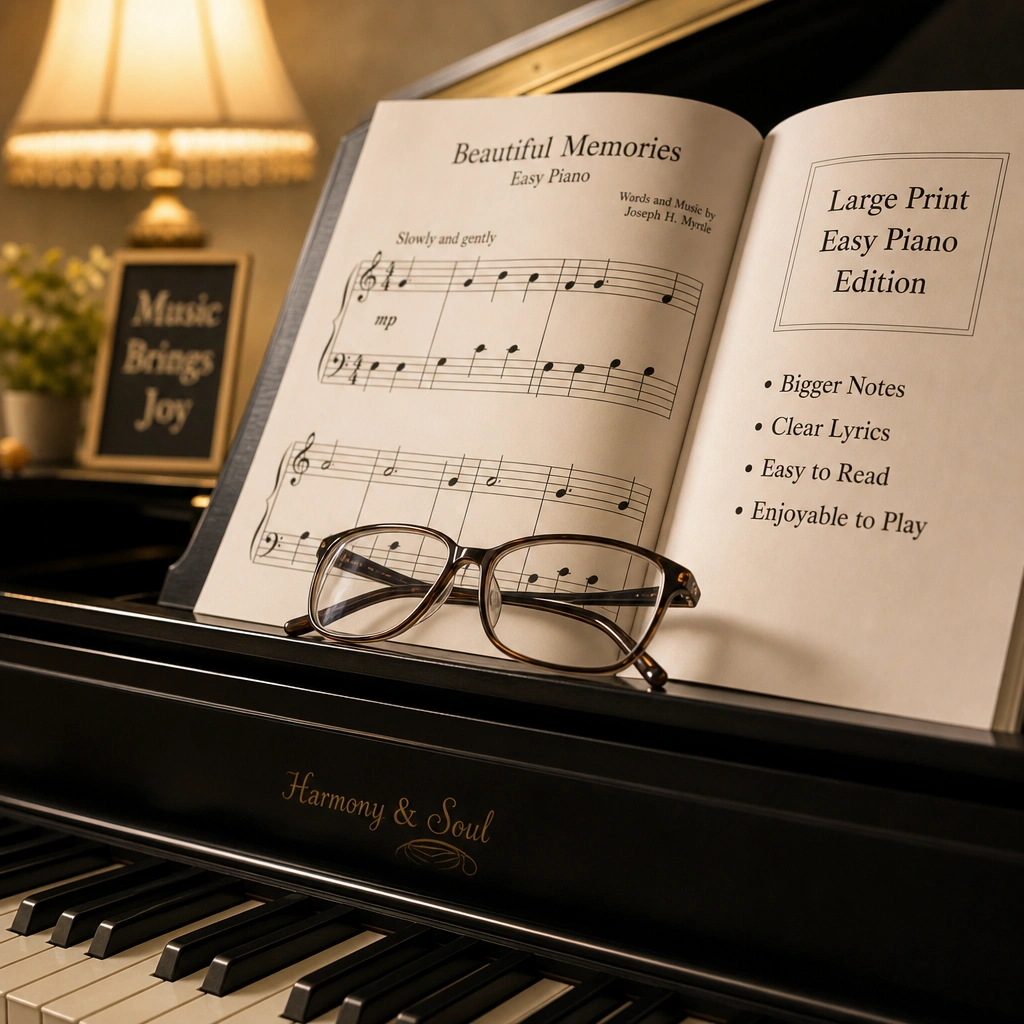
- More deliberate reading pace – I slow down note-naming drills and use bigger-print sheet music when needed.
- Higher motivation from personal meaning – most want to play a specific song, not “master piano” abstractly.
One student, Richard, 68, started with zero musical background and assumed he’d be the slowest learner I’d ever had. He wasn’t – he was one of the most consistent, because he practiced the same 15 minutes every morning with coffee, no exceptions.
How long does it take a senior to learn piano?
Most beginners over 60 can play a simple two-hand song, such as “Ode to Joy” or a hymn arrangement, within 8-10 weeks when practicing 15-20 minutes a day, five days a week. This is only slightly longer than the 6-8 week timeline typical for younger adult beginners, and the gap closes almost entirely by month three.
A few honest notes on pacing:
- Weeks 1-3: learning hand position, note names, and basic rhythm – this stage takes most students the same amount of time regardless of age.
- Weeks 4-8: two-hand coordination on simple pieces – this is where I see the biggest individual variation.
- Months 3-6: first “real” song at performance level, often something requested for a specific occasion.
Research from the field of neuroplasticity supports what I see in lessons: the adult brain retains the capacity to form new motor and cognitive patterns well into older age, especially with consistent, structured practice. Learning piano is one of the more studied examples of this. For more on building a workable daily habit, see our guide on practicing piano effectively.
What if I have arthritis or stiff hands?
Arthritis and hand stiffness do not disqualify someone from learning piano, though they do change how a teacher should structure technique. I adjust exercises to prioritize relaxed wrists, shorter practice bursts, and repertoire that avoids wide stretches or rapid octave jumps until strength and comfort build up.
Practical adjustments I make for students with joint pain or reduced hand mobility:
- Start every session with 2-3 minutes of gentle wrist circles and finger stretches, not scales.
- Choose beginner arrangements with smaller hand spans – I often simplify voicings before a student ever sees a “hard” chord.
- Break practice into two 10-minute sessions rather than one 20-minute block if fatigue sets in.
- Use a weighted digital piano rather than an unweighted keyboard, since even key resistance reduces strain over time.
I had a student, Diane, with moderate arthritis in both hands who was convinced she’d never manage chords. Within six weeks of daily stretching and simplified voicings, she was playing full hymns – slower than average, but cleanly and without pain. If joint discomfort is a real concern, mention it during your trial lesson so we can build technique around it from day one.
If you’ve been putting off piano because you think 60, 70, or 80 is “too late,” it isn’t. Your first 30-minute lesson with Austin is free – no card, no pressure.
Is it harder to read music or memorize as an older adult?
Reading music and memorizing pieces takes most adult beginners over 60 slightly longer than younger students, but the difference is a matter of weeks, not an inability. I typically see older students need about 20-30% more repetition on note-naming drills before it becomes automatic, then progress normally from there.
A few things that consistently help:
- Practicing in very short, focused chunks (5-10 minutes) rather than one long cram session – this matches how working memory actually consolidates new information.
- Using letter-name stickers or larger-print scores temporarily, then removing them once note recognition solidifies.
- Learning by ear alongside reading, especially for students who find sight-reading frustrating early on – our piece on learning piano without reading music covers this approach in more depth.
Memorization tends to come easier than expected, actually. Many of my senior students memorize pieces faster than younger students because they’re not splitting attention across five other activities. One student, Frank, 72, memorized a full page of a Chopin nocturne excerpt in about three weeks of daily 15-minute sessions – faster than most of my teenage students on comparable material.
What kind of piano lessons work best for seniors?
The best piano lessons for older adults are one-on-one, paced to the individual, and built around music the student actually wants to play rather than a generic curriculum. Group classes and rigid method books work against most senior learners, who tend to do best with flexible pacing and personal repertoire choices.
At Weaver Music, every lesson is live and one-on-one over Zoom, and Bay Area students can have me come to them in person. Standard lessons follow a full curriculum – technique, reading, theory, repertoire – and run $60 for 30 minutes, $80 for 45 minutes, or $99 for a full hour. If there’s a specific song you want to play – a wedding piece, a favorite hymn, a song from your youth – VIP lessons include everything in Standard plus a custom arrangement I write or transcribe by ear at your exact skill level, which I then rewrite as you improve. VIP runs $95, $125, or $149 for the same lesson lengths. You can move between the two formats anytime.
“I started as a complete beginner, and Austin made the learning process feel comfortable.” – Noah Peterson
For guidance on how long a session should actually be at your stage, see how long should piano lessons be. And if you’re deciding between an app and a real teacher, our comparison of piano lessons vs. piano apps is worth a read – apps struggle badly with the kind of individualized pacing older beginners need.
Common questions
Is 65 too old to start learning piano?
No. Sixty-five is a completely normal age to start piano, and many students begin even later. The main difference from starting younger is pacing – expect steady progress over months rather than weeks, with the same eventual results on beginner and intermediate repertoire.
Do I need a fancy piano to start lessons at my age?
No expensive piano is required to begin. A weighted digital keyboard with at least 61 keys is enough for a beginner, and it’s gentler on stiff joints than many older acoustic pianos with heavy, uneven action. You can upgrade later once you know you’ll stick with it.
Can piano lessons help with cognitive decline or memory issues?
Learning piano is associated in research with improved memory, attention, and fine motor coordination in older adults, though it is not a medical treatment and results vary by individual. Speak with a physician about any specific cognitive health concerns before relying on music lessons as an intervention.
Will my hands get tired quickly during practice?
Hand fatigue is common in the first few weeks for beginners of any age, and slightly more common for older adults with less hand strength built up. Short 10-15 minute sessions with brief stretching breaks usually solve this within a month of consistent practice.
Should a senior learn on their own with books or apps first?
Self-teaching with books or apps is possible but usually slower and more frustrating for older beginners, since there’s no one to correct hand position or adjust pacing in real time. A teacher who can see and adapt to your specific hands tends to prevent bad habits before they form.
What if I tried piano decades ago and quit?
Many older students return to piano after quitting as a child or young adult, and prior exposure – even decades old – usually speeds things up noticeably. Muscle memory and note recognition often resurface faster than expected once you start again.
Ready to find out for yourself?
Your first 30-minute lesson with me is completely free – we will evaluate where you are, talk through your goals, and map out your path.