
The short answer
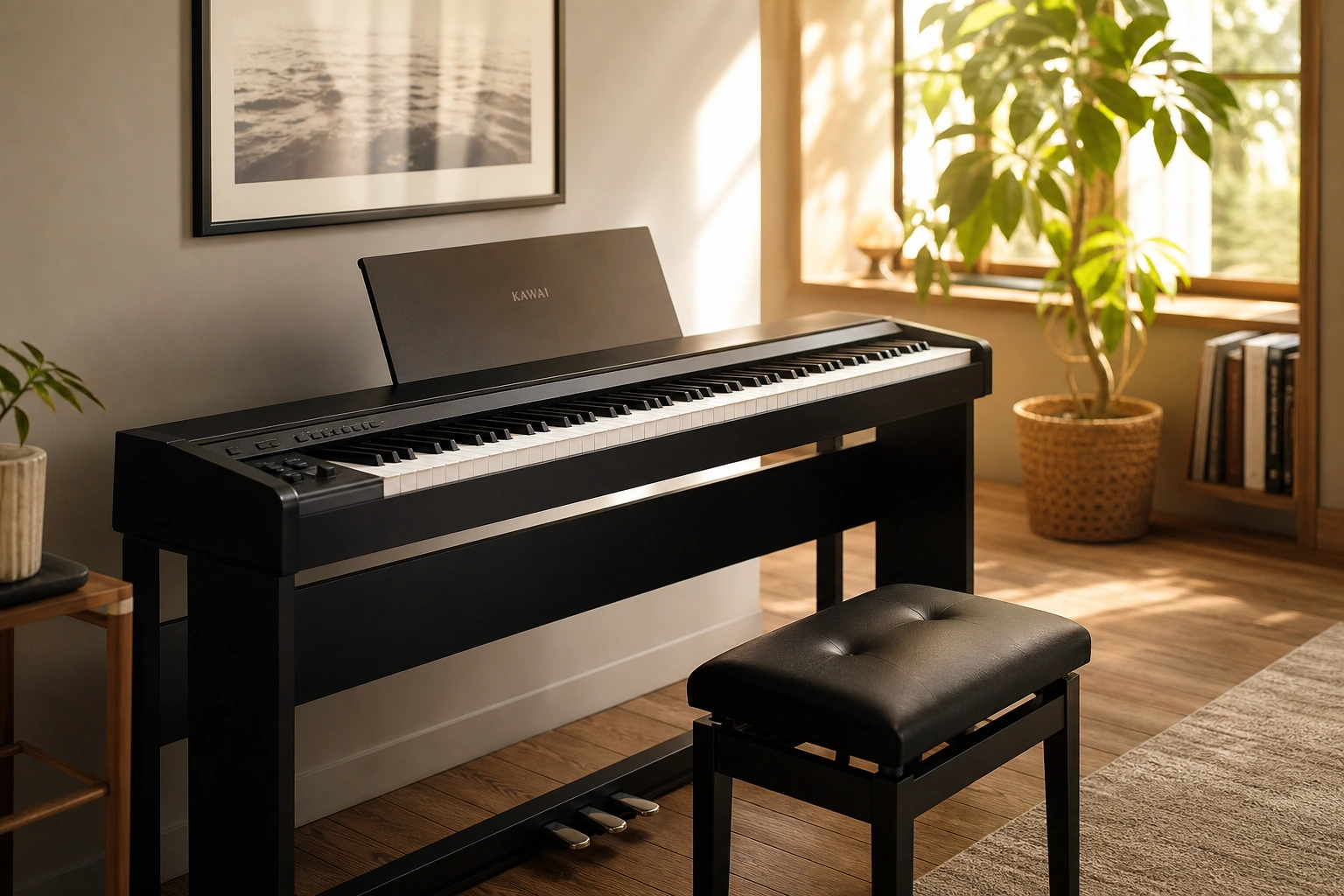
A beginner should buy a keyboard with fully weighted keys, ideally 88-key hammer action. Weighted keys push back like an acoustic piano, so your fingers build the strength and touch control that real technique needs. Unweighted keys press with almost no effort, which is fine for exploring sounds but builds habits that fall apart on a real piano.
I have over 10 years of experience at the piano, and this question comes up in nearly every first conversation with a new student or parent. Below I break down weighted keys vs unweighted in plain terms. Already own a keyboard? Bring it to a free 30-minute trial lesson and I’ll tell you honestly whether it will hold you back.
What’s the difference between weighted and unweighted keys?
Weighted keys have built-in resistance, from weights or a hammer mechanism, so pressing one feels like pressing an acoustic piano key. Unweighted keys are spring-loaded switches that go down with almost no force and snap back up. The difference shows up in finger strength, control over soft and loud playing, and how easily you adjust to a real piano.
On an acoustic piano, every key is a lever that throws a felt hammer at the strings (here’s a good overview of the piano action). Piano technicians typically regulate a key to need roughly 50 grams of force to press down. A weighted digital piano imitates that feel; an unweighted keyboard skips it.
Here’s how weighted keys vs unweighted compare at a glance, including the options in between:
| Key action | How it feels | Where you usually find it | Right for a beginner in lessons? |
|---|---|---|---|
| Unweighted (synth-action) | Light, springy, almost no resistance | Portable keyboards, synthesizers, budget 61-key models | Only for short-term exploring |
| Semi-weighted | Firmer than synth keys, but still returns on a spring | MIDI controllers, some portable keyboards | A compromise, not a long-term answer |
| Fully weighted | Piano-like resistance on every key | Digital pianos and stage pianos | Yes |
| Graded hammer action | Hammer feel, heavier in the bass and lighter in the treble | Most 88-key digital pianos from major brands | Yes, the best choice |
What are fully weighted, semi-weighted and hammer action keys?
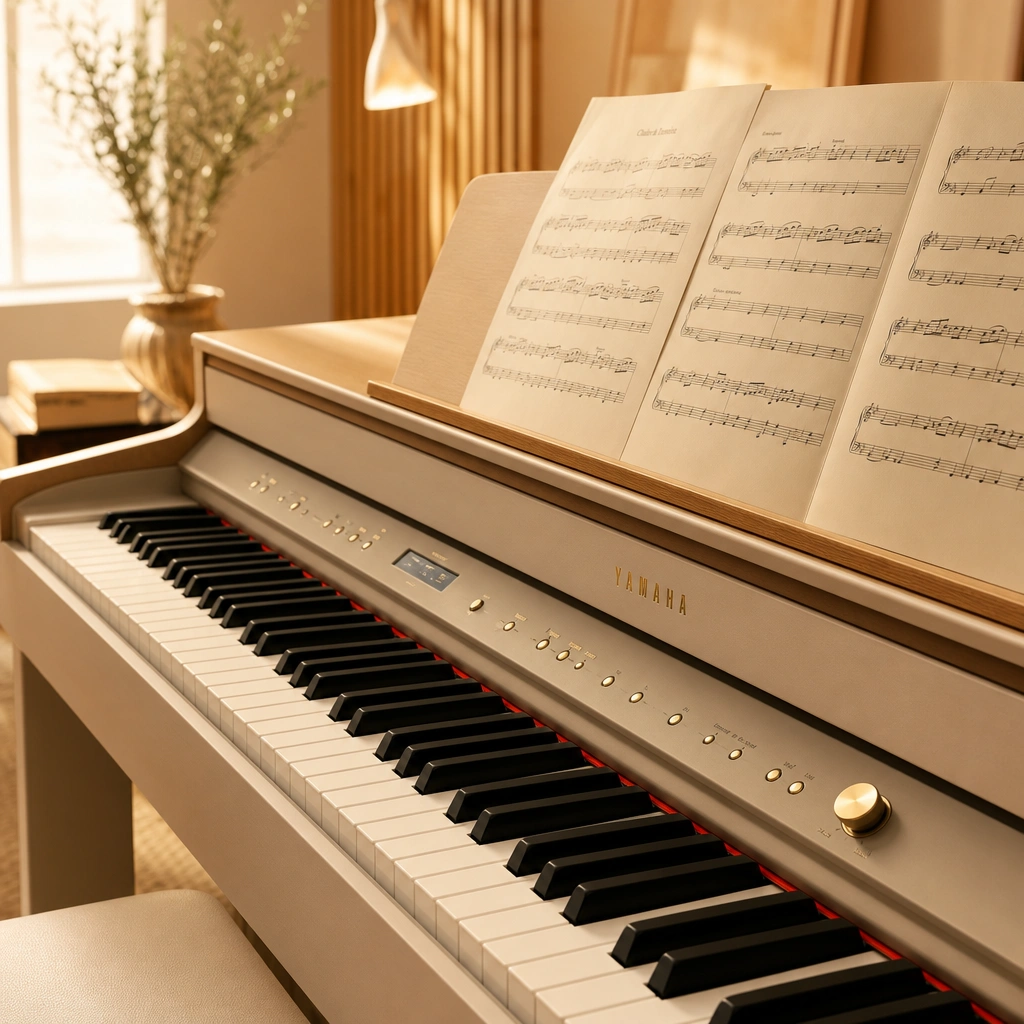
Fully weighted keys have piano-like resistance on every key. Semi-weighted keys add light weights or stiffer springs to a synth-style key, so they feel firmer but still springy. Hammer action keys use a small weighted hammer inside the keyboard that the key throws as you press, which copies how an acoustic piano’s mechanism feels under your fingers.
Manufacturers don’t use these labels consistently, but here’s what each usually means on a spec sheet:
- Fully weighted: a broad label meaning every key has real resistance. Some fully weighted keyboards get there with a hammer mechanism, others with weights built into the keys, so check which.
- Semi-weighted: common on MIDI controllers and some portable keyboards. The key pushes back more than a synth key, but it returns on a spring rather than under its own weight.
- Hammer action: a weighted hammer for each key gives the heavier, “thrown” feel of a real piano. The hammer triggers a sensor instead of striking a string.
- Graded hammer action: hammer action that is heavier in the bass and lighter in the treble, the way the larger low hammers of an acoustic piano feel.
At higher price points, many digital pianos add wooden keys, textured ivory-feel key tops, and simulated escapement, the faint notch you feel near the bottom of a grand piano key. Those details are nice. For a beginner, though, the big jump is from springy keys to properly weighted ones.
My honest take on semi-weighted: in my experience it sits closer to unweighted than to fully weighted. Don’t let the word “weighted” in the marketing convince you it has a piano feel. If a listing says semi-weighted, treat it as a keyboard, not a digital piano.
What are non-weighted (synth-action) keys?
Non-weighted keys, also called unweighted or synth-action keys, are spring-loaded keys found on most portable keyboards, synthesizers and budget instruments. A non-weighted key goes down under the lightest touch and springs straight back, so playing one feels closer to typing on a computer keyboard than to pressing a piano key.
Synth-action keys suit fast, light playing of organ, pad and lead sounds, where heavy keys would get in the way. For piano, they lack the resistance your fingers need to learn from.
Many non-weighted keyboards are touch-sensitive, meaning they play louder when you press a key faster. That helps, but with almost nothing pushing back, controlling key speed precisely is very hard. Most beginners on these keyboards end up playing everything at roughly one volume.
Key count and key weight are separate questions, too. You can find 88-key keyboards with unweighted keys, and 61-key keyboards are usually unweighted or semi-weighted. I cover the key count side in what size keyboard you need for piano lessons.
How do weighted keys affect piano technique?
Weighted keys build the finger strength, curved hand shape and touch control that piano technique depends on, because the keys only respond well when you play with good form. Unweighted keys respond to almost anything, so flat fingers, collapsed knuckles and tense wrists go unnoticed and turn into habits that are slow to undo later.
I call the habit I see most “typewriter fingers.” Students who have practiced only on unweighted keys tend to peck at the keys with flat fingers and very little control over volume. I can usually spot it within about thirty seconds of hearing someone play a real piano.
Here’s what weighted keys teach that springy keys can’t:
- Finger strength. Your hands get a genuine workout in the first few weeks. That’s normal, and it’s the strength you’ll need for everything that comes later.
- Dynamic control. On weighted keys you can play one note anywhere from a whisper to a loud accent just by changing your touch. Musical expression lives there.
- Hand position. Poor form simply doesn’t work well on weighted keys, so students self-correct. On unweighted keys you can play with a collapsed hand and never realize it.
- Relaxed arm weight. Good pianists let the arm support the fingers instead of poking with them. You can’t feel that on keys that don’t push back.
That’s the real weighted keys vs unweighted difference for technique. The finger independence work we do in lessons, like the drills in my left hand piano exercises, only does its job when the keys have real resistance. On a synth-action keyboard, the same exercise becomes a speed drill with no strength benefit.
If you’re not sure the keyboard you already own is good enough for lessons, that’s one of the quickest things to settle with a teacher watching you play. Your first 30-minute lesson with Austin is free – no card, no pressure.
Can you learn piano on a non-weighted keyboard?
You can learn the basics of piano on a non-weighted keyboard, including note names, reading music, rhythm and simple chords. What you can’t properly learn is technique: finger strength, dynamic control and a stable hand shape. A non-weighted keyboard works as a short-term starter, but regular lesson students should switch to weighted keys before habits set in.
Students do show up to their first lesson with unweighted keyboards, and we have an honest conversation about it. I can teach music theory, note reading and rhythm on any instrument. I can’t teach real piano technique on keys that don’t push back. It’s a bit like teaching swimming on dry land.
An unweighted keyboard is a reasonable temporary choice when:
- A young child, under about 5, is exploring sounds and isn’t ready for formal lessons
- The goal is synthesizer playing or music production, not traditional piano
- You need a travel keyboard and have weighted keys at home
- The budget truly allows nothing else yet, and you have a plan to upgrade soon
An unweighted keyboard won’t cut it when you’re taking regular lessons, preparing for a recital or exam, learning classical music that depends on dynamics, or planning to play acoustic pianos at all.
The “we’ll upgrade once they prove they’re serious” plan is the one I push back on most. Habits form in the first few months, so by the time the upgrade arrives, you’re undoing technique instead of building it. If commitment is the worry, many music stores rent weighted digital pianos, often with rent-to-own options.
Will unweighted keys make an acoustic piano feel hard?
Practicing only on unweighted keys usually makes an acoustic piano feel heavy and hard to control at first. Fingers that never met resistance tire quickly, hand shape collapses, and pieces that felt finished at home come out uneven. Players who practice on weighted keys generally adjust to an acoustic piano within minutes, because the core touch transfers.
One adult student of mine started on an unweighted keyboard because she wasn’t sure she’d stick with piano. After about six weeks she was hooked, but frustrated that her hands hurt whenever she played a weighted piano. She switched to a weighted digital piano, and within two weeks her tone improved, her dynamics got more controlled, and the hand fatigue stopped.
No digital piano feels identical to every acoustic, since uprights and grands vary and some older pianos are noticeably heavy. Weighted practice simply makes switching a small adjustment instead of starting over. That matters more than beginners expect, because pianos turn up at relatives’ houses, schools and recital venues, and confidence at an unfamiliar piano comes from practice that transfers.
“My confidence at the piano has grown so much since starting lessons.” – Mia Reynolds
What should a beginner buy, and how do you test the keys?
A beginner should buy an 88-key digital piano with fully weighted, preferably graded hammer action keys, plus a sturdy stand and a sustain pedal. To test the keys, play one note very softly and then loudly, try fast repeated notes, and compare the low and high ends. Good weighted keys feel firm, respond evenly and give clear dynamic control.
As of 2026, entry-level 88-key weighted digital pianos from major brands like Yamaha, Casio, Roland and Kawai typically start around $400 to $600, while basic unweighted portable keyboards run about $100 to $200. If the budget forces a trade-off, give up features before key action. Hundreds of sounds and light-up keys don’t matter. The keys do.
When you compare weighted keys vs unweighted in a store, run through this checklist:
- Play the same note as softly as you can, then as loudly as you can. You should hear a smooth, obvious difference.
- Play fast repeated notes on one key. The key should come back up quickly enough to keep pace.
- Play low in the bass, then high in the treble. On graded hammer action, the bass should feel a little heavier.
- Play for 10 to 15 minutes. Your fingers should feel like they’re doing some work. If the keys feel like calculator buttons, they aren’t really weighted.
Key actions vary even within one brand and price range, so try the exact model before buying, even if you order online.
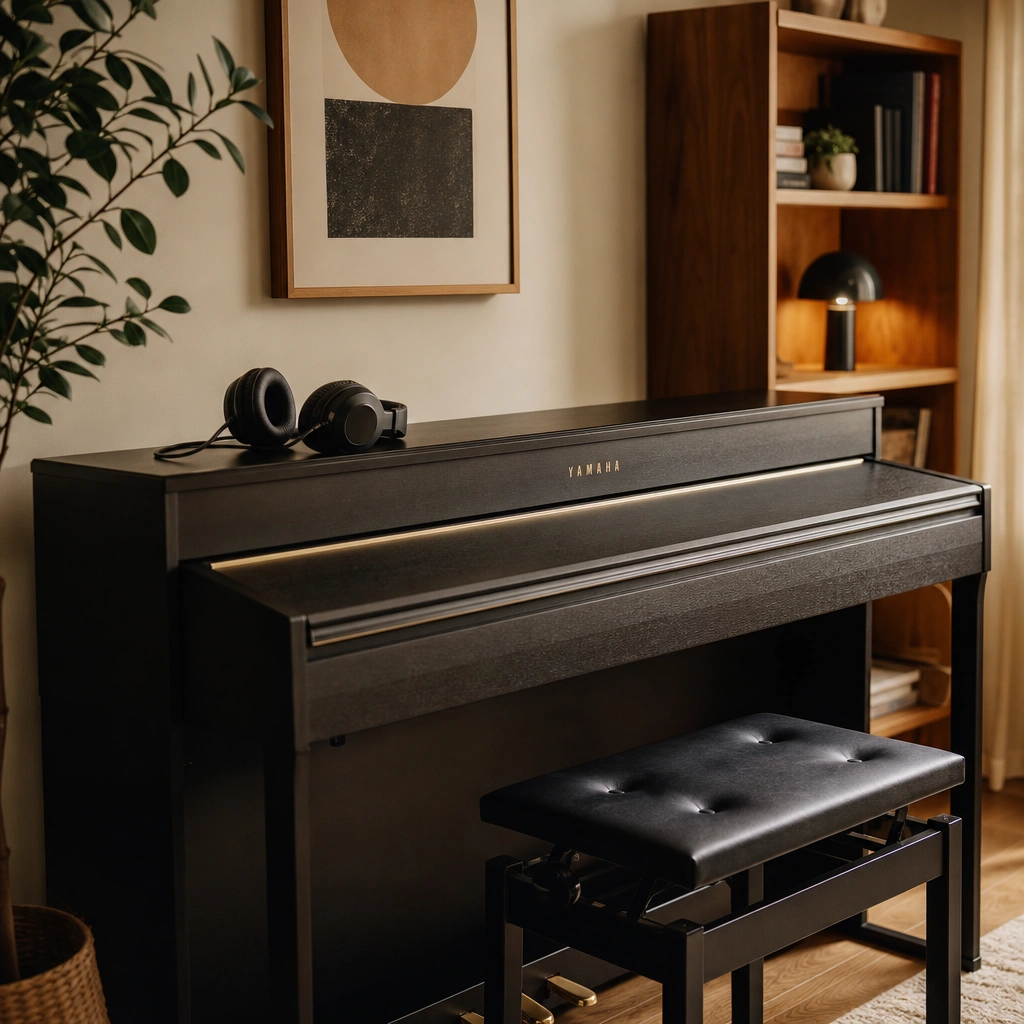
Don’t forget the setup. A weighted digital piano sitting on a dining table with no pedal loses a lot of its benefit, because posture and height affect hand position too. Get the matching stand or a sturdy adjustable one, plus a sustain pedal. For specific models and budgets, see my digital piano buying guide for beginners.
Common questions
Is a semi-weighted keyboard good enough for a beginner?
A semi-weighted keyboard is a step up from unweighted keys, but it isn’t a good long-term instrument for piano lessons. Semi-weighted keys still return on springs and lack the hammer feel that builds real touch control. For a beginner learning piano rather than synth or music production, fully weighted hammer action is worth the difference.
Is a weighted keyboard better than an unweighted keyboard for kids?
A weighted keyboard is better for kids who are taking or about to start lessons, usually around age 5 and up. Children adapt to weighted keys quickly, and starting there avoids relearning technique later. For a toddler or preschooler who is only exploring sounds, an inexpensive unweighted keyboard is fine until formal lessons begin.
Are weighted keys harder to play?
Weighted keys take more effort to press than unweighted keys, so they can feel tiring for the first week or two. That effort is the point, because it builds finger strength and control. Most beginners stop noticing the extra weight within a few weeks, and afterward unweighted keys feel flimsy and harder to play expressively.
Is a non-weighted keyboard okay for online piano lessons?
A non-weighted keyboard works for a first online lesson or trial, since note reading, rhythm and basic posture can all be taught on it. For ongoing online lessons, weighted keys matter just as much as in person, because your teacher is building the same technique. Make sure the keyboard also has a stable stand and room for your camera.
Does touch-sensitive mean the keys are weighted?
Touch-sensitive does not mean weighted. A touch-sensitive keyboard plays louder when you strike a key faster, and many cheap unweighted keyboards have that feature. Weighting describes how much physical resistance the key has. When shopping, look for the words “fully weighted” or “hammer action” in the specs, not just “touch-sensitive” or “velocity-sensitive.”
Can a weighted digital piano replace an acoustic piano?
A good weighted digital piano can replace an acoustic piano for most students, often serving 5 to 10 years from complete beginner through intermediate level and beyond. Graded hammer action, a sustain pedal and a quality piano sound cover what lessons require. Advanced players still benefit from regular time on acoustic pianos for tone color and pedaling.
Not sure your keyboard is ready for lessons?
Your first 30-minute lesson with me is completely free – we will look at the instrument you have, talk through your goals, and map out your path.
