
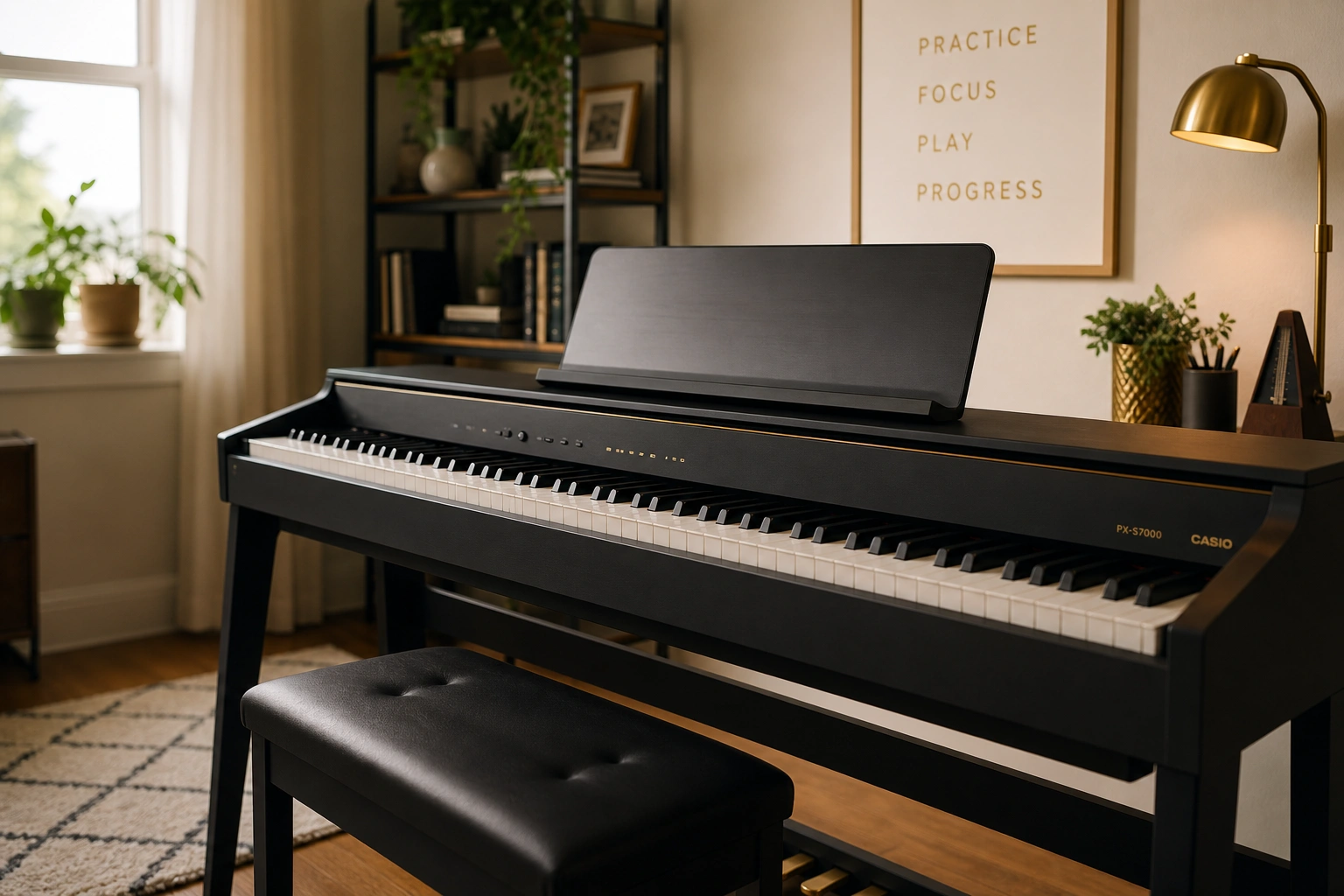
If you’re reading this digital piano buying guide beginners rely on, you’re probably standing in that exciting (and slightly overwhelming) moment: you’ve decided to learn piano, but now you need an instrument. With 10+ years of experience and hundreds of students across the Bay Area and worldwide via Zoom, I’ve watched people make brilliant choices and costly mistakes when buying their first digital piano. This guide will help you make the right decision for your budget and goals.
The good news is that you have more excellent options today than ever before. The challenging news is that you have more options today than ever before. Whether you have $200 or $2,000 to spend, I’ll walk you through exactly what to look for, what to skip, and which specific models I recommend to my own students.
The short answer
For most beginners, I recommend spending $400-$800 on a digital piano with fully weighted keys, at least 88 keys, and a sustain pedal. The sweet spot is around $500-$600, where you’ll find instruments like the Yamaha P-45, Roland FP-30X, or Casio Privia PX-160. These will serve you well for years without breaking the bank.
If your budget is tighter, you can start with a quality 61-key or 76-key semi-weighted keyboard around $200-$300, but plan to upgrade within a year if you stay committed. If you have more to invest, the $1,000-$1,500 range offers console-style digital pianos that feel remarkably close to acoustic instruments.
Why this digital piano buying guide beginners need matters more than you think
Your first instrument shapes your entire learning experience. I’ve seen talented students struggle unnecessarily on inadequate instruments, and I’ve watched beginners thrive because they invested wisely from day one.
The instrument you practice on affects your finger strength, your touch sensitivity, your dynamics, and ultimately your musicality. It also affects your motivation. An instrument that feels good under your fingers makes you want to play. One that feels cheap or sounds tinny makes practice feel like a chore.
But here’s what I tell every new student: you don’t need to spend a fortune. You need to spend wisely. This digital piano buying guide beginners can trust is designed to help you do exactly that, regardless of your budget.
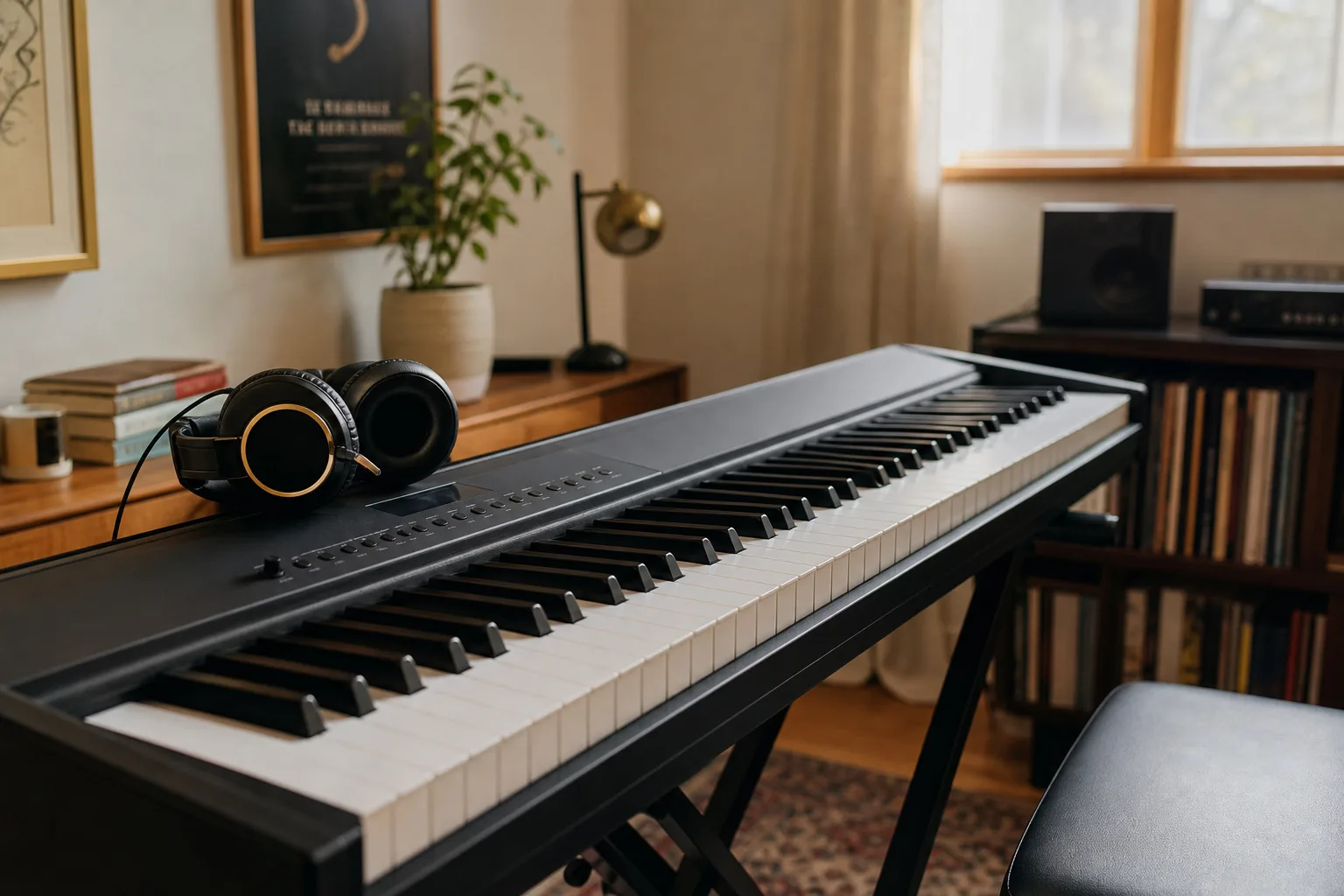
What makes a digital piano good for learning
Before we dive into specific models and prices, let’s talk about what actually matters. When students ask me what to look for, I always come back to these core elements.
Weighted or semi-weighted keys
This is non-negotiable for serious learning. Acoustic piano keys have hammers inside that create resistance. Your fingers need to build the strength and control to manage that resistance. Non-weighted “synth-action” keys feel like pressing buttons. They won’t prepare you for playing a real piano.
Fully weighted keys (sometimes called “graded hammer action”) mimic acoustic pianos most closely. The lower keys feel slightly heavier than the higher keys, just like on a real piano. Semi-weighted keys offer some resistance but less realism. For this digital piano buying guide beginners use, I recommend fully weighted whenever your budget allows.
88 keys versus fewer
A full acoustic piano has 88 keys. Most serious digital pianos match this. Some budget models offer 76, 61, or even 49 keys. For absolute beginners on a tight budget, you can start with 61 keys. But you’ll outgrow it quickly. Most intermediate repertoire requires more range.
If you’re an adult learner or a parent buying for a child you expect to continue, invest in 88 keys from the start. It eliminates the need to upgrade later.
Touch sensitivity
Your digital piano should respond to how hard or soft you press the keys. This is called velocity sensitivity or touch sensitivity. It’s how you create dynamics—the difference between loud and soft, gentle and powerful. Every piano I recommend in this guide includes this feature, but cheaper keyboards sometimes don’t.
Sound quality
You’ll be hearing this instrument for hours every week. Tinny, artificial piano sounds are fatiguing and uninspiring. Look for pianos with sampled acoustic piano sounds. The samples should have natural decay, resonance, and warmth. You can usually test this in online videos or in-store demonstrations.
Budget breakdown: What you can expect at every price point
Let’s talk real numbers. I’ve organized this digital piano buying guide beginners follow into realistic budget tiers based on what I’ve seen work for hundreds of students.
Under $300: The starting point
At this price, you’re looking at 61-key or 76-key keyboards with semi-weighted keys. These aren’t ideal long-term solutions, but they can get you started. Expect basic sounds, minimal features, and an instrument you’ll likely upgrade within 6-12 months if you stick with lessons.
This tier works for young children (under age 7) who are just exploring, or adults who aren’t yet sure of their commitment. Just know the limitations going in.
$400-$800: The sweet spot
This is where I steer most new students. You’ll find quality 88-key digital pianos with fully weighted keys, good sound samples, and built-in speakers. These instruments will serve you well through several years of learning, from beginner through early intermediate repertoire.
Models in this range often include headphone jacks (crucial for apartment living), sustain pedal inputs, and sometimes Bluetooth or USB connectivity. The build quality is solid, and the touch is respectable.
$900-$1,500: The upgrade tier
Here you’ll find console-style digital pianos with wooden keys, better speaker systems, and more nuanced hammer action. The sound engines are more sophisticated, often with multiple piano voices sampled from concert grands.
If you’re committed to years of study or you’re a returning player, this investment makes sense. The improved touch and tone will accelerate your development and increase your enjoyment.
$1,500-$3,000+: Professional territory
These instruments rival acoustic pianos in feel and tone. They often include actual wooden hammers, advanced modeling technology, and premium speaker systems. Unless you’re already an intermediate or advanced player, or you have specific professional needs, you probably don’t need this tier as a beginner.
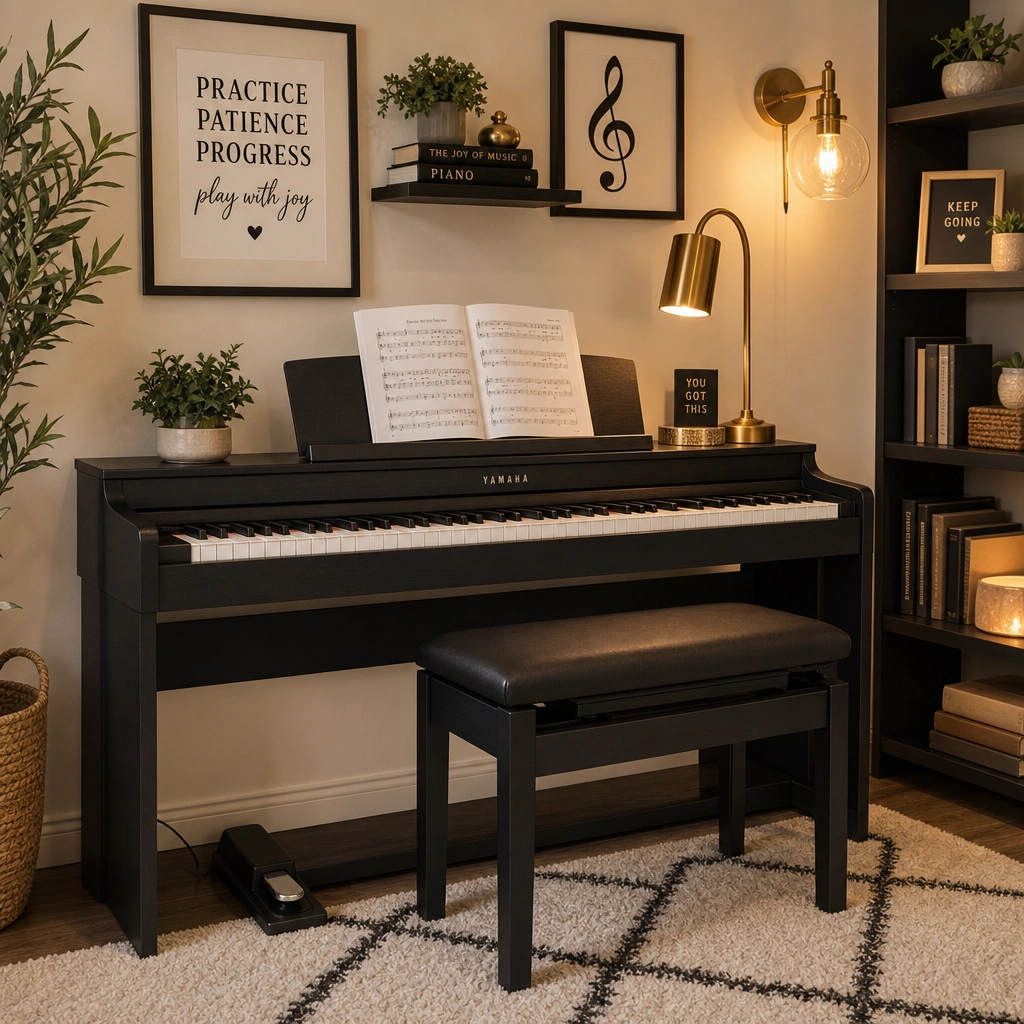
Weighted keys: The most important feature
I’m dedicating a whole section to this because it’s the single factor that matters most, and it’s often misunderstood. When I teach students who practiced all week on a non-weighted keyboard, I can tell immediately. Their fingers collapse, their wrists tense up, and they struggle with control.
Weighted keys build proper finger strength and technique from day one. They teach you to play from your arm and shoulder, not just your fingers. They allow you to develop the subtle control needed for beautiful tone and expressive playing.
There are different weighting mechanisms. Graded hammer action is best—heavier in the bass, lighter in the treble. Hammer action is good. Semi-weighted is acceptable for short-term use. Non-weighted should be avoided for serious learning.
When you test a piano in person, the keys should offer noticeable resistance. They should return to position smoothly. You should be able to play very quietly and very loudly by adjusting your touch. If the keys feel mushy, sticky, or uniform regardless of how you press them, keep looking.
Essential features every beginner needs
Beyond the keys themselves, certain features make learning easier and more enjoyable. This part of the digital piano buying guide beginners trust focuses on the practical elements you’ll use constantly.
Sustain pedal input
A sustain pedal (also called damper pedal) is essential for playing real music. It lets notes ring together, creates smooth connections between chords, and adds depth to your sound. Make sure your digital piano has a sustain pedal input jack, and ideally, make sure a pedal is included or plan to buy one separately for about $15-$40.
Headphone jack
This might be the most-used feature on any digital piano. It lets you practice at midnight without disturbing anyone. It’s perfect for apartments, shared housing, or families with different schedules. Most digital pianos include this, but always confirm.
Built-in speakers
You want to be able to play without headphones too. Built-in speakers should be clear and reasonably powerful. Bigger instruments generally have better speakers because there’s more room for them. Portable models sometimes compromise here.
Metronome
Many digital pianos include a built-in metronome. This is incredibly useful for practice. If you’re curious about how to use one effectively, I’ve written about how to use a metronome for piano practice.
Simple controls
As a beginner, you don’t need 500 sounds and rhythms. You need easy access to a good piano sound, volume control, and maybe a couple of other voices (electric piano, strings). Overly complex interfaces are distracting and overwhelming.
Nice-to-have features (not deal-breakers)
These features add convenience or expand possibilities, but they’re not essential for learning. Don’t sacrifice key quality or your budget for these extras.
USB or Bluetooth connectivity
Useful if you want to connect to learning apps, recording software, or online lessons. I teach many students via Zoom, and USB connectivity can improve audio quality. But it’s not required, especially at the beginning.
Recording function
Some pianos let you record and play back your playing. This is helpful for self-evaluation but not critical. You can always record with your phone if needed.
Multiple voices and rhythms
Organs, strings, synthesizers, and drum beats can be fun for exploration. But they’re not why you’re buying the instrument. Focus on piano sound quality first.
Lesson modes and light-up keys
Some beginner models include teaching modes or keys that light up to show you what to play. These sound appealing but rarely help with real learning. Proper instruction (whether through structured lessons or private lessons) is far more effective.
Three pedals versus one
Acoustic pianos have three pedals, but beginners use mainly the sustain pedal on the right. The soft pedal and sostenuto pedal come into play with intermediate and advanced repertoire. One pedal is fine to start.
Learning this goes faster with a teacher watching your hands. Your first 30-minute lesson with Austin is free — no card, no pressure.
Specific recommendations by budget
Now for the part you’ve been waiting for: specific models I recommend. These are pianos I’ve seen students use successfully, models I’ve tested myself, or instruments that consistently receive strong reviews from piano teachers. This digital piano buying guide beginners need wouldn’t be complete without real-world recommendations.
Best under $300
Casio CT-S300 or CT-S500: 61 keys, touch-sensitive, decent sound for the price. Good for young children or testing the waters. Not fully weighted, so plan to upgrade.
Alesis Recital Pro: 88 keys, semi-weighted, under $300 when on sale. A surprisingly solid option for tight budgets. The action isn’t great, but it’s functional for early learning.
Best $400-$600 (the sweet spot)
Yamaha P-45 or P-125: These are the models I recommend most often. 88 weighted keys, Graded Hammer Standard action, clean piano tone, reliable build. The P-125 adds better speakers and more features, but the P-45 is excellent for the price.
Casio Privia PX-160 or PX-770: Great value, solid weighted action, good sound. The PX-770 is a console-style version with a stand and three-pedal unit. Both are reliable workhorses.
Roland FP-30X: Slightly more expensive but worth it. Superb sound engine, excellent key action, Bluetooth connectivity. This piano punches above its weight class.
Best $700-$1,200
Yamaha P-515: Wooden keys, flagship sound engine, sophisticated touch. This is where portable digital pianos get serious.
Roland FP-90X: Exceptional action and sound, professional features, still portable. A fantastic instrument for committed learners.
Kawai ES920: Responsive Hammer Compact action, beautiful tone, underrated gem in this price range.
Yamaha YDP-165 (Arius series): Console-style with cabinet and three pedals. Great for home use when you want furniture-quality design.
Best $1,200-$2,000
Kawai CA49 or CA59: These console digitals have wooden-key actions that feel remarkably like acoustic pianos. The sound is rich and dimensional.
Roland RP701 or HP704: Beautiful cabinets, excellent sound, solid educational features. These feel like real furniture and play like serious instruments.
Yamaha CLP-745 (Clavinova series): Top-tier digital piano with grand-piano-style action and modeling technology. An investment that will serve you for a decade or more.
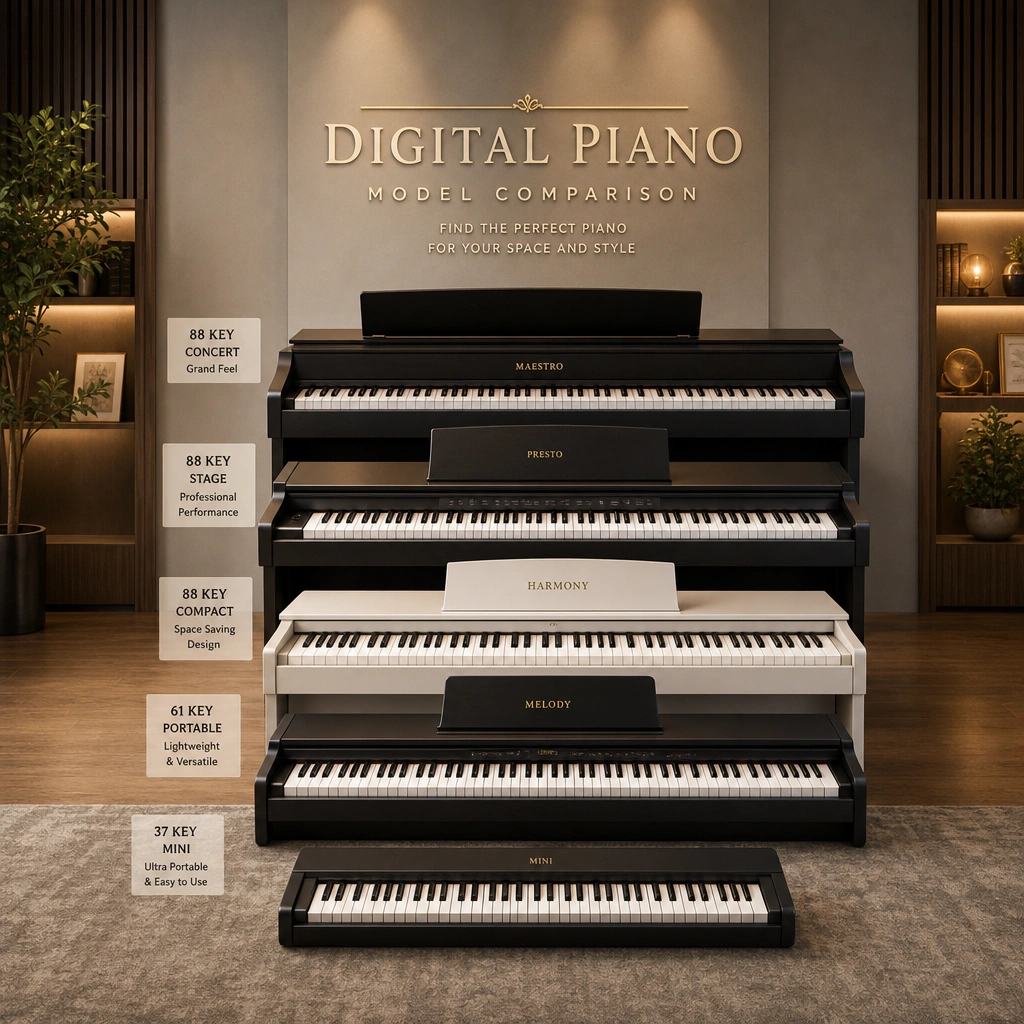
Where to buy and what to avoid
Where you buy matters almost as much as what you buy. Here’s what I’ve learned from students’ experiences and my own instrument purchases.
Best places to buy
Local music stores: You can test the instruments, get expert advice, and often negotiate bundles (stand, bench, headphones). Support local when possible. Plus, if something goes wrong, you have a relationship and a place to go.
Dedicated online music retailers: Sweetwater, Guitar Center, Sam Ash, and others offer good prices, detailed specs, and customer support from actual musicians. They usually pack well and handle returns professionally.
Manufacturer websites: Yamaha, Roland, Kawai, and Casio sometimes offer refurbished models or direct sales with warranties. Refurbished can save you 20-30% on a like-new instrument.
Amazon: Convenient and often competitive pricing, but read reviews carefully and confirm the seller is authorized. Unauthorized dealers sometimes don’t honor manufacturer warranties.
Places to be cautious
Used marketplaces (Craigslist, Facebook Marketplace): You can find deals, but you can also find broken instruments, missing parts, or obsolete models. If you buy used, test thoroughly in person, and research the model’s age and common issues first.
Big-box retailers (Costco, Target, Walmart): They occasionally carry decent beginner keyboards, but selection is limited and staff knowledge is often minimal. Fine for budget starter keyboards, not for serious instruments.
Unfamiliar online brands: If you’ve never heard of the brand and can’t find reviews from piano teachers or established music sites, be skeptical. Some off-brand “88-key weighted digital pianos” use misleading terminology and poor-quality components.
What to check before buying
Confirm the warranty and who honors it. Check return policies—ideally 30-45 days. Read reviews from actual piano students and teachers, not just casual users. Look for bundles that include bench, stand, and headphones. Compare prices across 3-4 retailers, including shipping costs.
Common mistakes I see new students make
I’ve watched hundreds of students navigate this decision. Here are the pitfalls to avoid, straight from real experience.
Buying based on number of sounds
“This one has 600 sounds!” means nothing if the piano sound—the one you’ll use 99% of the time—is mediocre. Focus on quality of the core piano voice, not quantity of novelty sounds.
Choosing non-weighted keys to save $100
This saves money in the short term but costs you in development. You’ll either plateau quickly or need to upgrade soon. It’s a false economy. If budget is truly tight, buy used or wait and save a bit more.
Underestimating space requirements
An 88-key digital piano is about 52 inches wide. Make sure you have space for the instrument, a bench, and room to sit comfortably. Cramped practice spaces create bad posture and tension.
Skipping the bench
A proper piano bench at the correct height is crucial for good technique. Dining chairs, office chairs, and couches all create problems. If the piano doesn’t come with a bench, budget for one. You want a bench that’s 19-20 inches high, with a flat, stable top.
Forgetting about ongoing costs
Digital pianos don’t need tuning (a huge advantage), but you might need replacement pedals, music stands, or eventually new speakers. Budget a small cushion for accessories and eventual maintenance.
Buying too much piano too soon
The flip side: sometimes students get intimidated by fancy features they don’t need yet. A $1,500 piano won’t make you learn faster than a good $600 piano. Buy for your current level and near-future needs, not for aspirations five years away.
What about keyboards versus digital pianos?
Let me clarify this common confusion. People often use “keyboard” and “digital piano” interchangeably, but they’re different instruments with different purposes.
Digital pianos are designed to replicate acoustic pianos. They have weighted keys, piano-focused sounds, and learning-appropriate features. This entire digital piano buying guide beginners use focuses on these instruments.
Keyboards (or synthesizers) are designed for versatility, performance, and sound creation. They usually have non-weighted or semi-weighted keys, hundreds of sounds, rhythm tracks, and portability. They’re excellent for composition, performance, and exploration—but not ideal for learning classical or traditional piano technique.
If your goal is to learn piano—to play classical pieces, jazz standards, pop songs with proper technique—choose a digital piano. If your goal is electronic music production, live performance with a band, or sound design, then a keyboard might be appropriate. But for traditional piano learning, stick with actual digital pianos.
The exception is very young children (ages 4-6) or absolute beginners who aren’t yet sure of their commitment. A basic 61-key touch-sensitive keyboard can serve as a short-term entry point. But expect to upgrade to a proper digital piano within a year if you continue. I discuss commitment and practice frequency in my article on how often beginners should practice piano.
Bringing it all together: Your action plan
Let’s make this practical. Here’s your step-by-step action plan based on everything we’ve covered in this digital piano buying guide beginners can follow.
Step 1: Set your budget. Be realistic about what you can afford, but remember that $500-$600 is the sweet spot for quality and value. If you can stretch to that range, do it. If not, $300-$400 can still work.
Step 2: Prioritize weighted keys and 88 keys. These are your non-negotiables if you’re serious about learning. Everything else is secondary.
Step 3: Research 3-4 specific models in your price range from the recommendations above. Read reviews, watch YouTube demos, compare specifications.
Step 4: Test in person if possible. Visit a music store and play the models you’re considering. Feel the key weight, listen to the sound, check the interface. Even ten minutes of hands-on testing is valuable.
Step 5: Check for bundles and deals. Many retailers offer packages with stands, benches, headphones, and pedals. These bundles often save $50-$100 versus buying separately.
Step 6: Confirm warranty and return policy. Make sure you’re covered if something goes wrong, and that you can return or exchange if the piano doesn’t meet your needs.
Step 7: Set up your practice space thoughtfully. Good lighting, comfortable seating, minimal distractions. Your environment affects your practice quality. For more on building effective practice habits, check out my piano practice schedule for adults.
Step 8: Start with good instruction. The best piano in the world won’t teach you proper technique. Whether you learn through online piano lessons, lessons, or in-person teaching, invest in quality instruction from the start. At Weaver Music, we offer a free 30-minute trial lesson so you can experience our teaching approach with no commitment.
Final thoughts from the piano bench
After teaching hundreds of students at every level—from complete beginners to advanced players returning after years away—I’ve learned that the right instrument makes an enormous difference. Not because expensive pianos magically make you better, but because the right piano removes obstacles and makes practice enjoyable.
This digital piano buying guide beginners depend on is built on real teaching experience, real student feedback, and real musical outcomes. The recommendations aren’t based on affiliate commissions or marketing hype. They’re based on what I’ve seen work, week after week, lesson after lesson, across every age and background.
Your piano will be your partner in this journey. It will witness your frustrations and your breakthroughs. It will be there at 6 AM when you practice before work and at 10 PM when you unwind with music. It deserves thoughtful consideration.
The beautiful thing about digital pianos today is that you truly can find an excellent instrument at almost any budget. Yes, there are differences between a $500 piano and a $1,500 piano. But both can serve you well if chosen wisely. Both can help you grow into the musician you want to become.
Start where you are. Buy the best instrument your budget allows, prioritizing key action and sound quality above features and extras. Then show up consistently, practice with intention, and trust the process. That combination—a decent instrument and dedicated practice—will take you remarkably far.
If you’re feeling overwhelmed, remember: you don’t have to figure this out alone. Many of my students begin their journey with questions exactly like yours. We discuss instrument options, practice strategies, and musical goals in that very first lesson. Sometimes just talking through your situation with an experienced teacher clarifies everything.
Our lessons are live over Zoom, and we work with students of all ages and levels at $99 per 60-minute session. We also maintain a four-level lesson path that can supplement your learning and provide structured guidance between lessons—or serve as a standalone learning resource if you prefer self-paced study.
The most important decision isn’t which specific model you choose from this digital piano buying guide beginners trust. It’s the decision to begin. To commit to this beautiful, challenging, rewarding instrument. To give yourself the gift of music.
Everything else—the gear, the technique, the repertoire—unfolds from that one decision.
Ready to find out for yourself?
Your first 30-minute lesson with me is completely free – we will evaluate where you are, talk through your goals, and map out your path.