
The short answer
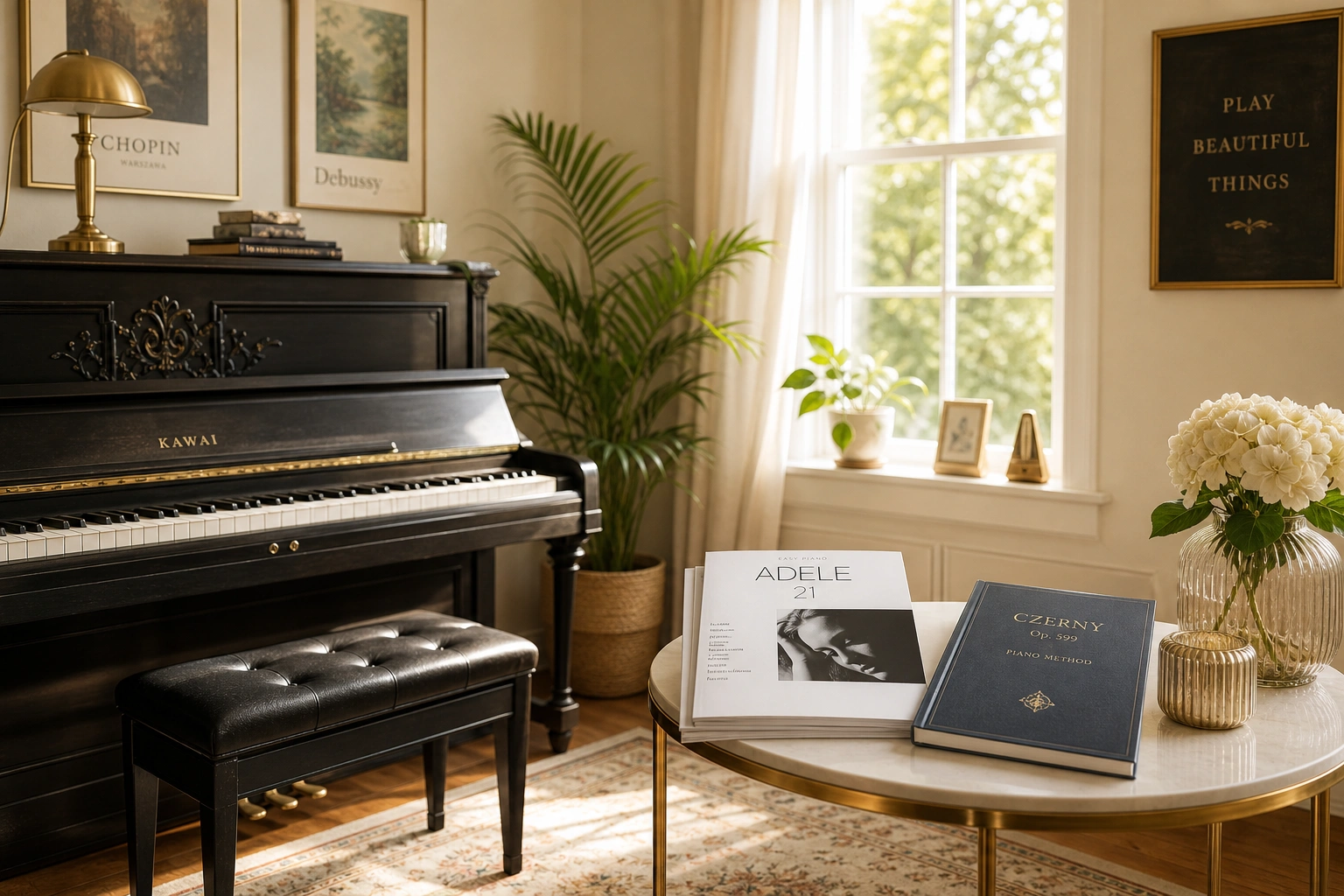
Classical or pop piano first depends on your goal: classical method books build reading and technique fastest, while pop songs build motivation fastest. Most of my students do best starting with a classical-leaning method book but learning one simple pop song within the first month to stay excited about practicing.
I say this after watching hundreds of students start from zero. Austin here, and I run a free 30-minute trial lesson for exactly this reason – I want to hear what a student actually wants to play before I hand them a method book, because the “right” answer changes person to person.
Why does classical-first work for many beginners?
Classical method books work well first because they introduce reading, hand position, and technique in a carefully graded sequence. Books like Faber’s Piano Adventures or Alfred’s Basic Piano build skills in an order that prevents bad habits, whereas pop sheet music often assumes skills a true beginner doesn’t have yet.
Here’s what I mean in practice. A classical method book typically starts with five-finger patterns in one position, adds one new concept per page, and reinforces it across three or four short pieces before moving on. That repetition is boring to some adults, but it’s exactly why kids who stick with it read fluently by book three.
I had a nine-year-old student, Lily, who wanted to skip straight to a pop song her older sister played. We compromised: she worked through Faber Level 1 for technique and sight-reading, and I arranged a simplified version of her favorite song as a side piece. She stayed motivated because she had both – structure and something recognizable.
- Classical method books teach correct finger numbering and hand shape from page one.
- They introduce rhythm notation gradually, so you’re not sight-reading syncopation on day three.
- They use mostly two-hand independence exercises, which pop arrangements for beginners often skip or oversimplify with block chords only.
If you want a deeper look at what a true beginner should tackle in week one regardless of genre, I wrote a full breakdown of the first things to learn on piano.
When is starting with pop songs the better choice?
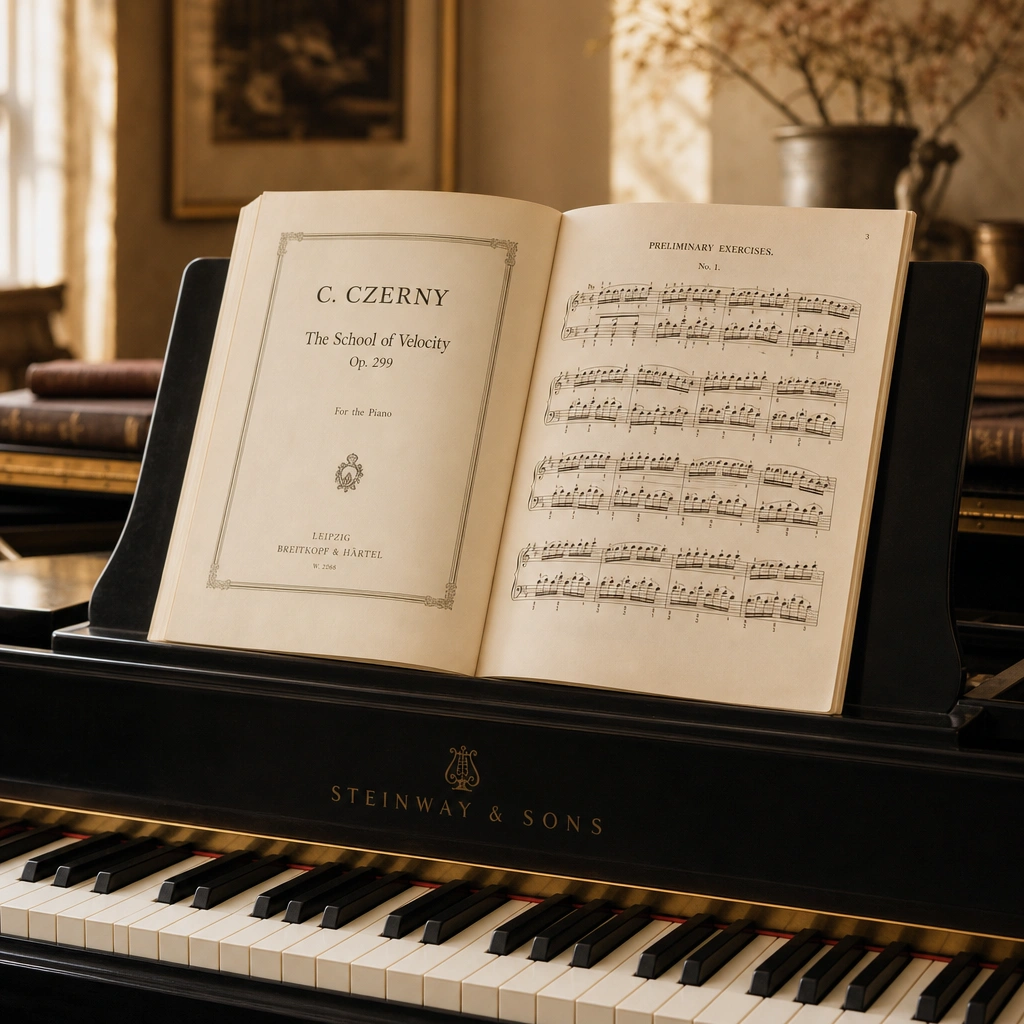
Starting with pop songs is the better choice when motivation, not technique, is your biggest obstacle. Adult learners who return to piano after years away, or teens who only practice when they’re excited, often quit a classical method book within six weeks but will happily practice a pop song for months.
I see this constantly with adult beginners. They sign up wanting to play one specific song – a wedding first dance, a favorite ballad, something from a show. If I hand them Hanon exercises in week one, half of them don’t come back. If I hand them a simplified arrangement of the song they love, even with just two or three chords, they practice daily because they’re emotionally invested.
Pop-first also works because modern pop and film-score arrangements for beginners are genuinely easier than they used to be. Publishers now release “easy piano” versions with simplified left-hand patterns, which didn’t really exist in the same quantity twenty years ago.
- Pop songs usually use repeating chord progressions, which teaches pattern recognition quickly.
- A single familiar song can carry a beginner through weeks of practice without boredom.
- Pop arrangements often lean on chord symbols rather than dense notation, which suits students who want to play by ear or by chords rather than read every note.
The tradeoff is real, though: a student who only ever plays simplified pop arrangements can plateau because they never build the reading fluency or finger independence that classical technique work provides. I’ve had adult students hit a wall around month four for exactly this reason.
What skills does each approach actually build?
Classical study builds sight-reading, two-hand independence, dynamics, and precise technique, while pop study builds chord fluency, rhythm feel, and ear training. Neither path is complete on its own – most working pianists, including accompanists and session players, eventually need both skill sets.
Think of it as two different muscle groups. A classical-trained beginner can usually read a new page of music faster but struggles to improvise over a chord chart. A pop-trained beginner can often play by ear and groove with a rhythm section but gets lost reading a Bach invention cold.
- Reading speed: classical method books win here, since they drill note-reading daily from the start.
- Rhythm and groove: pop songs win here, because syncopation and backbeat patterns show up immediately.
- Technique and hand shape: classical wins, since exercises isolate specific finger movements.
- Chord fluency and improvising: pop and lead-sheet work win, teaching you to hear harmony rather than just read it.
If improvising or playing without sheet music interests you long-term, it’s worth reading about how to improvise on piano – it’s a skill pop-first students tend to pick up faster, almost by accident.
Not sure which path fits your goals – or your child’s? Your first 30-minute lesson with Austin is free – no card, no pressure.
Can you mix classical and pop from the start?
Mixing classical and pop from the start is not only possible, it’s what I do with most students. A typical lesson plan pairs a classical method book for technique and reading with one pop or film song, arranged at the student’s actual level, for motivation and fun.
This is essentially why I built the Weaver Music curriculum the way I did. Lessons follow the structured method-book path – technique, reading, theory, repertoire – at $60 for 30 minutes, $80 for 45 minutes, or $99 for 60 minutes, with room for a song the student actually wants, arranged at their level.
Books are the only extra cost. I’ve had students spend six months building foundations before taking on a specific wedding song. Others start on a song from lesson one because it’s the whole reason they signed up.
“I started as a complete beginner, and Austin made the learning process feel comfortable.” – Noah Peterson
One pattern I’ve noticed across roughly ten years of lessons: students who mix both genres from week one quit far less often than students locked into just one. Boredom and frustration are the two biggest reasons students stop playing, and a blended approach hedges against both.
How do I decide for my child or myself?
Deciding between classical or pop first comes down to one honest question: what will keep you practicing most days? A student who practices an “easier” path consistently will always out-progress a student who abandons a “better” path after three weeks.
For kids, I generally recommend leaning classical-first, because young children benefit from the gradual skill-building and because most elementary-age students don’t yet have a strong enough musical identity to demand one specific song. That said, if your child asks for a particular song by name repeatedly, that’s a signal worth listening to – motivation at that age is fragile and precious.
For teens and adults, I lean toward starting with at least one pop or personally meaningful song immediately, layered with enough classical technique to avoid bad habits. Adults especially are paying for their own time and tend to disengage fast without a tangible, recognizable goal.
- If you have zero musical goal beyond “learn piano generally,” start classical.
- If you have one specific song driving you, start there and add technique work around it.
- If you’re a parent of a reluctant child, alternate – one classical piece, one fun piece, every few weeks.
Whichever path you pick, a solid rhythm foundation matters in both genres – if you’re shaky there, it’s worth a look at how to count rhythm on piano before you go much further. According to the Wikipedia overview of music education, balanced early training across repertoire styles is associated with stronger long-term retention of skills, which lines up with what I see in my own studio.
Common questions
Is it harder to switch from pop to classical later, or classical to pop?
Switching from classical to pop is usually easier. Classical students already read notation and have finger control, so chord-based pop music feels simpler by comparison. Pop-first students sometimes struggle initially with reading dense classical notation, since they never built that habit early on.
Do I need to learn classical music to play pop well?
No, you don’t need classical training to play pop well, but basic technique helps. Many skilled pop and session pianists never studied classical repertoire seriously. What matters more is solid hand position, steady rhythm, and enough theory to understand chord progressions.
What’s a good first pop song for a true beginner?
Good first pop songs use simple, repeating left-hand chord patterns and limited rhythmic complexity – think simplified arrangements of well-known ballads or film themes. I usually pick something the student already knows by ear, since recognizing the melody speeds up learning dramatically in the first few weeks.
Will starting with pop songs limit my child long-term?
Starting with pop songs alone can limit a child’s reading and technique if it’s the only material used. Pairing pop songs with a structured method book avoids this – the pop song keeps them motivated while the method book quietly builds the reading and hand skills they’ll need later.
How quickly can a beginner learn a recognizable pop song?
Most beginners practicing 15-20 minutes a day can play a simplified version of a recognizable pop song within 4-6 weeks. More complex arrangements with independent left-hand patterns typically take 2-3 months, depending on prior rhythm skills and how often they practice.
Can adults who only want to play pop songs skip theory entirely?
Adults can get by for a while without formal theory, but basic chord and key knowledge speeds everything up. Even a little theory – recognizing major versus minor chords, for example – helps you learn new pop songs faster and troubleshoot your own mistakes without a teacher.
Whatever you choose, the real decision isn’t permanent – most of my students shift the balance between classical and pop over time as their goals change. If you want help figuring out where to start, book a free trial lesson and we’ll map it out together based on what you actually want to play.
Ready to find out for yourself?
Your first 30-minute lesson with me is completely free – we will evaluate where you are, talk through your goals, and map out your path.
