
The short answer
The first things to learn on piano are: correct posture and hand shape, the names of the white keys using groups of two and three black keys as landmarks, basic rhythm (quarter and half notes), and one simple five-finger song played hands separately, then together. In that order, most beginners feel genuinely comfortable within two to three weeks.
I’ve walked hundreds of students through this exact sequence, from six-year-olds to retirees, and the order matters more than people expect. If you want a second opinion and a personalized plan, Weaver Music offers a free 30-minute trial lesson where I check your current skill level and build a book list around it – no card required.
Why do posture and hand position matter before anything else?
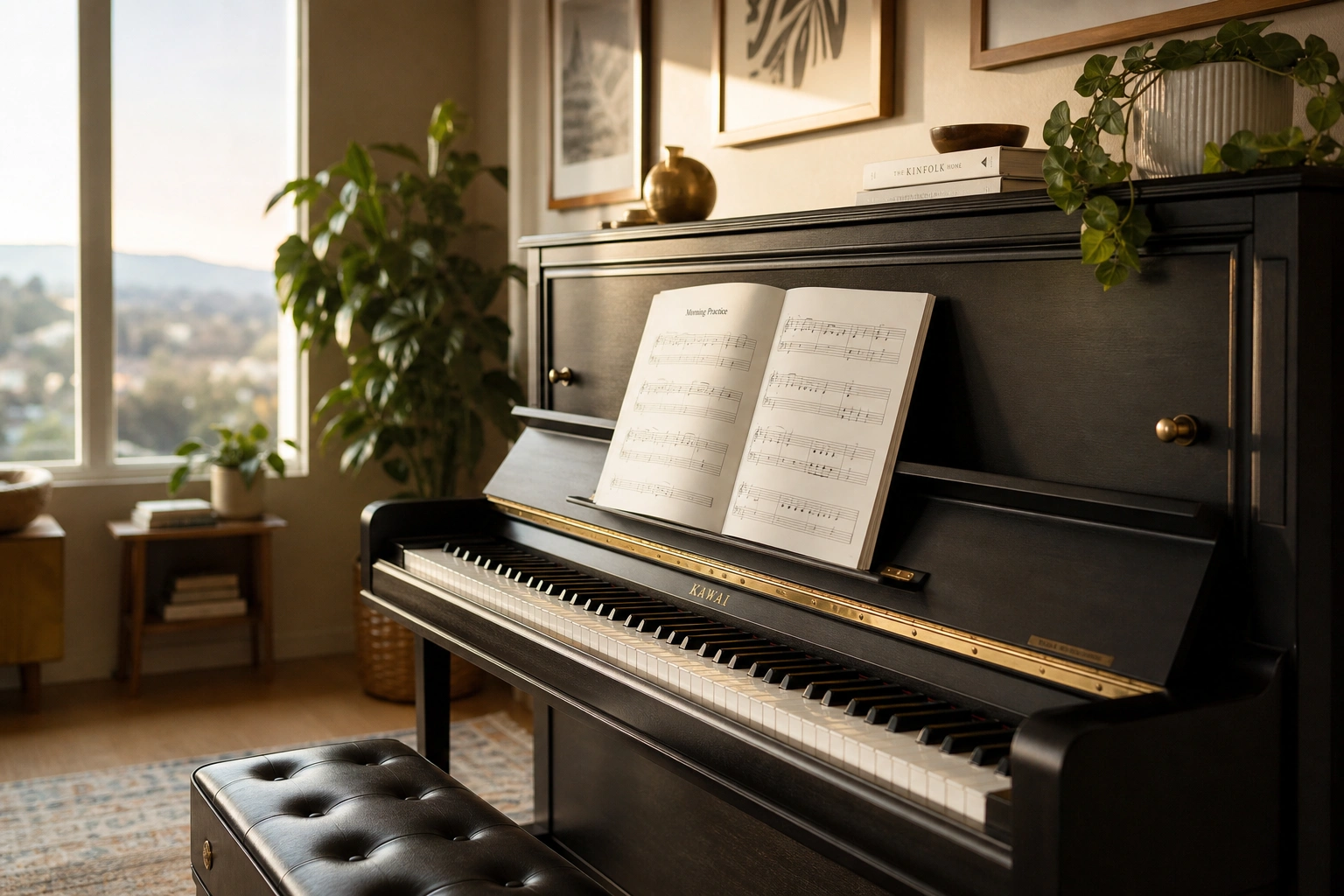
Posture and hand position come first because bad habits formed in week one are the hardest thing to undo later. Sit with elbows slightly above the keys, wrists level, and fingers curved as if holding a small ball, not flat or collapsed at the knuckle.
I see one mistake constantly: new students lean in and flatten their fingers to “feel” the keys more. It feels natural but it caps your speed and control for years if left uncorrected. One of my adult students, a software engineer in his 40s, spent his first two lessons just practicing curved-finger taps on the closed keyboard lid before we touched a single note – it saved him months of retraining.
- Bench height: forearms roughly parallel to the floor
- Wrists: level, never sagging below the keys
- Fingers: curved, each knuckle slightly domed
- Feet: flat on the floor or a footstool if legs don’t reach
What note names and keys should a beginner learn first?
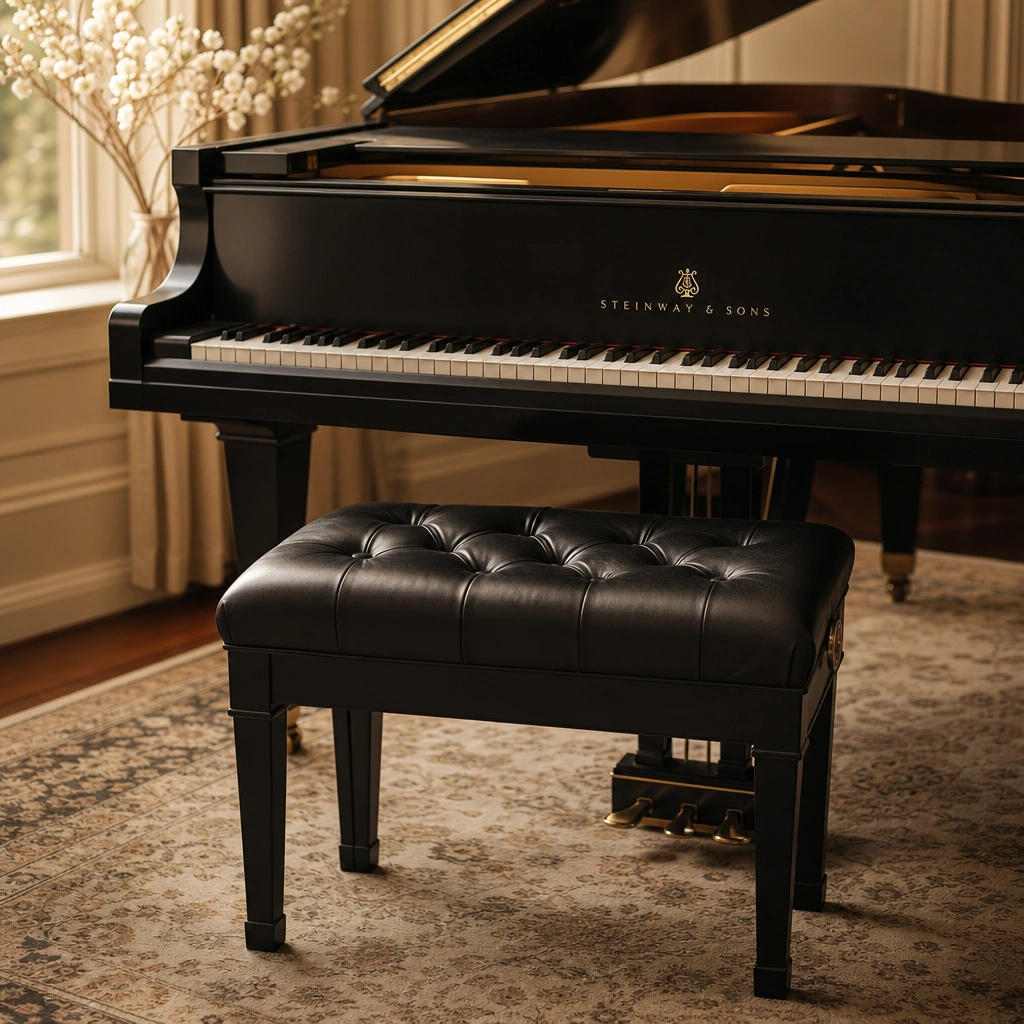
Beginners should first learn to find C using the group of two black keys as a landmark, then learn the white key names C-D-E-F-G-A-B moving up from there. This takes most people one short practice session to memorize reliably across the whole keyboard.
Once a student can find any C instantly, the rest of the alphabet falls into place because it simply repeats. I teach the “two black keys, three black keys” landmark system in the very first lesson – it’s faster than counting keys from the end of the piano, which is how a surprising number of self-taught adults try to do it.
For a deeper dive into labeling every key correctly, see our guide on piano key names.
How much rhythm do I need to know before playing songs?
A true beginner needs just two rhythm values to start: the quarter note (one steady beat) and the half note (two beats). Clapping or tapping these while counting aloud, “1, 2, 3, 4,” for about five minutes a day builds the internal pulse needed to play even a simple song in time.
I ask every new student to count out loud during their first few weeks, even if it feels awkward. Silent counting is where timing problems hide. A twelve-year-old student of mine insisted she “already knew” the rhythm of her first song by ear, skipped counting, and rushed every phrase – once she counted aloud for one practice session, the whole piece snapped into place.
For more detail on building this skill properly, our article on how to count rhythm on piano walks through it step by step.
If you’re not sure whether you’re starting in the right order, a quick skill check can save you weeks of guessing. Your first 30-minute lesson with Austin is free – no card, no pressure.
What should my very first piano song actually be?
A beginner’s first song should use only five notes in one hand, stay within a single position with no hand shifts, and have a simple, repetitive rhythm. “Mary Had a Little Lamb” and “Hot Cross Buns” are classic first choices because both fit entirely under five fingers without moving.
Practice each hand separately for two or three days before combining them. Most adult beginners I work with can play a simple two-hand song cleanly within 6-8 weeks at about 20 minutes of practice a day. Kids often get there faster on rhythm but need more repetition on note reading.
- Learn the right hand alone until it’s smooth
- Learn the left hand alone until it’s smooth
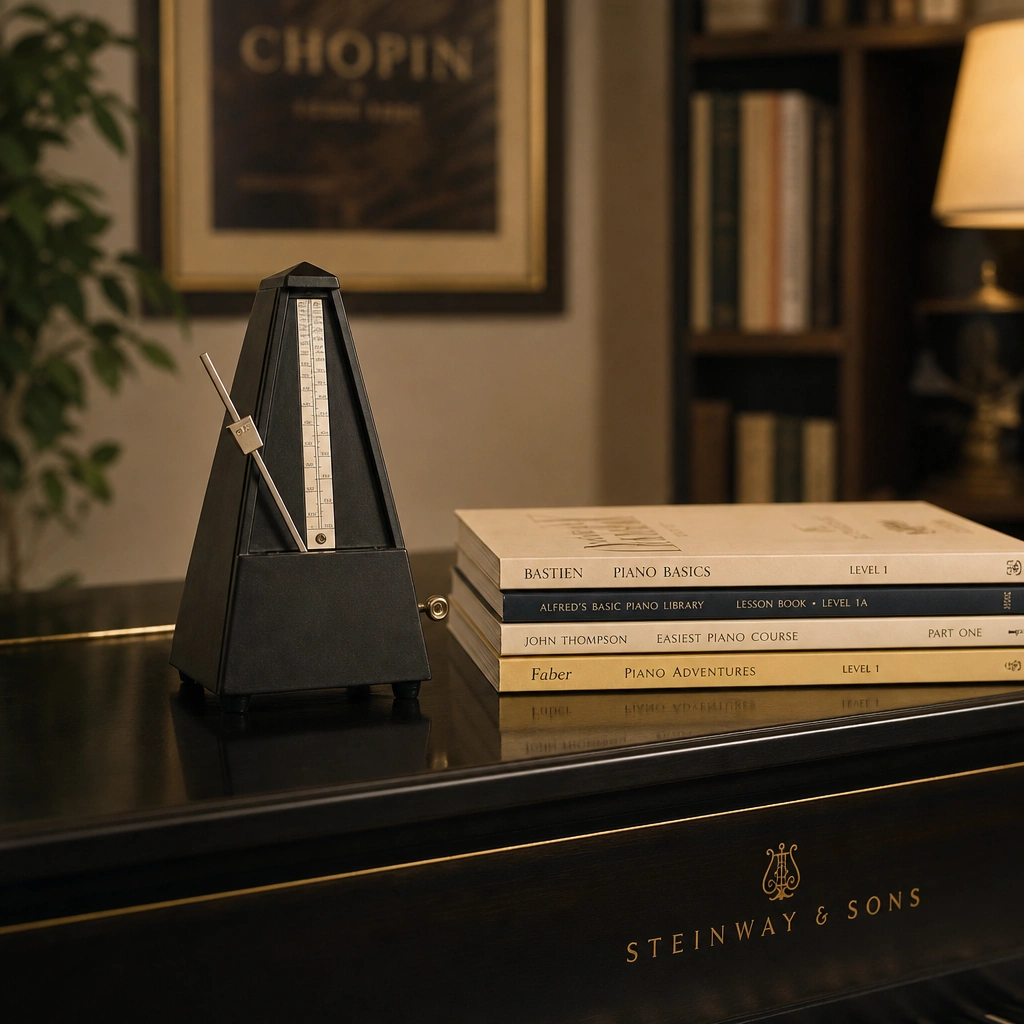
- Combine both hands at half speed with a metronome
- Gradually increase tempo over several days
“I started as a complete beginner, and Austin made the learning process feel comfortable.” – Noah Peterson
Should a beginner learn to read music or play by ear first?
Most beginners benefit from learning basic note reading alongside simple ear training from the very first lessons, rather than choosing one exclusively. Reading gives structure and independence; playing by ear builds the listening skills that make music feel natural rather than mechanical.
In my own teaching, I introduce the staff and note names in week one but also ask students to pick out a familiar tune, like “Happy Birthday,” by ear within the first month. Doing both early prevents the common trap of a student who reads fluently but can’t play a single song without sheet music in front of them, or the opposite problem of a strong ear player who stalls the moment real notation shows up.
According to the Wikipedia overview of music theory, reading notation is a learned skill distinct from musical hearing – both develop with consistent, separate practice.
How fast does a beginner actually make progress?
Most beginners who practice 15-20 minutes a day can play a simple two-hand song within 6-8 weeks, read basic notation comfortably within 2-3 months, and hold a short memorized piece by the 4-6 month mark. Progress is rarely linear – expect plateaus around weeks 3 and 10.
These numbers come from tracking real students, not a general estimate. A student who practices in five short daily bursts almost always outpaces one who practices 90 minutes once a week, even though the total time is similar. Consistency beats duration every time.
- Weeks 1-2: posture, note names, basic rhythm
- Weeks 3-6: first five-finger song, hands together
- Months 2-3: reading simple sheet music fluently
- Months 4-6: first memorized short piece
If you’re also deciding on practice gear or hand independence drills, our pieces on Hanon exercises for beginners and what piano lessons typically include are good next reads.
Common questions
Do I need to buy a piano before starting lessons?
No. A 61-key or larger weighted or semi-weighted keyboard is enough to begin. Many students start on a basic keyboard and upgrade later once they know they’ll stick with it; what matters most early on is consistent daily access, not the instrument’s price.
Can adults really start piano from scratch and get good?
Yes. I teach adult beginners regularly, including several in their 60s and 70s, and the learning process is nearly identical to a child’s – slightly slower on finger independence, often faster on reading and theory because adults grasp abstract concepts more quickly.
How long should a beginner’s first practice sessions be?
Ten to fifteen minutes a day is plenty for the first few weeks. Short, focused, daily sessions build muscle memory and rhythm far better than one long weekly session, and they’re much easier to actually stick with.
What if I can’t tell whether I’m making progress?
Record yourself playing the same short passage once a week. Beginners rarely notice their own improvement in real time, but a one-minute recording from three weeks ago usually makes the progress obvious.
Is it normal to feel clumsy for the first several lessons?
Completely normal. Nearly every beginner I’ve taught felt uncoordinated for the first two to four weeks, especially coordinating both hands. This is a temporary, well-documented stage of motor learning, not a sign of lacking talent.
Should a beginner start with a specific song they love instead of exercises?
It’s fine to want this, and it’s genuinely motivating, but a loved song usually needs to be simplified first. That’s something Austin does in lessons at Weaver Music – he arranges the song at the student’s actual level. See lessons to learn a specific song for details.
Weaver Music lessons are live, one-on-one, and held over Zoom, wherever you are. All ages and levels are welcome, Standard lessons run $60 for 30 minutes, $80 for 45 minutes, or $99 for a full hour, and every new student starts with that free 30-minute trial lesson, a skill check, and a book list tailored to where they’re actually starting from.
Ready to find out for yourself?
Your first 30-minute lesson with me is completely free – we will evaluate where you are, talk through your goals, and map out your path.
