The short answer
Yes, most adults with arthritis in their hands can play piano, often quite well, by adjusting how they practice rather than whether they practice. Shorter sessions, a proper warm-up, a lighter keyboard action, and forgiving repertoire choices let joints work comfortably instead of fighting the instrument every time.
I’ve taught students with osteoarthritis in their fingers, rheumatoid arthritis flares, and post-surgery stiffness, and nearly all of them found a way to keep playing once we changed the approach instead of the goal. If you want a second opinion on where your hands are at right now, a full 60-minute first lesson is $29 (normally $99, paid after the lesson, and only if you loved it) — it’s a low-pressure way to get a real skill check rather than guessing on your own.
This article stays focused on arthritis in the hands specifically. If you’re looking at piano more broadly as an older adult, I’ve written a separate guide on piano lessons for seniors that covers pacing, memory, and motivation.
What usually still works for hands with arthritis?
Most people with arthritis retain enough finger mobility and grip control to play simple to moderately complex piano music. What usually goes first is endurance and fine dexterity at speed, not basic note-playing, so slower pieces, block chords, and relaxed hand positions tend to stay comfortable the longest.
In my studio, I’ve noticed a pattern across students in their 50s, 60s, and 70s with arthritis diagnoses:
- Single-note melodies and simple hymn-style arrangements are usually very manageable.
- Wide stretches (octaves, big chords) are often the first thing to become uncomfortable.
- Repetitive fast passages (trills, rapid scales) tend to fatigue joints faster than slow legato playing.
- Rolled or broken chords are often easier than blocked chords struck all at once.
One student, a retired nurse named in her late 60s with osteoarthritis in both thumbs, assumed she’d have to give up piano entirely. We simplified her chord voicings and dropped a few notes from each hand shape, and six months later she was playing full arrangements of songs she’d wanted to learn for years. The music changed; the ability to make music didn’t.
How should I warm up before playing with arthritis?
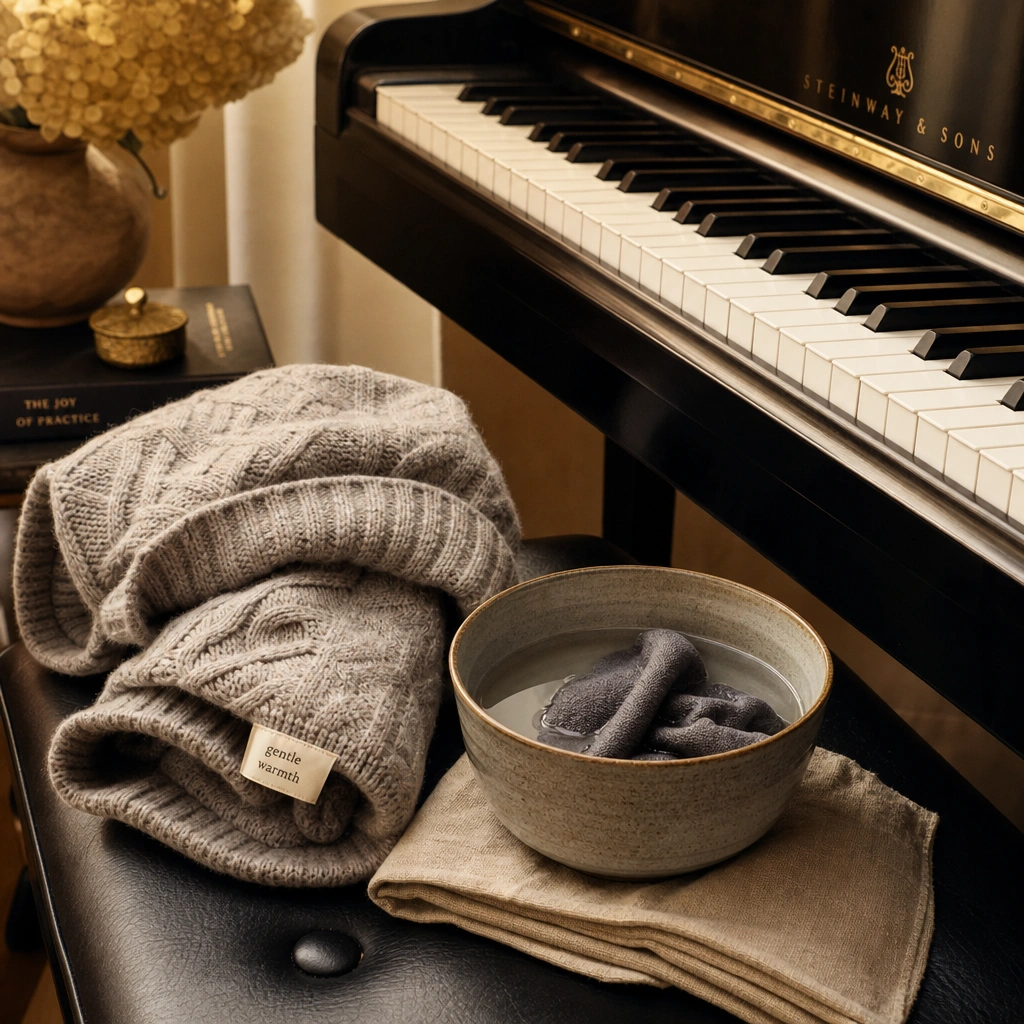
A good warm-up for arthritic hands means gentle movement before any keyboard contact, not jumping straight into scales. Five minutes of slow finger stretches, wrist circles, and light hand-opening and closing gets blood flowing and joints moving before you ask them to do precise work.
A warm-up routine I give students with stiff or sore hands:
- Rub palms together for 20-30 seconds to generate warmth.
- Slowly open and close each hand into a loose fist, 10 times.
- Gentle wrist circles, both directions, 10 each way.
- Play very slow, soft five-finger patterns (no stretching) for 2-3 minutes before anything harder.
I tell students: if a warm-up movement hurts, stop and skip it — this is about preparing the joints, not pushing through pain. This is a teaching habit I use, not medical advice, so adjust it based on what your own hands tell you that day.
How long should I practice if my hands get sore?
Shorter, more frequent practice blocks usually work better for arthritic hands than one long session. Many of my students with arthritis do well with two 10-15 minute sessions a day instead of one 30-minute block, which keeps total practice time similar while giving joints recovery time in between.
A few adjustments I make for students managing joint pain or stiffness:
- Stop at the first sign of sharp pain — mild fatigue is normal, pain is a signal to rest.
- Practice on good days, go lighter (or skip) on flare days rather than forcing consistency.
- Break practice into smaller chunks: five minutes of warm-up, ten of new material, five of review.
- Track which songs or passages consistently cause discomfort and simplify those specific spots.
One student with rheumatoid arthritis told me her flare days were unpredictable, so we built a practice plan around “flexible minimums” — even five minutes of slow, easy playing counted as a full practice day. That small shift kept her consistent for over a year instead of quitting during her first bad flare.
If arthritis has you wondering whether piano is still possible, the best way to find out is to sit down with a teacher and actually try. Your first lesson with Austin is a full 60 minutes for just $29 (normally $99). Love it, or it’s on us.
What keyboard or piano action is easiest on arthritic hands?
A lighter, unweighted or semi-weighted keyboard action is generally easier on arthritic hands than a heavy, fully-weighted acoustic piano action. Less resistance per keypress means less force through the finger joints over a practice session, which matters more as session length or song difficulty increases.
Some practical points on instrument choice:
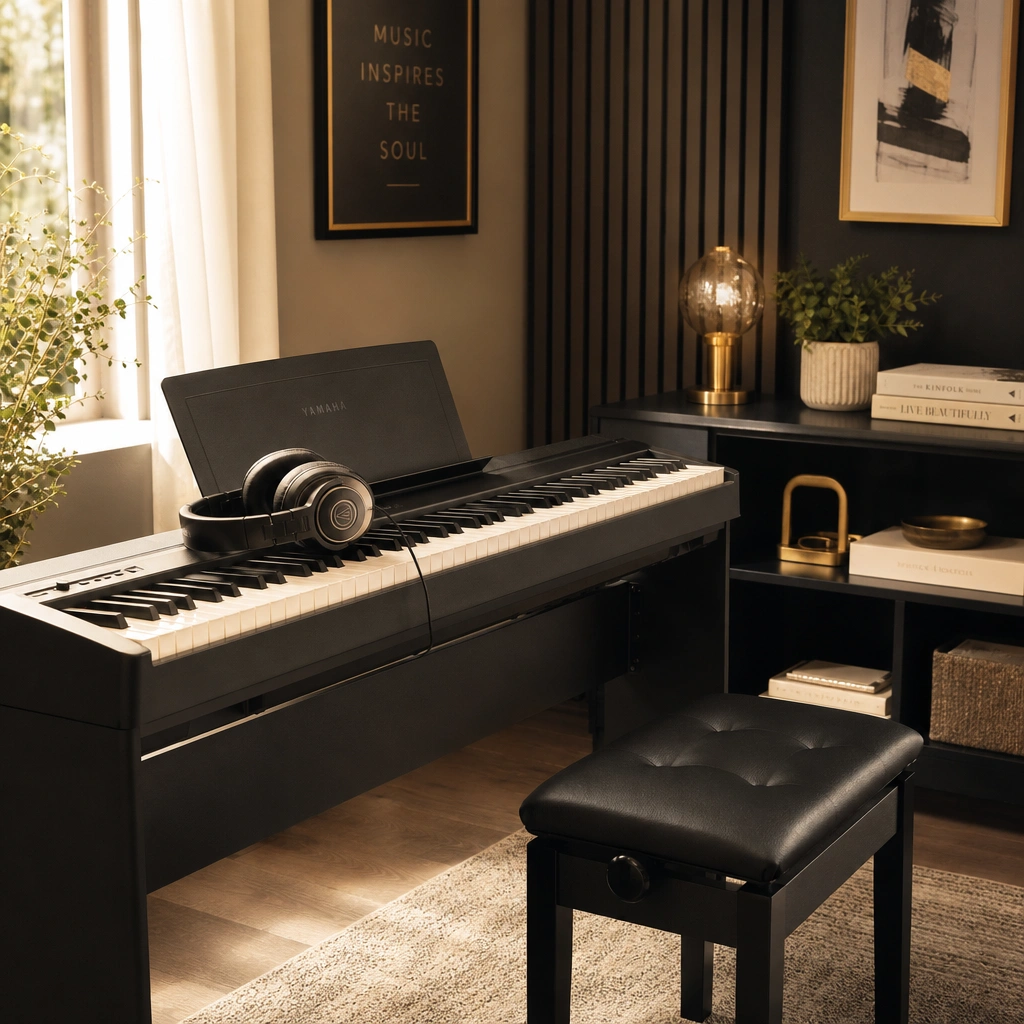
- Digital keyboards let you adjust touch sensitivity, which can lighten the feel further on tough days.
- A slightly smaller keyboard (narrower keys) can reduce stretching for some hand shapes, though this varies person to person.
- Headphones on a digital keyboard let you practice in short bursts without worrying about disturbing others, which supports the shorter-session approach above.
- If you take lessons online, setup matters too — my guide to setting up for online piano lessons covers bench height and angle, which affects wrist strain more than people expect.
All lessons at my studio are live, one-on-one over Zoom, so I can actually watch a student’s hand position in real time and flag tension before it becomes pain — that’s harder to catch from a video course alone.
Which pieces should I choose first?
The best first pieces for arthritic hands avoid wide stretches, rapid repeated notes, and long unbroken playing sections. Simple melodies with mostly stepwise motion, slower tempos, and chords you can roll instead of strike all at once tend to feel the most comfortable.
What I steer students toward and away from:
- Good choices: simple arrangements of familiar songs, slow hymns, easy classical pieces with mostly five-finger patterns.
- Use caution with: advanced classical repertoire requiring octave stretches or sustained fast passages — something like the first movement of Moonlight Sonata is playable for some but genuinely demanding on the hands for others.
- Adjust rather than avoid: if a piece you love has a big chord, it’s often fine to drop the middle note or roll it slightly instead of skipping the song entirely.
I’ve had students insist on learning a specific wedding song or a piece tied to a memory, arthritis or not. In almost every case we found a simplified arrangement that kept the melody and feeling intact while removing the physically demanding parts. The emotional reason to play is usually worth protecting even when the original sheet music isn’t realistic.
“My confidence at the piano has grown so much since starting lessons.” – Mia Reynolds
When should I ask a doctor before playing?
A doctor or hand therapist should be consulted before starting piano if you have sharp pain during normal daily tasks, recent hand surgery, an active severe flare, or any new swelling and numbness. As a piano teacher, I can adjust technique and repertoire, but I’m not qualified to diagnose or treat a joint condition.
Some signs that point toward a medical conversation first:
- Pain that’s sharp, sudden, or worsening rather than mild fatigue.
- Numbness or tingling in the fingers during or after playing.
- A recent diagnosis where you haven’t yet discussed activity levels with your doctor.
- Swelling that doesn’t settle down within a day of rest.
Once a student has the green light from their doctor, that’s when I come in to help find the technique and repertoire that fits their hands day to day. I’ve had students bring notes from their hand therapist about specific movements to avoid, and we build the lesson plan around that information.
Common questions
Can arthritis get worse from playing piano?
Playing with proper technique and reasonable breaks generally doesn’t worsen arthritis, but forcing through sharp pain or practicing in long unbroken sessions can aggravate a joint. The safest approach is slow tempos, light touch, warm-ups, and stopping at the first sign of real pain rather than fatigue.
Is it better to learn piano or keep up an instrument I already played before arthritis?
Returning to piano after a gap is often easier than starting fresh, since muscle memory and reading skills usually return faster than they were built the first time. Either way, expect to relearn comfort with stretches and speed before expecting your pre-arthritis skill level back immediately.
Do finger splints or braces help while playing?
Some students play comfortably with light splints or braces on specific fingers, especially for support rather than restriction, but this is a question for a doctor or hand therapist, not a piano teacher. If you use one, tell your teacher so lesson exercises can work around it.
Can I still play piano with arthritis in just one hand?
Yes, many students play well with significant asymmetry between hands, leaning more on the less-affected hand for melody and simplifying the other hand’s part. Left-hand-only or right-hand-only arrangements exist for exactly this situation, and a teacher can adapt almost any song this way.
Will an electric keyboard really feel different from an acoustic piano for my hands?
Yes, noticeably. Acoustic pianos use a heavier, fully mechanical action that requires more force per key, while most digital keyboards let you choose a lighter touch setting. For arthritic hands, that difference in resistance over a 20-minute session can be the difference between comfortable and sore.
How do I know if piano is still realistic for me at all?
The best way to know is to try a short, guided session and see how your hands respond, rather than guessing from home. A teacher can watch your hand shape, suggest immediate adjustments, and give you an honest read on what’s realistic — that’s exactly what a first lesson is designed to do.
If you’re an adult with arthritis wondering whether piano is still in reach, I’d rather give you an honest answer in person than have you guess alone at home. Many students also ask me about related adjustments — if slower reading is part of your concern too, my piece on memorizing piano notes might help reduce how much you need to sight-read under finger strain. And if you’re weighing instruments before you commit to anything, the piano action itself is worth understanding — it explains exactly why touch varies so much between instruments.
Ready to find out for yourself?
Your first lesson with me is a full 60 minutes for just $29 (normally $99). We will evaluate where you are, talk through your goals, and map out your path. Love it, or it’s on us.
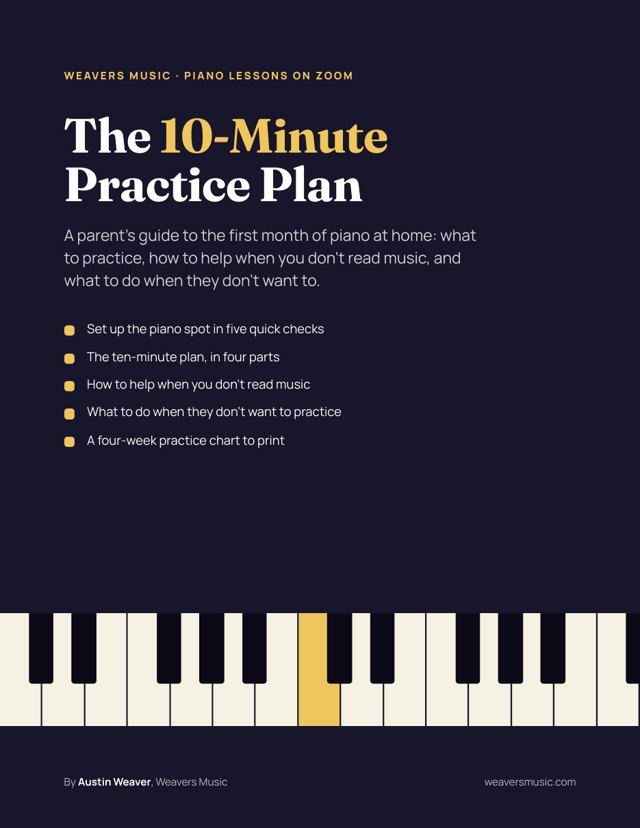
Free guide for parents
The 10-Minute Practice Plan
What to practice, how to help when you don’t read music, and what to do when they don’t want to. A short printable guide from Austin, with a four-week practice chart.