The short answer
The Moonlight Sonata’s first movement is rated early-to-mid intermediate, roughly a late RCM Level 6 to Level 8 piece or ABRSM Grade 5 to 6. It is not technically brutal like the finale, but it demands patient hands, steady triplets, careful pedaling, and real control over soft, singing tone – which is exactly what makes it feel harder than it looks on the page.
I’ve assigned this piece to dozens of students over the years, and the pattern is always the same: everyone underestimates it at first glance, then respects it by week three. If you want a second opinion on where you actually stand before diving in, a full 60-minute first lesson is $29 (normally $99, paid only after the lesson, and only if you loved it).
What skills does it actually require?
The Moonlight Sonata’s first movement requires four specific skills: steady triplet rhythm in the right hand, a quiet and even left-hand bass line, the ability to voice a melody buried inside moving notes, and disciplined pedal control. None of these are flashy, but each one takes real practice time to feel natural under your hands.
Here’s the breakdown I give students before they start:
- Triplet coordination – the right hand plays continuous eighth-note triplets, almost the entire piece, without speeding up or dragging.
- Hand independence – the left hand holds long, quiet bass notes while the right hand keeps moving, so one hand cannot “borrow” rhythm from the other.
- Melodic voicing – the top note of each triplet carries the tune, and it has to sing out above the rest.
- Pedal technique – Beethoven’s own marking asks for continuous sustain pedal, which modern pianos handle differently than instruments from 1801.
- Dynamic control – almost the entire movement sits at pianissimo to piano, which is its own kind of difficulty.
None of these skills is advanced in isolation. Combined, at a slow tempo, for four pages straight, they add up to a piece that rewards patience more than raw technique.
Why do the triplets trip people up?
Triplets trip up Moonlight Sonata students because the rhythm has to stay perfectly even for almost five minutes without a metronome click to lean on. Most beginners speed up during louder sections and drag during quiet ones, which breaks the hypnotic, floating quality the piece depends on.
I had a student, a retired engineer who picked piano back up at 61, who could play every note accurately within two weeks but sounded rushed and anxious the whole way through. The fix wasn’t more notes – it was slowing his metronome down to 40 beats per minute and staying there for a full week before speeding up again. Within ten days his triplets sounded calm instead of nervous.
A metronome is non-negotiable here. If you’ve never built a habit with one, our guide on building speed safely covers the same slow-practice principle that makes this piece work.
How do you bring out the melody?
Voicing the melody in Moonlight Sonata means making the top note of each right-hand triplet louder than the two notes underneath it, so the tune floats above the texture instead of blending into it. This is a finger-weight skill, not a volume-pedal trick, and it’s one of the hardest things to self-teach from a score alone.
Three things help students get this feeling under their fingers:
- Practice the top notes alone as a separate melodic line, hands apart, until you can hum it from memory.
- Add the two lower triplet notes back in very softly, almost like background noise.
- Use slightly more weight on the fifth finger and slightly less on fingers two and three of the same hand.
This is exactly the kind of subtle, ear-trained adjustment that’s nearly impossible to catch from a video alone – it’s where having a teacher listen in real time, even over Zoom, actually changes how fast you improve.
If you’re working through Moonlight Sonata on your own and want a second set of ears on your voicing and pedal timing, that’s exactly the kind of thing a single lesson can fix fast. Your first lesson with Austin is a full 60 minutes for just $29 (normally $99). Love it, or it’s on us.
How much does the pedal matter?
Pedal use is one of the biggest difficulty factors in Moonlight Sonata, because Beethoven’s original instruction asks for the sustain pedal held down across long passages, which works on his era’s instrument but creates a muddy wash of sound on a modern piano. Getting the atmosphere right without the blur is a skill most intermediate players haven’t needed yet.
In practice, most performers today use quarter-pedaling or half-pedaling instead – small, partial lifts that keep the sound connected but not smeared. I teach this by having students change the pedal on every new harmony change rather than holding it through the whole bar, then gradually lightening the depth once their ear can hear the difference. If you’re new to pedal technique generally, that’s a worthwhile detour before tackling this piece specifically.
How long does it take to learn?
Learning Moonlight Sonata’s first movement typically takes 2 to 4 months of consistent practice for an intermediate player, and 6 months or more for a motivated late-beginner, at around 20-30 minutes of focused daily practice. True beginners usually need a year or more of foundational work first.
Realistic timelines by starting point, based on what I’ve seen across students:
- Complete beginner (0-6 months of piano): not ready yet – focus on hand independence and reading first.
- Solid beginner (one year in, comfortable playing hands together): 8-12 months, working section by section.
- Early intermediate (two to three years in): 3-5 months to a performance-ready level.
- Intermediate to advanced player: 6-10 weeks, mostly refining voicing and pedal nuance.
Speed of progress depends far more on daily consistency than talent. A student who practices 20 minutes a day for ten weeks will almost always outpace one who practices an hour, once a week, for the same ten weeks.
“I started as a complete beginner, and Austin made the learning process feel comfortable.” – Noah Peterson
Are there easier versions worth starting with?
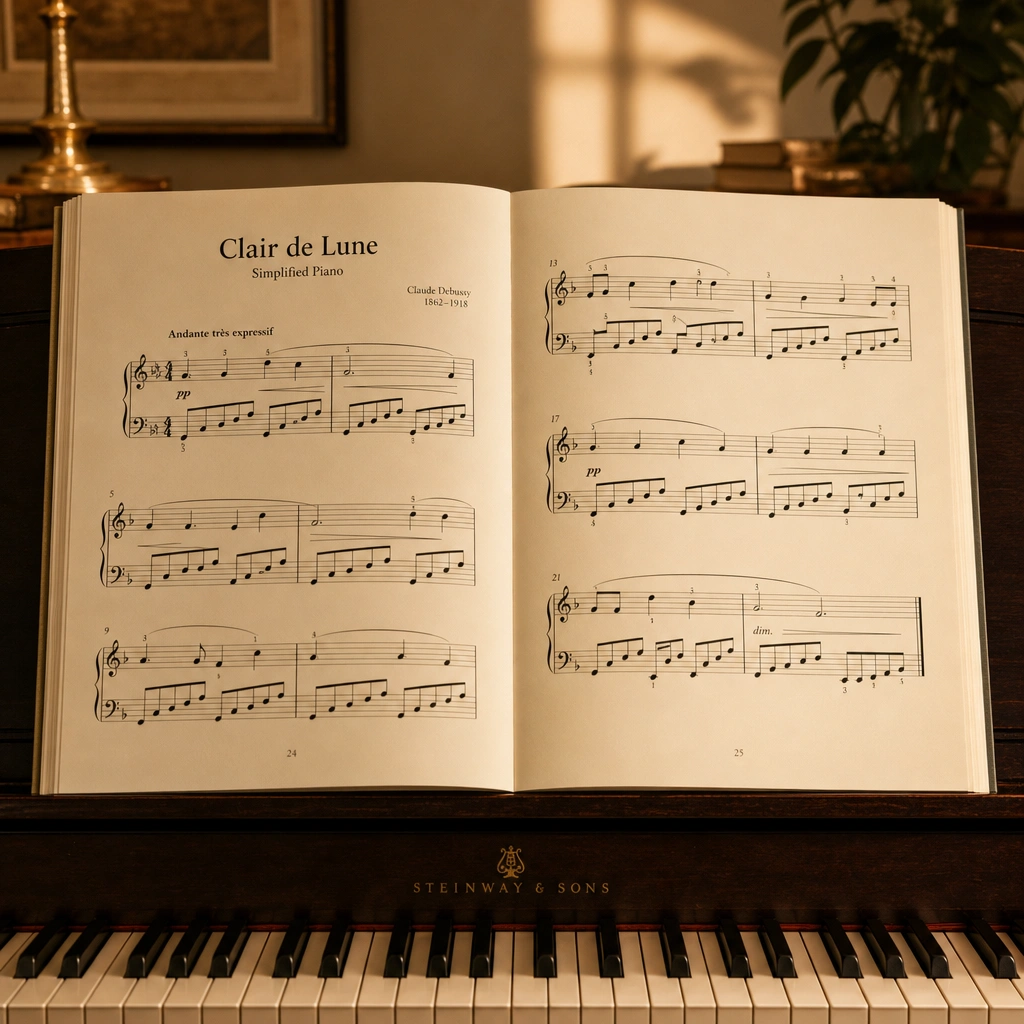
Simplified arrangements of Moonlight Sonata exist specifically for early-intermediate and even late-beginner players, with reduced left-hand spans, slower suggested tempos, and thinner right-hand textures. These let students play a recognizable, satisfying version of the piece months before they could handle Beethoven’s original score.
What to look for in a simplified edition:
- Leveled arrangement books that label difficulty by grade (look for “late elementary” or “early intermediate” on the cover).
- Versions that keep the original triplet feel but narrow the left-hand octave stretches, which is often the real barrier for smaller hands – our guide on playing piano with small hands covers this in more depth.
- Editions with pedal markings already written in, so you’re not guessing.
One free example of that second kind: PlayableNotes has a version of the whole first movement without the left-hand octaves. The right hand is exactly as printed, and each left-hand octave keeps its lower note, so the widest stretch is a sixth instead of an octave. You can play it at any tempo, one hand at a time, or print it, with no account.
I generally recommend students attempt a simplified version first if they’re under two years into lessons. It builds the right habits – slow triplets, soft dynamics, melody voicing – without the frustration of a piece that’s genuinely out of reach yet.
Common questions
Is Moonlight Sonata harder than Fur Elise?
Moonlight Sonata’s first movement is generally considered slightly more demanding than Fur Elise, mainly because of its continuous triplet texture and the pedal control it requires. Fur Elise has more varied sections but shorter technical demands in any single passage, which makes it a common stepping stone beforehand.
Can a self-taught beginner learn Moonlight Sonata?
A self-taught beginner can learn Moonlight Sonata’s notes, but voicing the melody and pedaling correctly are very difficult to judge without outside ears. Many self-taught players learn the right notes but miss the musical shaping that makes the piece actually sound right – something worth reading about in our piece on teaching yourself piano.
How fast should Moonlight Sonata be played?
Beethoven marked the first movement “Adagio sostenuto,” meaning slow and sustained, typically around 50-60 beats per minute for the quarter note pulse underlying the triplets. Many recordings vary slightly, but rushing this movement is the single most common mistake I hear from students.
Do I need big hands to play Moonlight Sonata?
Large hands are not required for Moonlight Sonata’s first movement – most stretches stay within a comfortable octave, unlike the piece’s dramatic third movement. Players with smaller hands may need to roll a few chords slightly, but this rarely affects the overall difficulty.
What grade level is Moonlight Sonata 1st movement?
Most graded syllabi place the first movement around ABRSM Grade 5-6 or RCM Level 6-8, putting it solidly in early-to-mid intermediate territory. The third movement, by contrast, sits at an advanced level, which is why many students play only the first movement for years before attempting the rest.
Should I memorize Moonlight Sonata or read from the score?
Either approach works, but most students find memorizing small two-to-four bar sections as they go easier than reading the full piece at tempo, since the repeating triplet pattern is unusually easy to memorize by feel. Our memorization guide isn’t listed here, so check general memory techniques for repetitive pieces like this one.

Ready to find out for yourself?
Your first lesson with me is a full 60 minutes for just $29 (normally $99). We will evaluate where you are, talk through your goals, and map out your path. Love it, or it’s on us.
Free guide for parents
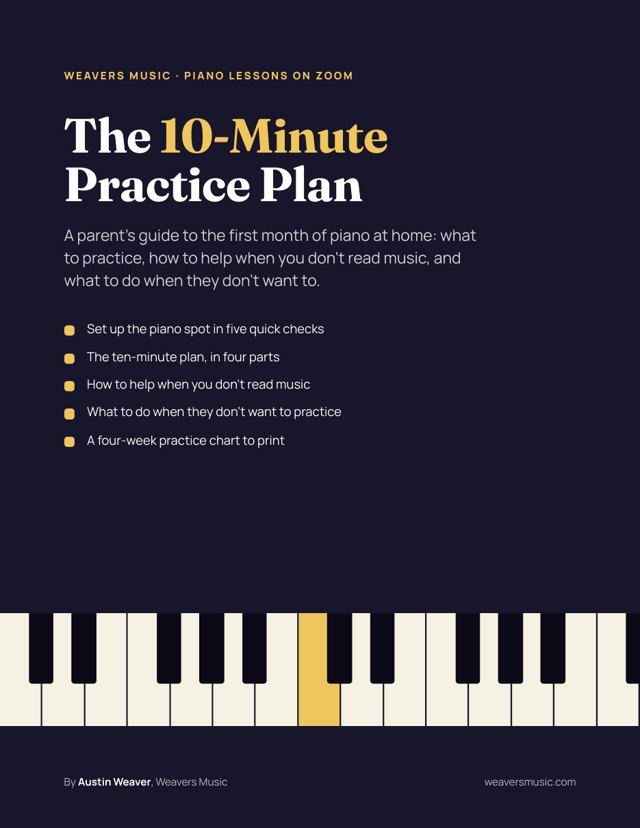
The 10-Minute Practice Plan
What to practice, how to help when you don’t read music, and what to do when they don’t want to. A short printable guide from Austin, with a four-week practice chart.