The short answer
Yes, you can play piano well with small hands. Hand size affects which specific stretches and chord voicings feel comfortable, but it does not determine your ceiling as a musician. I’ve taught students with small hands who play Chopin, write their own songs, and pass auditions – they just learn to adapt fingering and avoid a handful of true-bone-structure limits.
If you’re worried small hands will hold you back, the best next step is simply to get an honest assessment of your hand and your goals – which is exactly what happens in a 60-minute first lesson for $29, where we check your stretch, your reach, and build a realistic plan before you spend a dollar on books.
What actually counts as “small hands” at the piano?
In piano terms, “small hands” usually means a comfortable reach of an octave or slightly less – roughly 7 to 7.5 inches from thumb to pinky when stretched flat on the keys. Anything under that is considered small by piano standards, since a full-size octave spans about 7.5 inches on a standard keyboard.
- Comfortable octave reach (7.5″+): average hand size
- Can reach an octave but it’s tight: moderately small hands
- Cannot comfortably reach a full octave: small hands by piano standards
- Can reach a 9th or 10th easily: larger-than-average hands
I measure this with new students in the first lesson, not because it changes whether we start lessons, but because it changes how I write fingering for them from day one. A student’s actual reach matters far more than how their hand “looks” – some players with visually small hands have surprisingly wide spans between thumb and pinky.
What does having small hands actually make harder?
Small hands make wide chord voicings, fast octave passages, and certain Romantic-era pieces (think late Chopin, Liszt, Rachmaninoff) genuinely more physically demanding. They do not make basic technique, reading, rhythm, sight-reading, or expressive playing any harder – those skills depend on practice habits and ear training, not hand span.
The honest limits are narrow but real. A tenth-spanning chord in a Rachmaninoff prelude is not something you fake with a 7-inch hand – you roll it, redistribute it between the hands, or choose different repertoire. That’s a legitimate constraint, not a confidence problem.
What small hands do NOT limit:
- Learning to read music fluently
- Playing with good tone and dynamics
- Developing finger independence and evenness
- Playing almost all beginner through advanced-intermediate repertoire
- Improvising, playing by ear, or playing pop and jazz voicings (which are often more forgiving than classical ones)
Have any famous pianists had small hands?
Yes – several well-documented concert pianists have played at the highest level with hands many teachers would call small, proving hand size is not destiny. The limiting factor is almost always technique, repertoire choice, and arm/wrist mechanics, not the raw measurement of the hand itself.
I bring this up with students not to shame anyone into “just pushing through,” but because it reframes the real question. It’s less “can I play with small hands” and more “which pieces and voicings suit my hand, and how do I move efficiently.” A good teacher adjusts fingering around your hand instead of forcing your hand to match a fingering written for someone else.
“I started as a complete beginner, and Austin made the learning process feel comfortable.” – Noah Peterson
How do you adapt piano technique for small hands?
Pianists with small hands adapt mainly through redistribution – splitting wide chords between both hands, rolling chords instead of striking them flat, using the pedal to sustain notes you can’t physically hold, and choosing fingerings that avoid unnecessary stretching. These are standard, legitimate techniques used by pianists of all hand sizes.
- Roll wide chords – play the notes in rapid succession rather than simultaneously, a technique even large-handed pianists use for 10ths and beyond.
- Redistribute between hands – if the left hand has room, let it grab a note written for the right.
- Use the pedal strategically – sustain a bass note while your hand moves on to the next shape.
- Relax wrist and arm weight – tension shrinks your effective reach; a loose wrist buys you real distance.
- Re-finger instead of forcing – editors’ fingerings assume an “average” hand; cross them out when they don’t fit yours.
I had a student – an adult beginner with a genuinely small hand, maybe a 6.5-inch stretch – who was convinced she’d never play a particular Debussy piece she loved. We spent three weeks just on redistributing two passages between her hands and rolling one chord. She played the whole piece at her recital. The piece didn’t get easier; her approach to it did.
If you’ve been told your hands are “too small” for piano, the fastest way to find out what’s actually true is a real assessment, not a guess. Your first lesson with Austin is a full 60 minutes for just $29 (normally $99). Love it, or it’s on us.
Should small hands affect what music you choose?
Small hands should influence repertoire choice at the advanced level, but barely at all for beginners and early-intermediate players. Most method books, pop arrangements, hymn settings, and even a large share of classical repertoire are written within a comfortable octave span that nearly any adult or child hand can manage.
Where it matters more is late-stage Romantic repertoire written by composers who themselves had enormous hands – Rachmaninoff reportedly had a reach close to a 12th. If you’re drawn to that repertoire eventually, we talk honestly about which pieces are realistic as written and which need an arranged edition. This is also where the debate between starting with classical or pop piano comes up – pop and jazz voicings are generally more hand-friendly for smaller spans.
Does keyboard or piano key size matter for small hands?
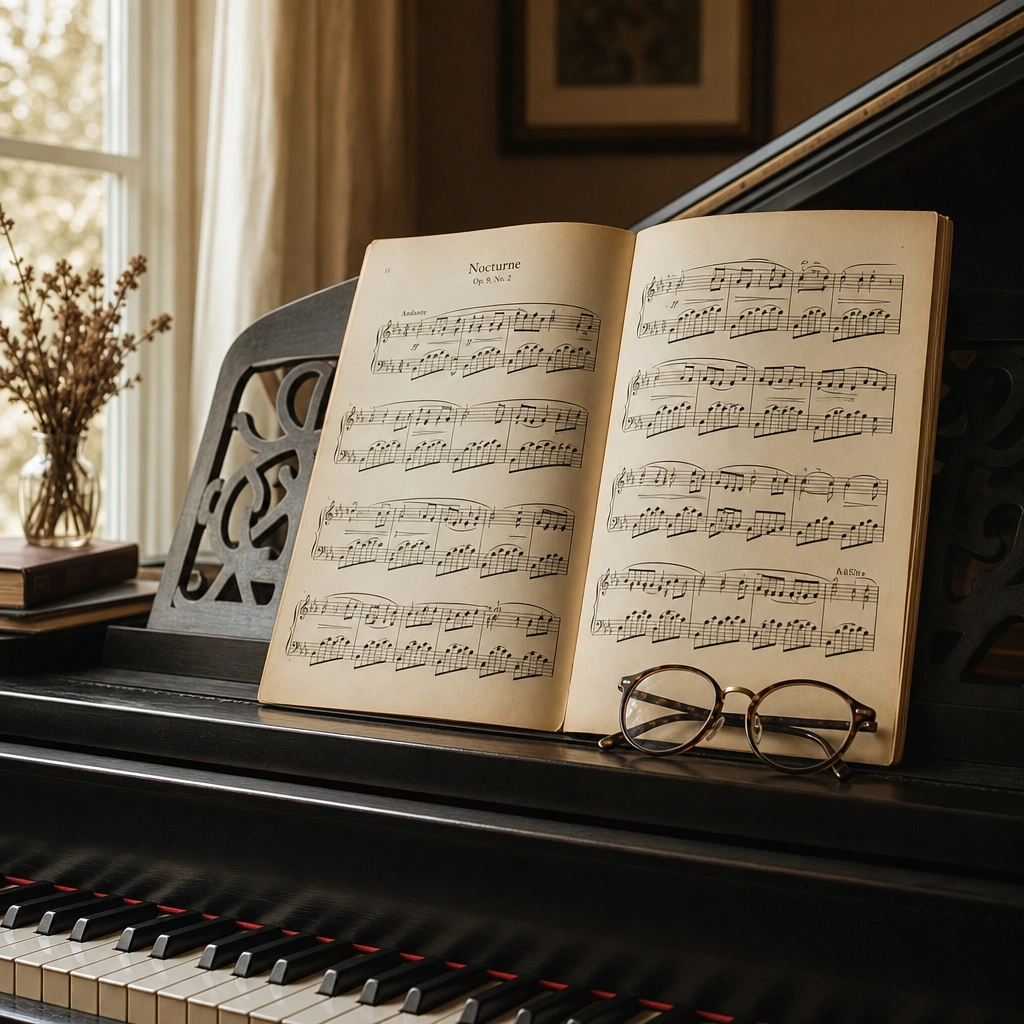
Keyboard key size matters more than most beginners realize – a handful of manufacturers now make slightly narrower keyboards, and some teachers recommend them for younger children or adults with very small hands. For the vast majority of students, though, a standard full-size keyboard is fine and worth learning on, since most pianos you’ll ever encounter are standard size.
A few practical notes on this:
- Standard octave width is about 7.5 inches across nearly all acoustic pianos and full-size digital keyboards.
- Narrower “DS” keyboards exist but are uncommon outside specialized programs – you likely won’t need one.
- Weighted, full-size keys matter more for building proper technique than shaving a few millimeters off key width.
I almost never recommend a smaller keyboard to beginning students, even kids with small hands, because learning on standard spacing from the start means your technique transfers to any piano you sit down at later – recitals, friends’ houses, school pianos. If you’re shopping for a first instrument, the digital piano buying considerations matter more than key width for 95% of students.
One more thing worth saying plainly: a lot of what feels like a “small hands problem” in the first year is actually a tension problem. Students brace their wrist and curl their fingers tightly, which shrinks their functional reach. Loosening the wrist and letting the arm’s weight do the work often adds real stretch without the hand changing size at all. This is something a teacher watching your hands live, over Zoom or otherwise, can spot and correct in a single lesson.
At Weaver Music, lessons run live, one-on-one over Zoom – no in-person option – and follow a curriculum covering technique, reading, theory, and repertoire chosen around music the student actually wants to play. A 30-minute lesson is $60, 45 minutes is $80, and 60 minutes is $99. Every new student starts with a 60-minute first lesson for $29: we check your hand, your current level, and build a book list, and you pay only after the lesson.
“Austin explains everything clearly and makes online piano lessons easy to follow.” – Emily Carter
Common questions
Can small hands eventually grow enough to reach bigger chords?
Children’s hands do grow through the teen years, so a 9-year-old’s reach today isn’t permanent. Adult hands, however, don’t meaningfully change size – adapting technique rather than waiting for growth is the realistic path for adult learners with smaller hands.
Is it harder for a child with small hands to start piano?
No – most beginner method books are written well within a child’s comfortable reach, so hand size rarely slows early progress. If a specific stretch comes up, teachers simply adjust fingering; it’s not a reason to delay starting lessons at all.
Do small hands make scales and arpeggios harder to play?
Not really – scales and arpeggios involve moving across the keys, not stretching wide intervals at once, so hand size barely factors in. Thumb-under technique and relaxed wrist motion matter far more than reach for smooth scale and arpeggio playing.
Can I measure my own hand span to know if it’s “small”?
Yes – stretch your hand flat on the keys from thumb to pinky and see how many white keys you comfortably cover without straining. Roughly eight white keys (an octave) comfortably reached is average; anything noticeably less is considered small by piano standards.
Does playing piano with small hands cause injury risk?
The injury risk comes from forcing stretches with tension, not from small hands themselves. Reaching for intervals beyond your span while clenching the wrist is what causes strain – rolling chords or re-fingering avoids that risk entirely regardless of hand size.
Are there famous piano pieces specifically written for smaller hands?
Not written specifically for small hands, but many Baroque and early Classical pieces – Bach, Mozart, Clementi – use narrower voicings than later Romantic works, making them naturally more comfortable. Many pop and jazz lead-sheet arrangements are similarly hand-friendly.
Ready to find out for yourself?
Your first lesson with me is a full 60 minutes for just $29 (normally $99). We will evaluate where you are, talk through your goals, and map out your path.