The short answer
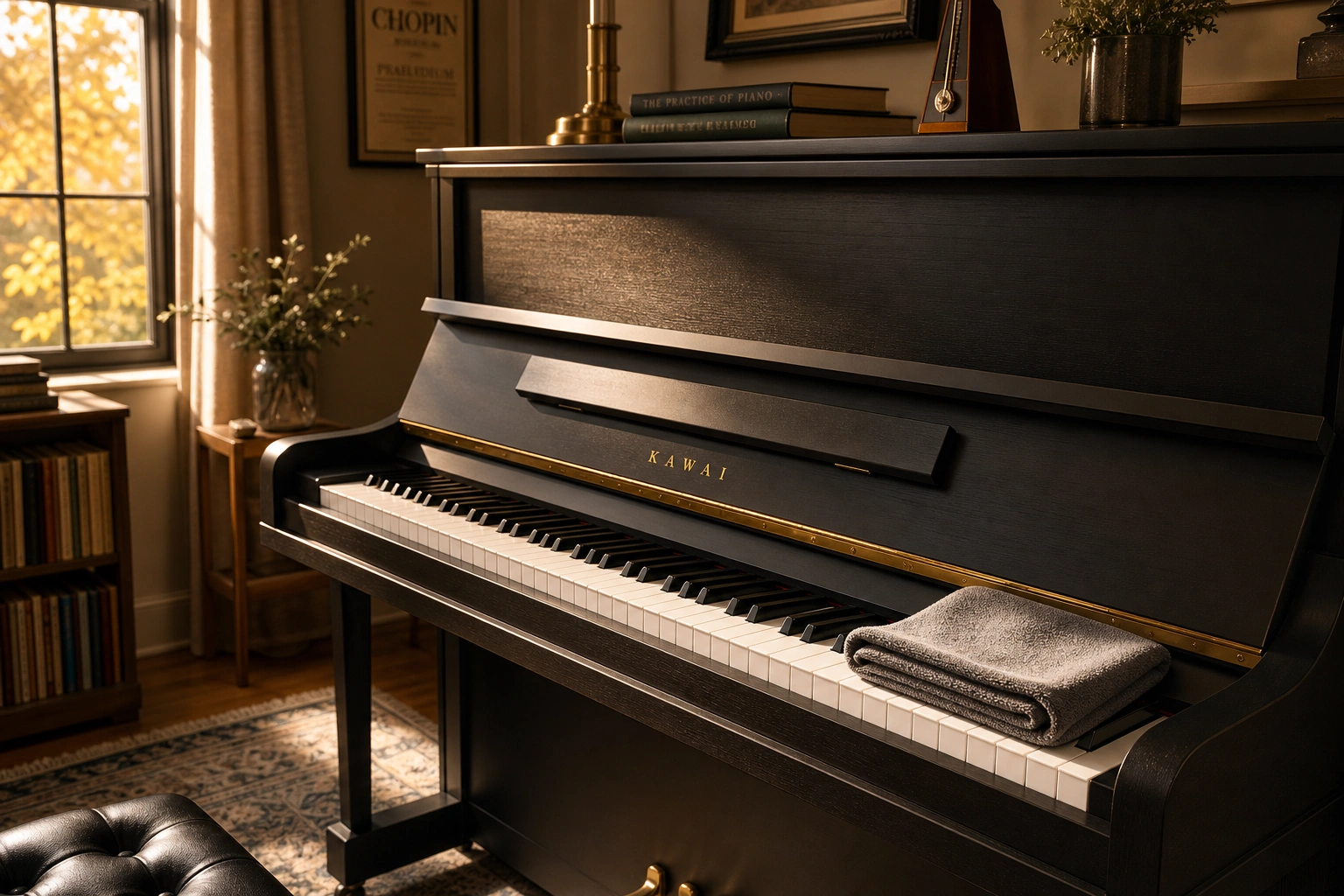
Clean piano keys safely with a barely-damp microfiber cloth, mild soap diluted in water, and gentle wiping in one direction per key. Avoid soaking, spraying liquid directly on keys, or using alcohol-heavy products on ivory. Dry immediately with a separate soft cloth, and always check your owner’s manual first if you have a digital piano.
I’ve cleaned keys on everything from a 1920s upright with real ivory to brand-new digital keyboards still in the box, and the biggest first-lesson I give students is: less liquid is always better than more. If you’re newer to piano altogether and want someone to walk through care basics like this in person, a first lesson is a full 60 minutes for $29 (normally $99), and you only pay after, if you loved it.
How do you clean plastic piano keys?
Plastic piano keys, the kind on nearly every modern acoustic piano, clean easily with a soft cloth dampened in water with a drop of mild dish soap, wiped dry right after. Work on one key at a time, top to bottom, never side to side across the gaps between keys where moisture can seep into the mechanism.
Here’s the process I actually use with students who ask about this after a recital, usually because someone’s hands left visible smudges on the white keys:
- Mix a few drops of mild dish soap into a cup of warm water.
- Dip a microfiber cloth, then wring it out hard. It should feel barely damp, not wet.
- Wipe each key individually, top to bottom.
- Follow immediately with a dry cloth on the same key before moving to the next.
- Avoid letting water pool at the back of the keys near the fallboard hinge.
Black keys usually show less grime but collect skin oil along the edges. The same damp-then-dry method works for both colors. I tell students: if the cloth is dripping, you’ve used too much water. Piano keys sit on wooden levers under a thin plastic cap, and trapped moisture can warp that wood over months, which is a repair, not a cleaning job.
How do you clean ivory piano keys?
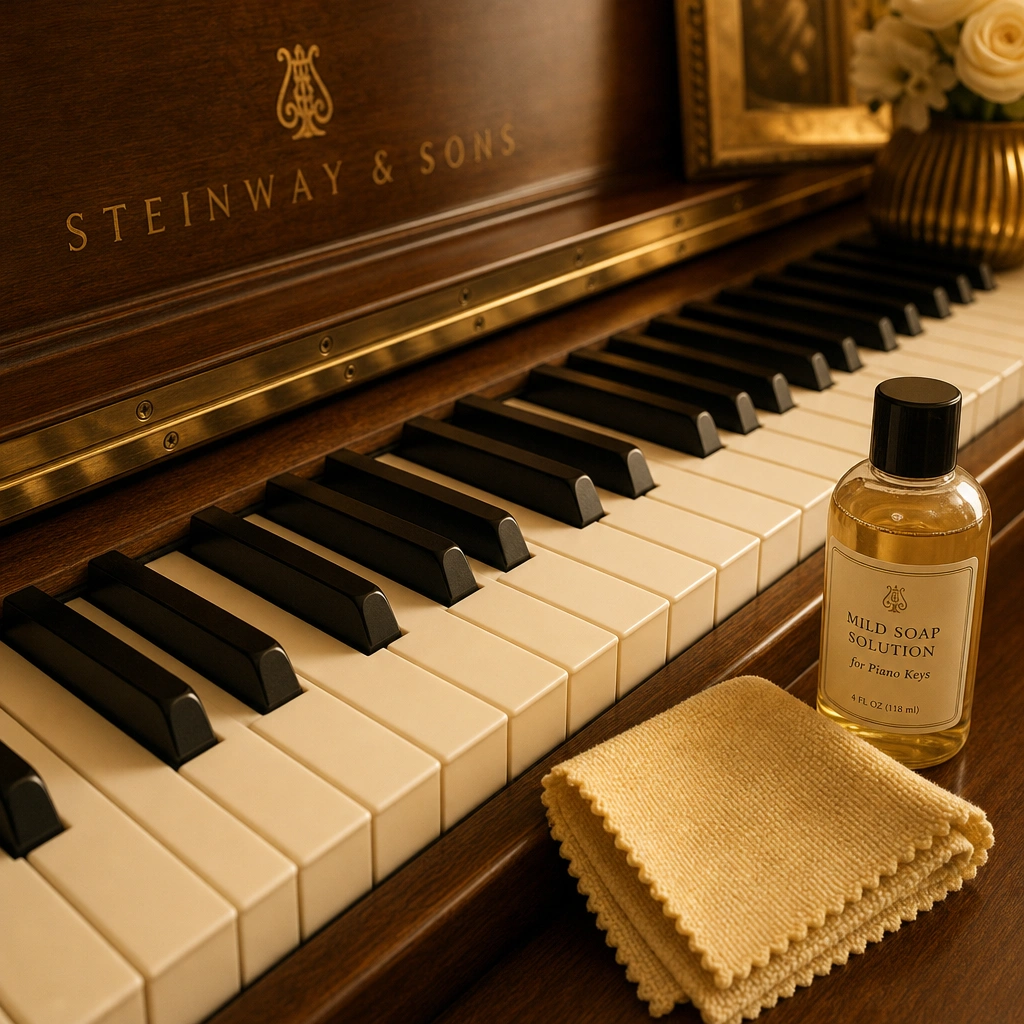
Ivory piano keys, found mostly on pianos built before the 1950s, need the gentlest possible approach: a soft, barely-damp cloth, no soap if you can avoid it, and immediate drying. Ivory is porous and yellows or cracks when it absorbs water, alcohol, or direct sunlight over time.
I worked with an adult student who inherited her grandmother’s baby grand with genuine ivory keys and nearly scrubbed them with a vinegar solution she’d read about online. Vinegar is acidic enough to etch ivory’s surface over repeated use. I had her switch to plain water on a cloth, wiped on and off within seconds, and the yellowing she was worried about turned out to be normal aging, not dirt.
A few extra notes specific to ivory:
- Light, even yellowing across all the white keys is usually age, not grime, and is not something cleaning fixes.
- Keep ivory keys away from direct sun exposure, which accelerates yellowing and can crack the thin ivory veneer.
- If a key is chipped or lifting at the edge, stop cleaning and get it looked at by a piano technician before the cap comes loose entirely.
- Never use bleach, ammonia, or whitening products on ivory. They do not restore color and can damage the material permanently.
How do you clean digital piano or keyboard keys?
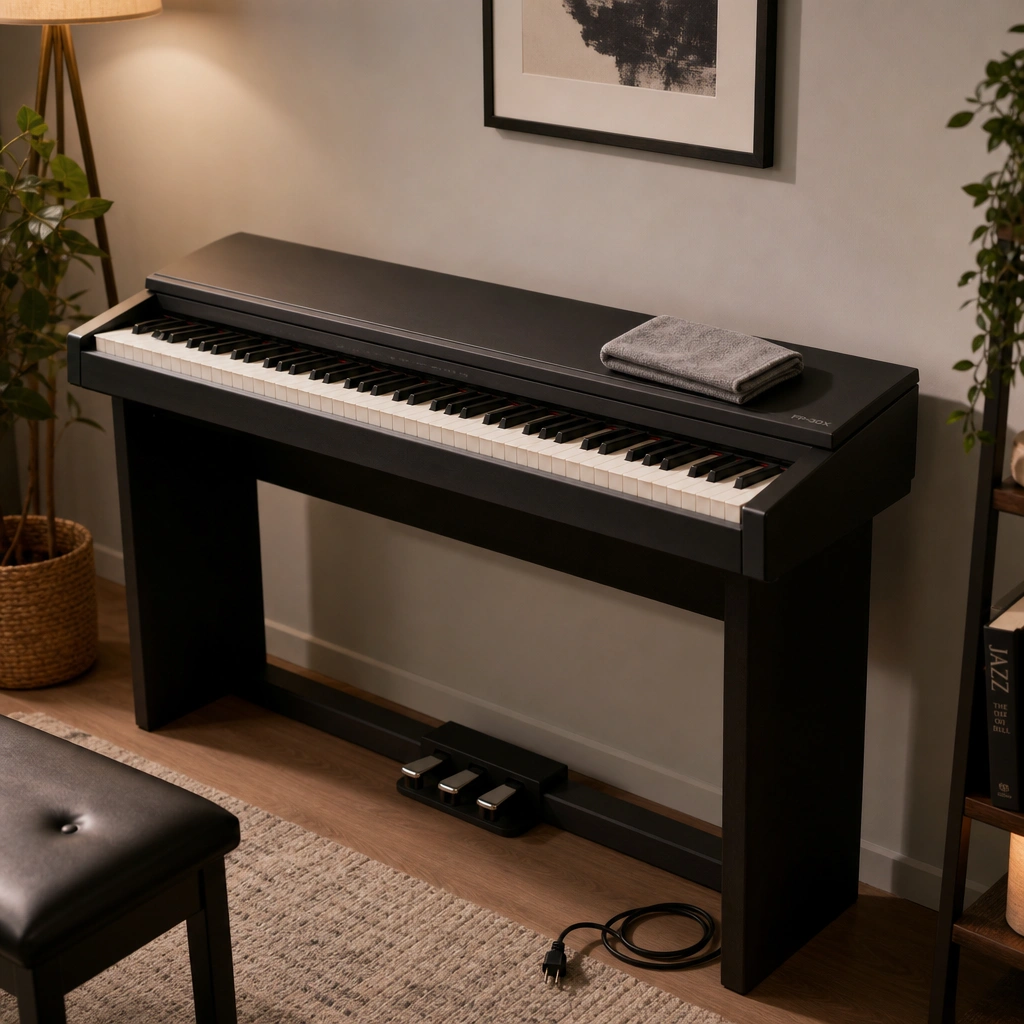
Digital piano keys clean safely with a dry or very lightly damp microfiber cloth, since the keybed sits above electronic sensors that can be damaged by any liquid getting underneath. Always power off the instrument first, and never spray cleaner directly onto the keys.
Digital instruments are more sensitive to moisture than acoustic pianos, not less, because the electronics underneath the keybed don’t tolerate dampness the way a wooden action does. A parent I worked with wiped down her daughter’s keyboard with a wet paper towel before a lesson, and three keys stopped registering touch sensitivity properly within a week. Paper towels also leave tiny fibers and can scratch textured key surfaces over time.
For digital keys specifically:
- Turn the instrument off and unplug it before cleaning.
- Use a dry microfiber cloth for daily dust; only lightly dampen it for sticky spots.
- Never let liquid drip into the seams between keys.
- Check the manufacturer’s manual, since some keybeds have specific cleaning guidance and warranty terms tied to how they’re cared for.
If you’re still deciding between an acoustic and digital instrument for lessons, that’s a bigger question than cleaning, but it’s worth sorting out early with a teacher who can look at your space and goals together.
If keeping your keys (and your instrument) in good shape is on your mind, it’s worth having a teacher who treats the whole instrument, not just your hands, as part of your lessons. Your first lesson with Austin is a full 60 minutes for just $29 (normally $99). Love it, or it’s on us.
What should you never use to clean piano keys?
Never use alcohol-based wipes, ammonia, bleach, vinegar, furniture polish, or heavily scented household cleaners on piano keys of any kind. These products either strip finish, discolor ivory, degrade plastic over time, or leave a residue that attracts more dust and grime.
Specific things to avoid, regardless of key material:
- Alcohol wipes or hand sanitizer residue, which dry out and crack both ivory and some plastics with repeated contact.
- Furniture polish or spray cleaners, since the propellant and oils can seep into key gaps.
- Abrasive sponges or paper towels, which scratch the surface finish and leave fibers behind.
- Soaking cloths or spraying liquid directly onto keys, which is the single most common way I see keys get damaged.
- Nail polish remover or acetone, which will dissolve plastic key caps almost immediately.
If you only remember one rule from this whole article, make it this one: nothing should ever be sprayed directly onto a piano. Put cleaner on the cloth, never on the instrument.
How do you disinfect piano keys without damaging them?
Disinfect piano keys by wiping with a cloth dampened in a very dilute mild soap and water solution, rather than using alcohol or disinfecting wipes marketed for hard surfaces. These household wipes are formulated for countertops, not for porous ivory or painted plastic, and repeated use dulls the finish.
This question comes up a lot from parents with young kids sharing a keyboard, especially during cold and flu season. I tell families the honest truth: a piano is not a high-touch surface the way a doorknob is, so daily disinfecting usually isn’t necessary. A gentle soap-and-water wipe-down once a week, plus regular handwashing before practice, handles the same concern without the risk of damaging the keys.
If you genuinely need to disinfect after an illness in the house, dilute soap in water heavily, dampen the cloth, wipe, and dry immediately. Skip the wipe canister entirely.
How do you keep piano keys clean between cleanings?
Keep piano keys clean day to day by washing hands before practice, keeping drinks and food away from the keyboard, and closing the fallboard when the piano isn’t in use. These three habits prevent most of the grime that eventually requires a deeper clean.
A few habits I actually recommend to students, especially younger ones:
- Wash and dry hands before sitting down to practice, every time.
- Keep snacks and drinks in a different room, not next to the bench.
- Close the fallboard over the keys when the piano is idle for more than a day, which cuts down on dust.
- Wipe keys with a dry cloth weekly as routine maintenance, saving a damp clean for a deeper monthly pass.
- Keep the piano out of direct sunlight, which protects both the keys and the finish on the case.
One of my long-time students, Mia, started doing a quick dry wipe every Sunday after her practice session, just thirty seconds, and her keys have stayed in noticeably better shape than keyboards I see that only get cleaned once a year.
“My confidence at the piano has grown so much since starting lessons.” – Mia Reynolds
If sticky keys or sluggish key response is a recurring problem rather than a one-time mess, that’s often a mechanical issue under the keybed, not a cleanliness issue, and worth a technician’s visit rather than more scrubbing. For general care and practice habits beyond keys themselves, our guide on practicing effectively covers the daily-routine side of things, though that’s a separate topic from cleaning.
Common questions
Can I use baby wipes to clean piano keys?
Baby wipes usually contain alcohol, fragrance, or lotion that can leave residue or dull the finish on piano keys over repeated use. A plain damp microfiber cloth with a drop of mild soap is safer and works just as well for everyday grime.
Why are my piano keys sticky even after cleaning?
Sticky keys after cleaning usually mean residue got into the gap between keys, or there’s a mechanical issue under the keybed rather than a surface cleanliness problem. If a key stays sticky or slow to return after a proper dry cleaning, it’s worth having a piano technician check the action.
How often should I clean my piano keys?
A quick dry wipe weekly and a gentle damp cleaning about once a month keeps most home pianos in good shape. Pianos used daily by multiple people, like in a family home or classroom, may need the damp cleaning closer to every two weeks.
Will cleaning remove yellow stains from old ivory keys?
Cleaning will not remove genuine age-related yellowing from ivory keys, since that discoloration happens within the material itself, not on the surface. Surface grime can be gently cleaned away, but the underlying yellow tone of old ivory is permanent and considered normal.
Is it safe to use compressed air to clean between piano keys?
Compressed air is generally safe for blowing dust out from between piano keys on both acoustic and digital instruments, as long as it’s used in short bursts rather than continuous spray. Avoid it near a digital piano’s internal vents if you’re unsure where the electronics sit.
Should I clean piano keys before or after tuning?
Cleaning piano keys has no effect on tuning, since tuning concerns the strings and pins inside the piano, not the key surface. It’s fine to clean keys before or after a technician’s visit, whichever is more convenient for you.
Key care is a small part of a much bigger picture, and most students I work with over Zoom lessons ask about it maybe once a year, usually right after noticing smudges before a recital. If you’re building habits from scratch, whether that’s keeping an instrument clean or figuring out a practice routine that sticks, a teacher who sees your whole setup helps more than any single cleaning tip. Weaver Music lessons run live, one-on-one, for all ages and levels, at $60 for 30 minutes, $80 for 45 minutes, or $99 for 60 minutes, with books as the only added cost.
Ready to find out for yourself?
Your first lesson with me is a full 60 minutes for just $29 (normally $99). We will evaluate where you are, talk through your goals, and map out your path. Love it, or it’s on us.

Free guide for parents
The 10-Minute Practice Plan
What to practice, how to help when you don’t read music, and what to do when they don’t want to. A short printable guide from Austin, with a four-week practice chart.