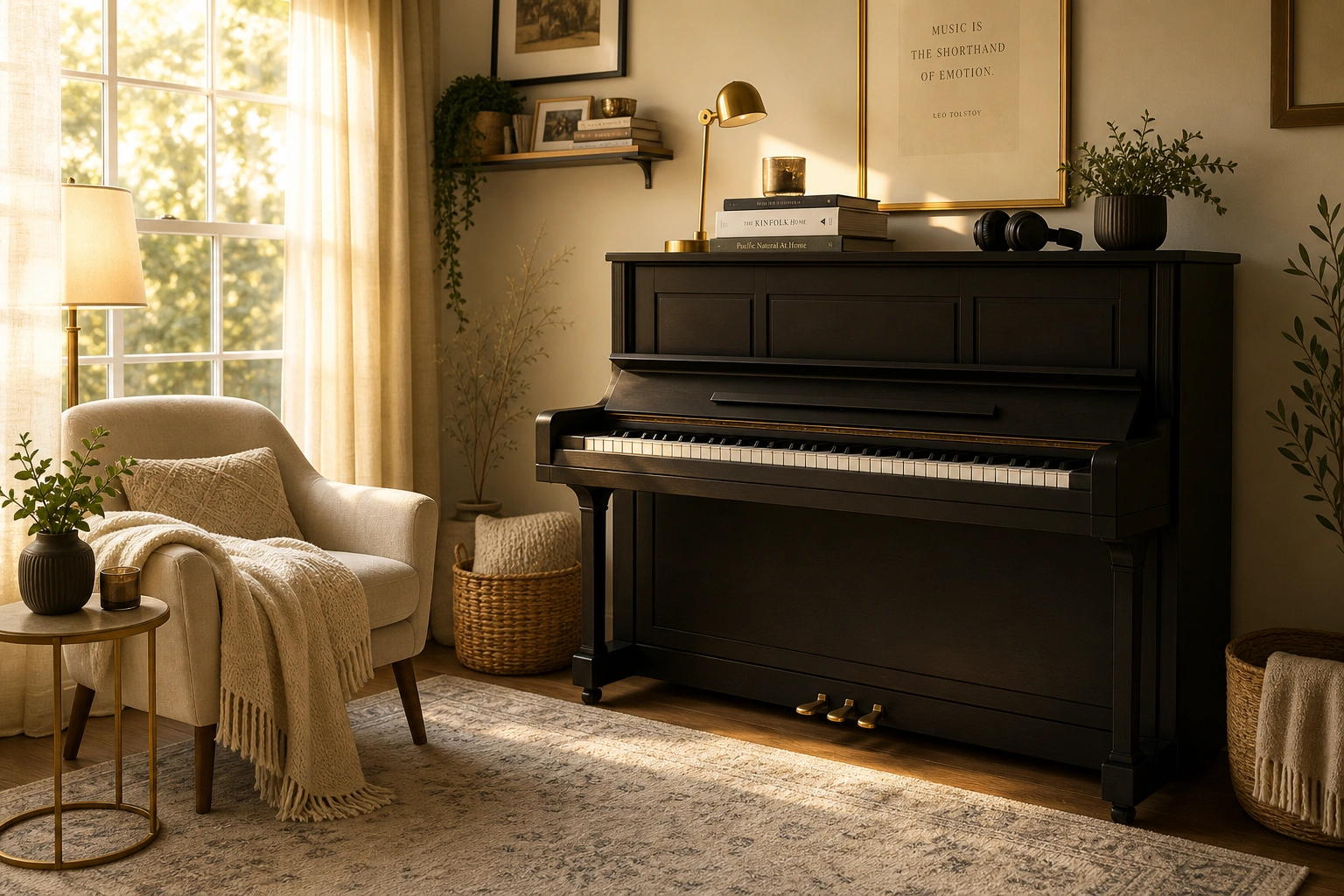
The short answer
Piano lessons for autism can be a genuinely good fit for many children because the instrument offers a predictable, visual, repeatable structure that some kids find calming and motivating. Success depends less on the diagnosis and more on finding a patient teacher who adjusts pacing, sensory setup, and communication style to the individual child.
I’m not a therapist, and I want to be upfront about that – nothing here is medical advice. What I can speak to is what I’ve seen work and not work in actual lessons with actual kids over 10+ years of experience teaching piano, including several autistic students. If you want to see how a teacher assesses a child’s needs before committing to anything, a full 60-minute first lesson is $29 (normally $99), paid only after the lesson, so you get real information before spending real money.
This article stays focused on piano specifically for autistic children. If your child has ADHD instead, or alongside autism, I’ve written a separate piece on piano lessons for ADHD that covers that different set of challenges. The Autism Speaks resource library is also a good general starting point if you’re early in researching extracurricular activities for your child.
What sensory considerations matter for an autistic child learning piano?
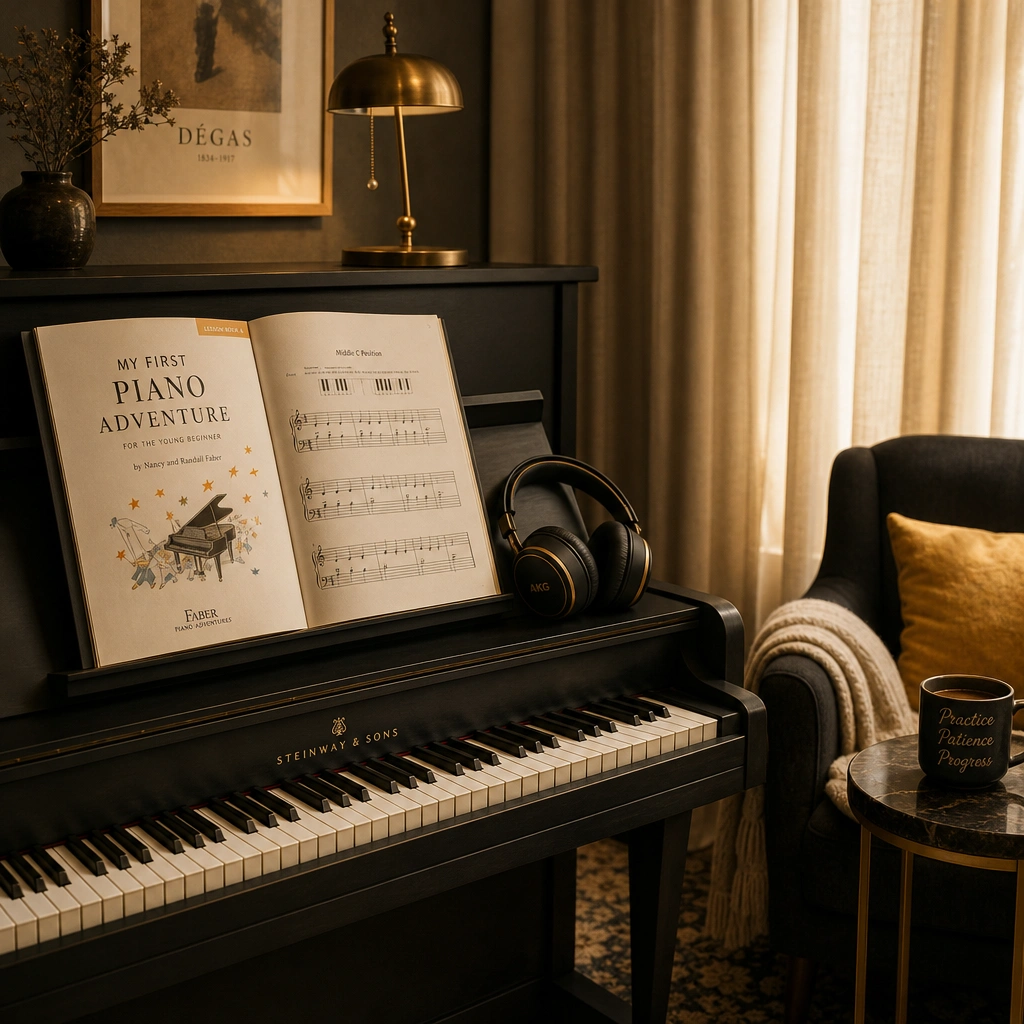
Sensory considerations for autistic piano students mainly involve sound volume, room lighting, and physical comfort at the bench. A piano can be loud and sharp-sounding up close, so volume control, headphones on a digital keyboard, or starting with a quieter room setup often makes the first several lessons much easier to tolerate.
A few things I check or suggest in practice:
- Digital keyboards with a volume knob or headphone jack let a child control exactly how loud the sound is – this alone has saved several of my first lessons from going sideways.
- Bright overhead lighting or a flickering screen can be distracting; a lamp instead of fluorescent light near the piano helps some kids settle in faster.
- Bench height and foot support matter more than people expect – dangling feet create restlessness that gets mistaken for disinterest.
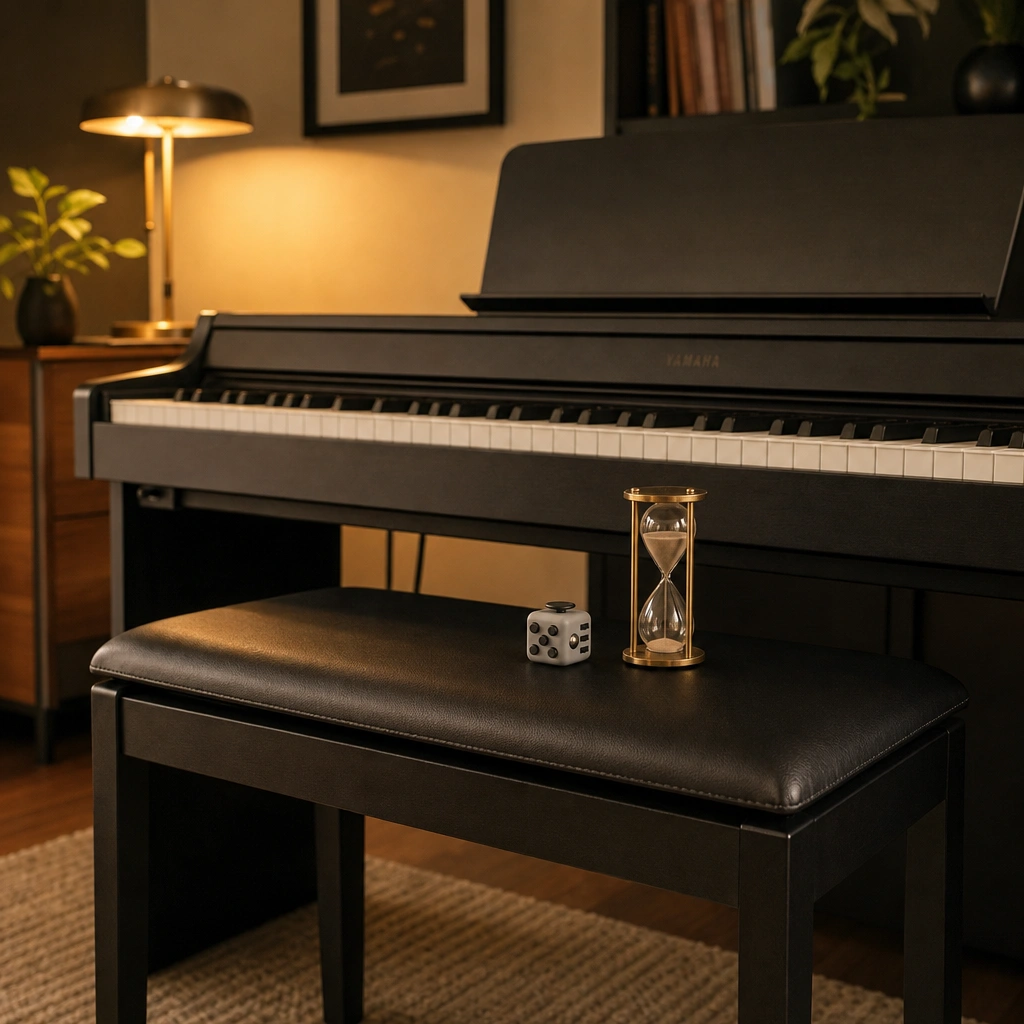
- Some kids do better with a weighted blanket or fidget item nearby during the explanation parts of a lesson, as long as hands are free when it’s time to play.
I had one student, a nine-year-old named Theo, who initially covered his ears every time I played a full chord. We switched to single notes at low volume for two weeks before reintroducing chords gradually, and by week four he was asking to play “the big sound” himself. Small sensory accommodations, not a different curriculum, made the difference. The CDC’s overview of autism spectrum disorder is a helpful reference if you want to understand sensory sensitivities in a broader clinical context before adapting a music environment.
Why does structure and routine matter so much in piano lessons for autistic kids?
Structure and routine matter because predictable lesson patterns reduce anxiety and help autistic children know exactly what comes next, which frees up mental energy for actually learning the music. The same opening exercise, the same order of activities, and consistent lesson length each week tend to work better than lessons that vary.
In my own lessons, I keep a fixed sequence: a warm-up exercise, a reading section, then repertoire, every single time, even as the actual content gets harder. A student named Lily, autistic and eight years old, visibly relaxed once she memorized this order – she started narrating it back to me (“warm-up, then notes, then my song”) before we began, which told me the structure itself was doing real work beyond the music.
Practical ways to build routine:
- Keep lesson time and day fixed week to week whenever possible.
- Use the same warm-up exercise for several weeks before changing it.
- Give a visual or verbal heads-up before transitions (“one more line, then we switch”).
- End every lesson the same way, even with something small like replaying a favorite piece.
How should a piano teacher adjust communication for an autistic student?
Teacher communication should match the child’s actual processing style rather than a generic teaching script – some autistic students need literal, concrete instructions, while others respond better to visual demonstration than verbal explanation. The fix is flexibility, not a special “autism method.”
Things I’ve learned to adjust on the fly:
- Saying “play the note under your right thumb” instead of “play that one” – vague pronouns slow some kids down a lot.
- Demonstrating on the keys first, explaining second, for students who are stronger visual learners than auditory ones.
- Avoiding idioms like “let your hand float” – I’ve watched a literal-minded student genuinely look for something to float on.
- Giving processing time after a question instead of repeating it or rephrasing immediately, which can overload rather than help.
One mistake I made early on: I used to narrate constantly while a student played, thinking it was encouraging. For one autistic student, Daniel, that constant talking was actually distracting him from his own hands. Once I went quiet during playing and only spoke between attempts, his accuracy improved noticeably within the same lesson.
If you’re wondering whether your child would respond well to this kind of individualized attention, the best way to find out is to watch a real lesson happen. Your first lesson with Austin is a full 60 minutes for just $29 (normally $99). Love it, or it’s on us.
What should I look for in a piano teacher for my autistic child?
A good teacher for an autistic child is one who treats the first lesson as an honest assessment rather than a sales pitch, asks you directly about sensory and communication preferences, and is willing to adjust pacing without treating slower progress as a problem. Credentials matter less than flexibility and patience.
Questions worth asking any prospective teacher:
- “Will you ask me about my child’s sensory needs before the first lesson, or during it?”
- “What happens if my child needs more repetition than a typical student?”
- “Can lesson length or pacing change week to week if needed?”
- “How do you handle a child who needs a break mid-lesson?”
I always start a new student with a full skill check and conversation before building a plan – for a child with any additional needs, I ask parents directly what helps and what doesn’t, because they know their kid far better than I do after one phone call. That conversation shapes the book list and pacing from day one rather than being an afterthought three weeks in.
“Austin explains everything clearly and makes online piano lessons easy to follow.” – Emily Carter
How do online one-on-one piano lessons fit an autistic child’s needs?
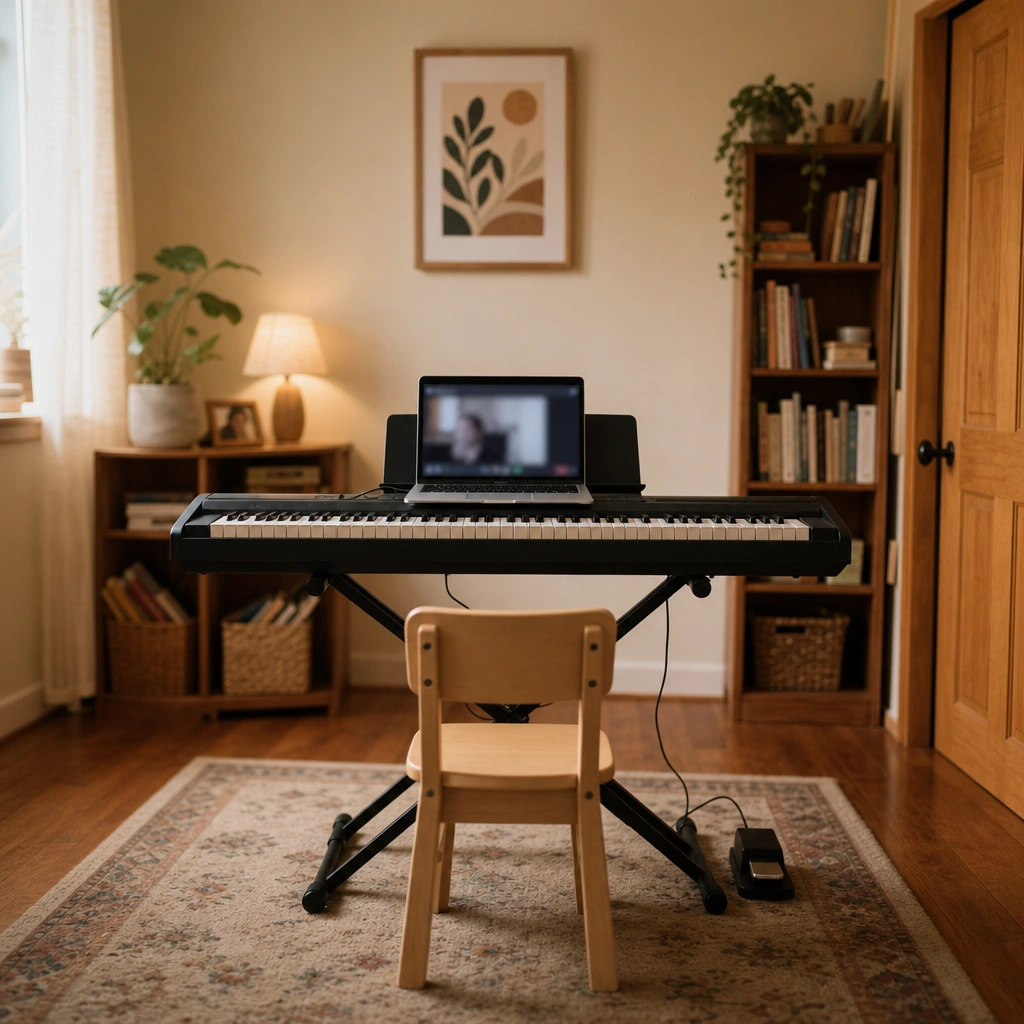
Online one-on-one lessons fit well for many autistic children because the child stays in their own familiar room, avoids the sensory load of a new environment, and gets full teacher attention without the distraction of other students. There’s no waiting room, no new smells or sounds, and no unfamiliar furniture to adjust to.
At Weaver Music, every lesson is live and one-on-one over Zoom – there are no in-person options, which for some families is actually the whole point rather than a limitation. A child can sit at their own keyboard, in their own lighting, with their own fidget item within reach, and I’m just a face on a screen they can mute, pause, or ask to repeat something.
Lessons run at $60 for 30 minutes, $80 for 45 minutes, or $99 for a full 60 minutes, and follow a consistent curriculum covering technique, reading, theory, and repertoire built around music the student actually wants to play. Many parents start shorter and extend once they see how their child handles the format. For general background on how remote lessons work for younger students, see our piece on online piano lessons for kids.
If building a steady practice habit at home is the bigger challenge, our guide on motivating a child to practice piano covers that separately in more depth.
Common questions
Can piano help with sensory regulation for autistic kids?
Some autistic children find the repetitive, predictable motion of piano practice calming, similar to other rhythmic activities, though this varies enormously by individual. It’s not a guaranteed outcome, and a teacher should never promise it – treat it as a possible benefit some families notice, not a certainty.
What age should an autistic child start piano lessons?
There’s no fixed best age – readiness depends more on a child’s attention span, comfort with a new adult, and interest in sound than on calendar age. I’ve started students as young as five and as old as fourteen successfully; the key factor is usually whether the child shows any curiosity about the keyboard already.
Should I tell the piano teacher about the autism diagnosis beforehand?
Yes, telling a teacher in advance lets them prepare sensory accommodations, communication adjustments, and a realistic first-lesson plan rather than guessing in real time. Most teachers, myself included, would much rather know ahead so the first session goes smoothly for everyone involved.
What if my child melts down during a lesson?
A good teacher pauses, lowers demands, and lets the child reset rather than pushing through – this might mean ending early, switching to a quieter activity, or simply sitting quietly for a minute. Occasional difficult lessons are normal and don’t mean piano is the wrong fit.
Do autistic children need a special piano method or curriculum?
Not necessarily – most autistic students do well with a standard, well-structured curriculum covering technique, reading, theory, and repertoire, adjusted in pacing and delivery rather than replaced entirely. The adjustments are usually about how material is taught, not what material is taught.
How long before I’ll know if piano lessons are working for my child?
Most parents get a clear sense within three to four lessons whether their child is engaging, tolerating the sensory environment, and responding to the teacher’s style. That’s roughly a month at a weekly cadence – enough time to see real patterns without committing to months of lessons first.
Piano isn’t a cure, a therapy, or a guaranteed fit for every autistic child – it’s an instrument that happens to offer a lot of the structure, predictability, and visual logic that many autistic kids respond well to. The only real way to know if piano lessons for autism click for your child is to sit through an actual lesson with a teacher willing to adapt. That’s exactly what the first lesson at Weaver Music is built for.
Ready to find out for yourself?
Your first lesson with me is a full 60 minutes for just $29 (normally $99). We will evaluate where you are, talk through your goals, and map out your path. Love it, or it’s on us.
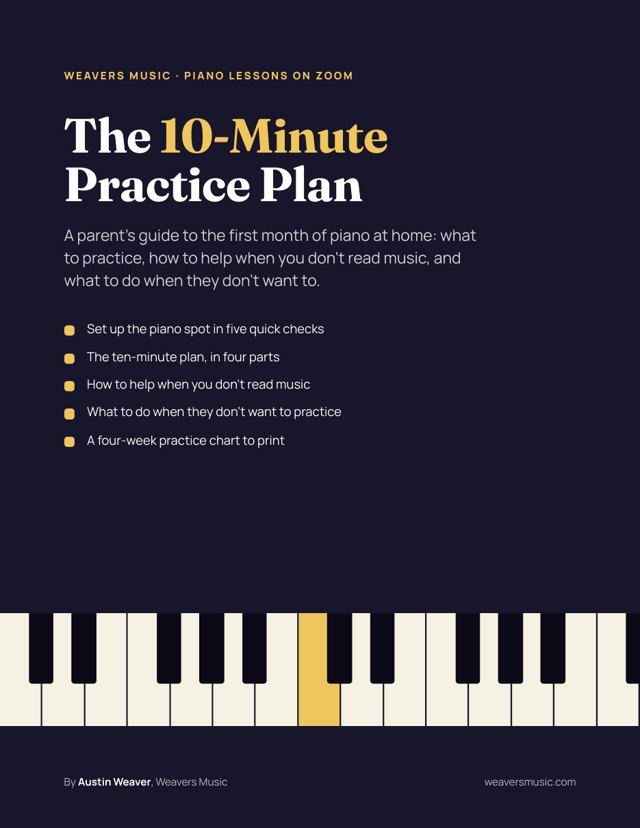
Free guide for parents
The 10-Minute Practice Plan
What to practice, how to help when you don’t read music, and what to do when they don’t want to. A short printable guide from Austin, with a four-week practice chart.