
The short answer
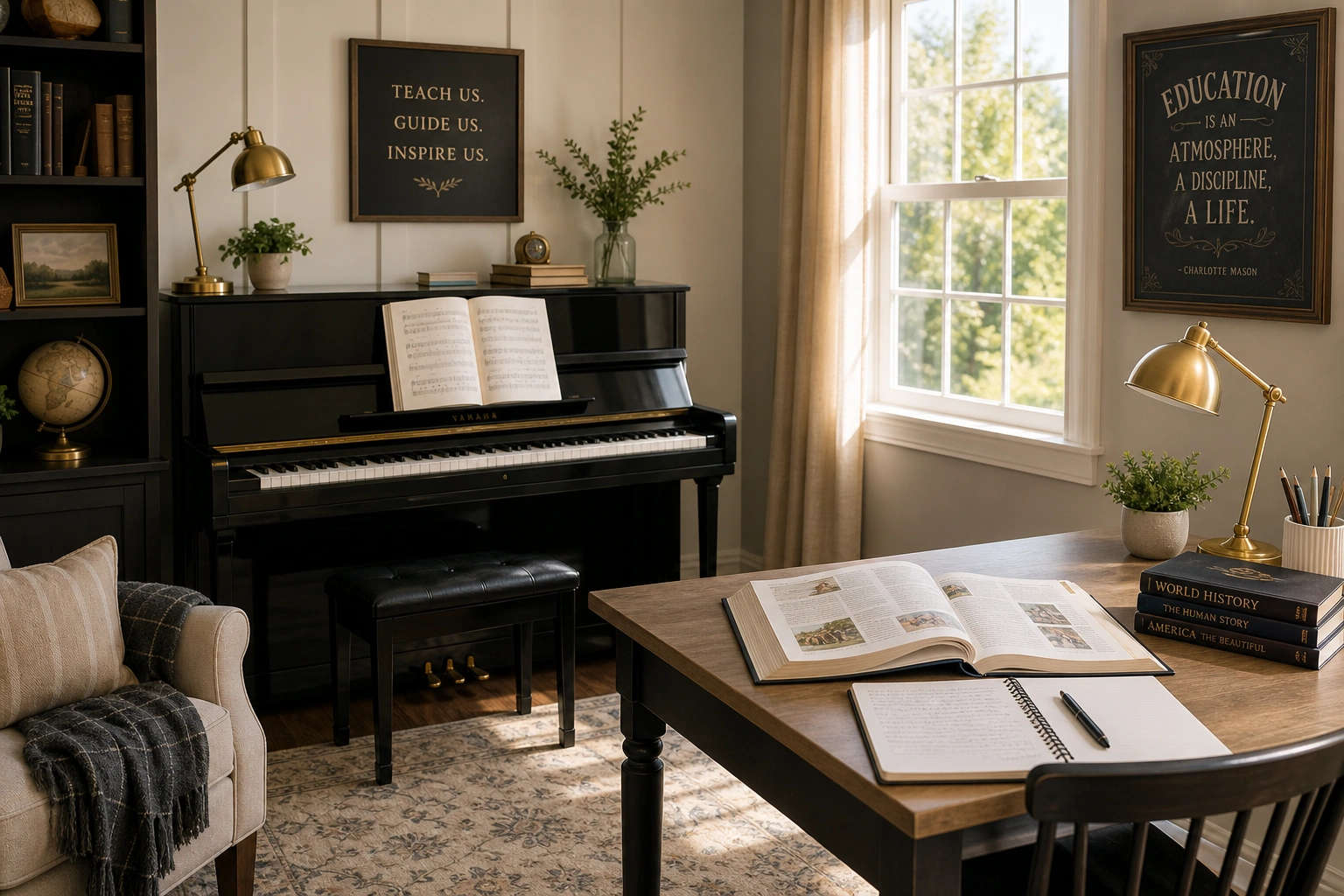
Piano lessons for homeschoolers fit best when scheduled during the family’s natural morning or early-afternoon academic block, right alongside other subjects, rather than squeezed in after a full day. Most homeschool families I work with set one weekly lesson (live over Zoom) plus four short practice sessions on non-school-heavy days.
Because homeschool days already have flexible blocks built in, this is genuinely one of the easier schedules to build – and it’s worth starting with a free 30-minute trial lesson to see how a lesson slot actually feels in your week before committing to anything.
Why do homeschool families fit piano lessons in more easily than traditional schoolers?
Homeschool families fit piano lessons in more easily because their days aren’t locked into a single 8-to-3 block, so a 30- or 45-minute lesson can slot into whatever hour the student is sharpest, without a car pickup line or after-school scramble. That flexibility is the single biggest advantage homeschooling gives music study.
I’ve taught kids at 10 a.m. on a Tuesday and kids at 2 p.m. on a Thursday – both from the same family – because their parents built school around energy levels, not a bus schedule. One mom I work with rotates lesson time seasonally: mornings in fall and spring, afternoons in winter when the family sleeps in more. That kind of flexibility simply isn’t available to most brick-and-mortar students.
It also means practice can happen in short bursts between subjects instead of being crammed into one exhausted evening slot, which is where I see traditionally-schooled kids struggle most.
What time of day works best for piano lessons in a homeschool schedule?
Late morning, roughly 9:30 to 11:30, tends to work best for piano lessons in a homeschool schedule because kids are alert but not yet fatigued from a full day of academics. This slot also avoids competing with typical after-school activities like sports or co-op classes.
A few patterns I’ve noticed over years of scheduling:
- Younger kids (under 8) focus best before lunch, not after.
- Tweens and teens often do better with a mid-afternoon lesson once morning academics are done but before they’re mentally checked out.
- Avoid scheduling right after intense subjects like math tests – I’ve had students walk in frazzled and it shows in the first 10 minutes.
- Keep the same day and time each week if possible. Consistency matters more than the specific hour.
If your family does school four days a week, the fifth day is often the best lesson slot since it’s naturally lighter.
How many days a week should a homeschooler practice piano?
Homeschoolers should aim to practice piano five to six days a week for 15 to 25 minutes per session, rather than one long session on a single day. Consistent short practice builds muscle memory far faster than occasional long sessions, according to research on skill acquisition and spaced repetition (see Wikipedia’s overview of spaced repetition).
In my own studio, the students who progress fastest are almost never the ones who practice an hour on Saturday. They’re the ones who practice 20 minutes every weekday morning before their other subjects even start. One of my homeschooled students, a 9-year-old named Theo, practices for exactly 15 minutes right after breakfast, before his mom starts the school day – he’s finished three method books in a year doing nothing more than that.
If your week only allows for four practice days, that’s still workable. What matters more is that the days are spread out rather than stacked together.
Can piano lessons count as part of a homeschool curriculum?
Piano lessons can absolutely count as part of a homeschool curriculum in most states, typically logged as fine arts or music credit alongside practice time as an elective or enrichment hour. Requirements vary by state and by homeschool umbrella program, so check your specific state’s guidelines.
Many families I work with log:
- Lesson time itself (30-60 minutes weekly) as “Music/Fine Arts.”
- Practice time as either part of that same subject or a separate “Independent Study” line.
- Music theory covered during lessons as partial credit toward a broader arts requirement.
I’m not a homeschool law expert, so this is general guidance, not legal advice – check with your state’s homeschool association for the exact rules that apply to your family.
Fitting music into your homeschool week doesn’t have to mean another scheduling headache. Your first 30-minute lesson with Austin is free – no card, no pressure.
What does a sample weekly piano schedule for homeschoolers look like?
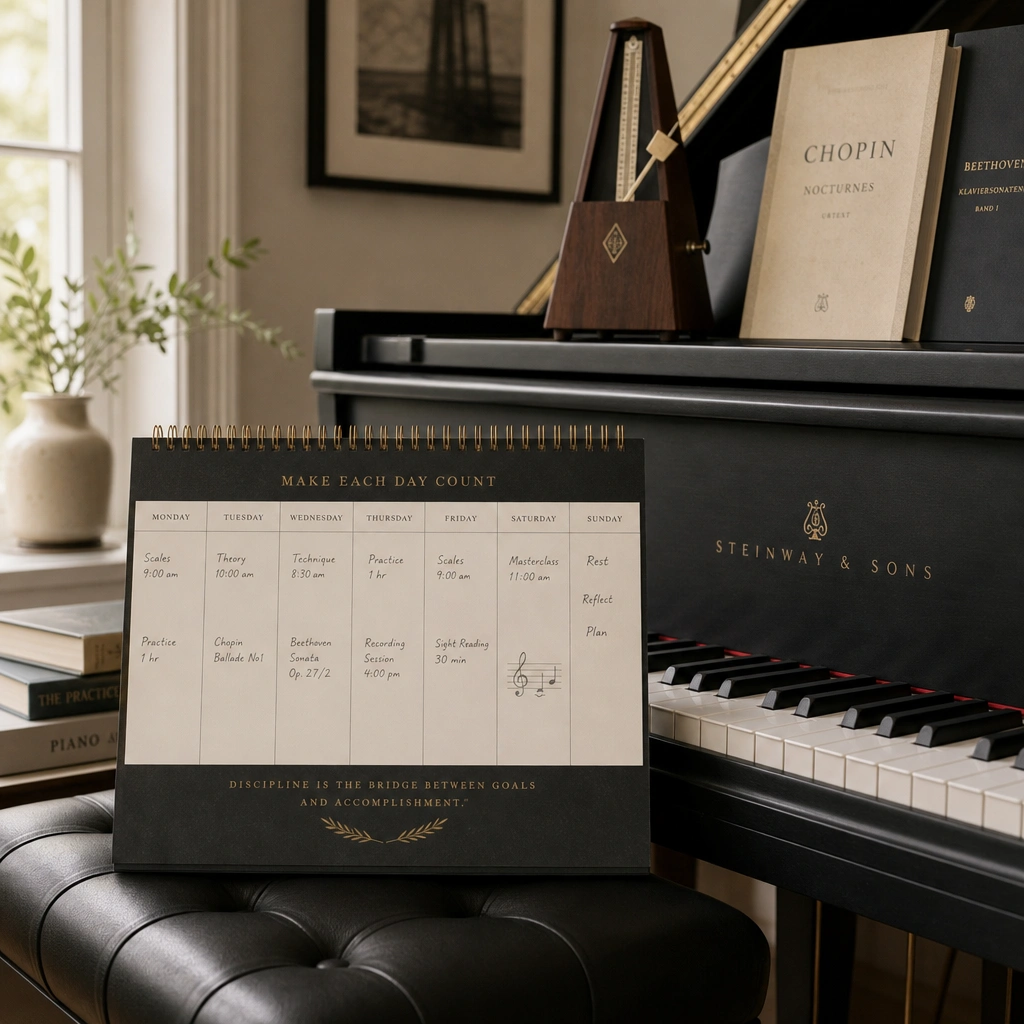
A realistic weekly piano schedule for homeschoolers includes one 30-45 minute lesson and four to five short practice sessions spread across the other school days, timed to follow the family’s natural energy and focus patterns rather than a fixed school-day clock.
Here’s a schedule I’ve helped several families use as a starting point:
- Monday: 20-minute practice, right after morning read-aloud time.
- Tuesday: Lesson day – 10:30 a.m., 30 or 45 minutes depending on age.
- Wednesday: 20-minute practice, before lunch.
- Thursday: 15-minute practice, whenever fits (co-op days are lighter here).
- Friday: 20-minute practice, first thing after breakfast.
- Weekend: Optional light run-through, 10 minutes, no pressure.
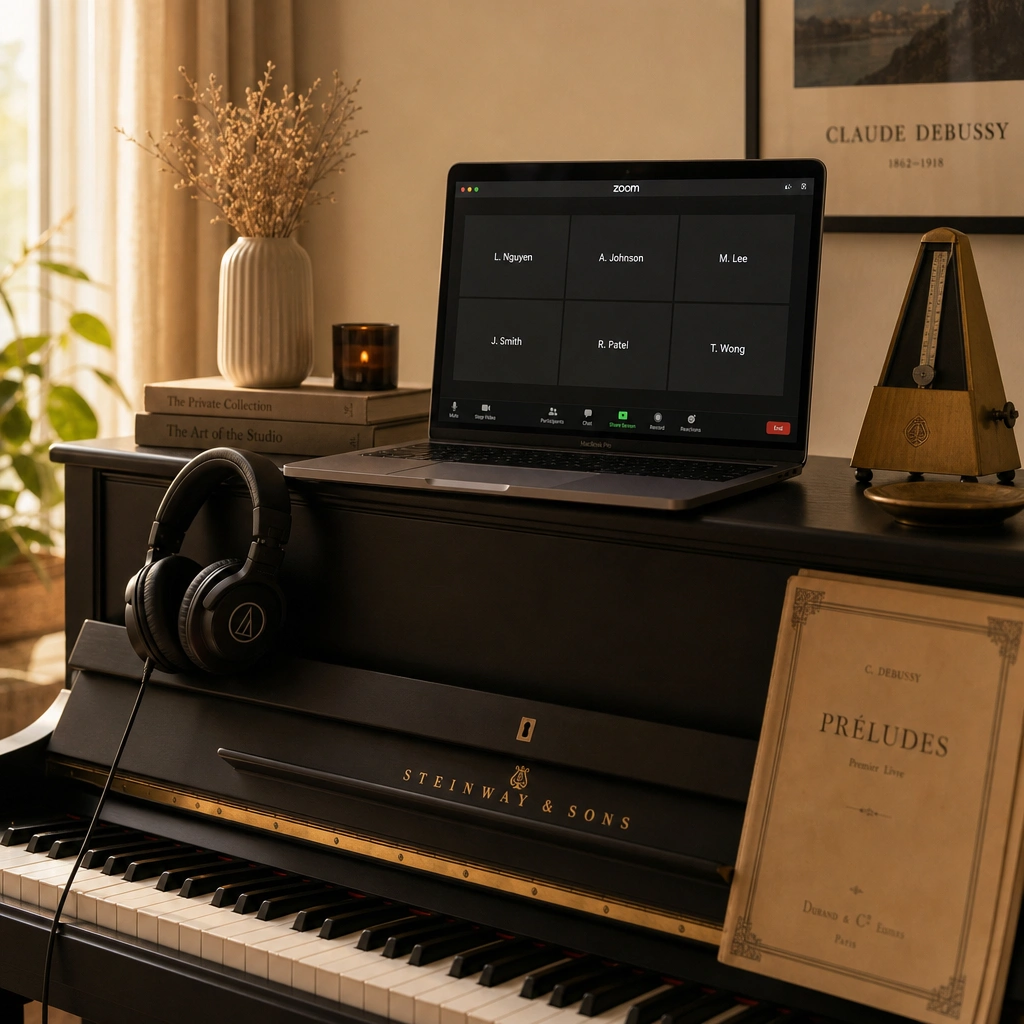
Weaver Music lessons run live and one-on-one over Zoom, so the lesson slot itself never has to compete with drive time. Lessons can also be built around a song a student wants to learn – handy for kids motivated by a movie theme or a favorite hymn.
How do I schedule piano lessons for multiple homeschooled kids?
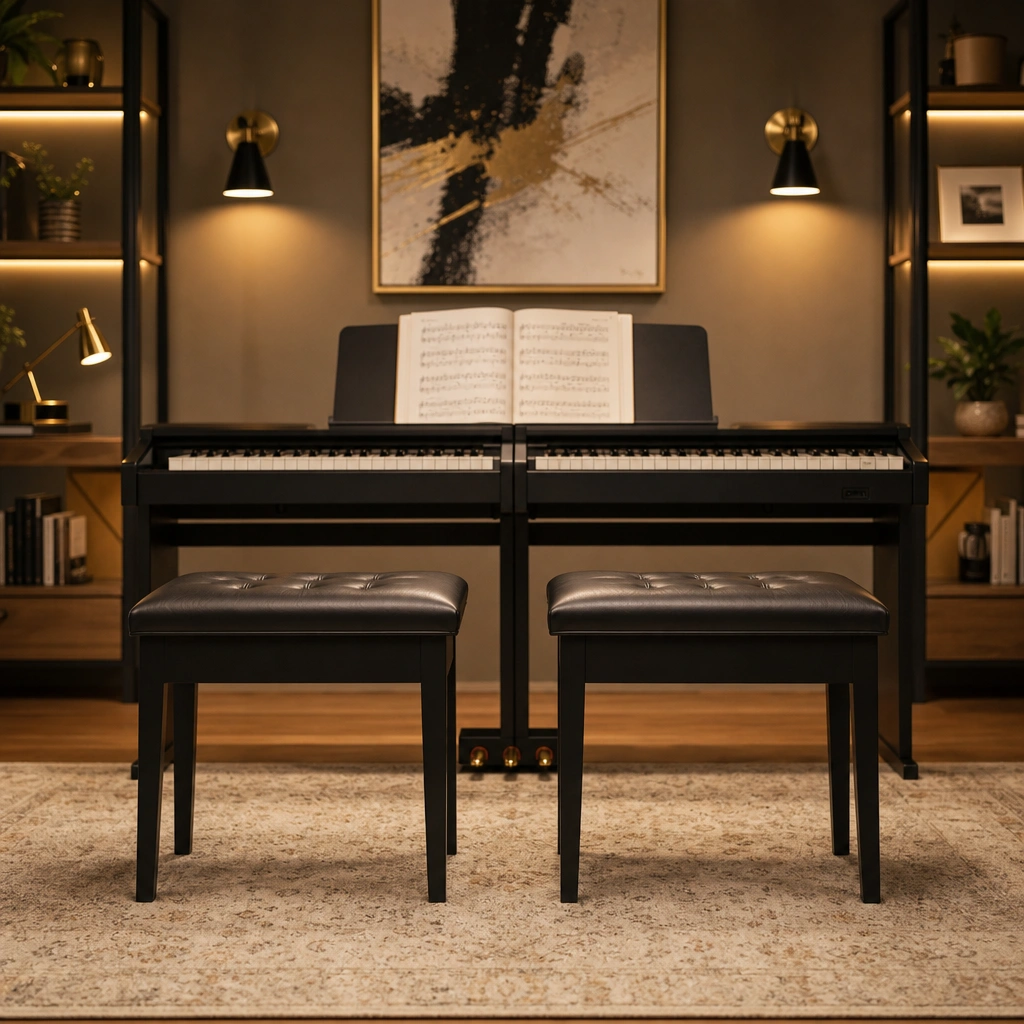
Scheduling piano lessons for multiple homeschooled kids works best when siblings take back-to-back lesson slots on the same day, so one parent isn’t managing separate pickup or login times all week. Many families book two 30-minute lessons in a row, one right after the other.
A few things that make multi-kid scheduling smoother:
- Stagger practice times by age so younger kids practice while older ones do independent schoolwork.
- Let the older sibling practice first if they need less supervision, freeing you up for the younger one.
- Keep each kid’s practice tied to a specific daily anchor (after breakfast, before lunch) rather than “sometime today,” which is where sibling schedules tend to collide.
I currently teach three sets of homeschooled siblings back-to-back on Zoom, and the parents tell me the biggest win isn’t the music – it’s that Tuesday mornings finally have a predictable shape.
“Austin explains everything clearly and makes online piano lessons easy to follow.” – Emily Carter
For families building out a broader home-learning routine, it also helps to know how to practice piano effectively in short sessions, and whether your current instrument is set up well for daily use in a busy household.
Common questions
Do homeschool co-ops usually offer piano as a group class?
Some co-ops offer group piano or music theory classes, but group settings rarely give each child individual feedback on technique or repertoire. Most families pair a co-op music class with private one-on-one lessons for actual skill progress.
What age should a homeschooled child start piano lessons?
Most children are ready to start around age 6 or 7, once they can sit still for 15-20 minutes and recognize letters and numbers, though motivated 5-year-olds sometimes do fine too. Homeschool flexibility makes it easier to start whenever a child is truly ready.
Can piano lessons happen during a co-op day instead of at home?
Yes, as long as there’s a quiet space and reliable internet for a Zoom lesson. Some families schedule their lesson during a sibling’s co-op class time to make double use of the drive.
What if our homeschool schedule changes seasonally?
Lesson times can move with your schedule since Weaver Music lessons are booked week to week rather than locked into a rigid semester slot. Many families do shift lesson times between fall/spring and summer without any issue.
Is it better to do piano first thing or after lunch in a homeschool day?
Either can work, but younger kids generally focus better before lunch while teens often do better mid-afternoon once morning academics are finished. Test both for two weeks and watch which one produces less resistance at the piano.
How long before a homeschooled beginner can play a full song?
With daily short practice, most beginners play a simple two-hand song within 6-8 weeks. For more detail on typical timelines by skill level, see how many piano lessons it takes to play a song.
Ready to find out for yourself?
Your first 30-minute lesson with me is completely free – we will evaluate where you are, talk through your goals, and map out your path.
